













On this page

Trucks keep lining up, and your operations slow down. A poor truck scale layout causes massive delays. Discover how smart traffic design fixes this problem today.
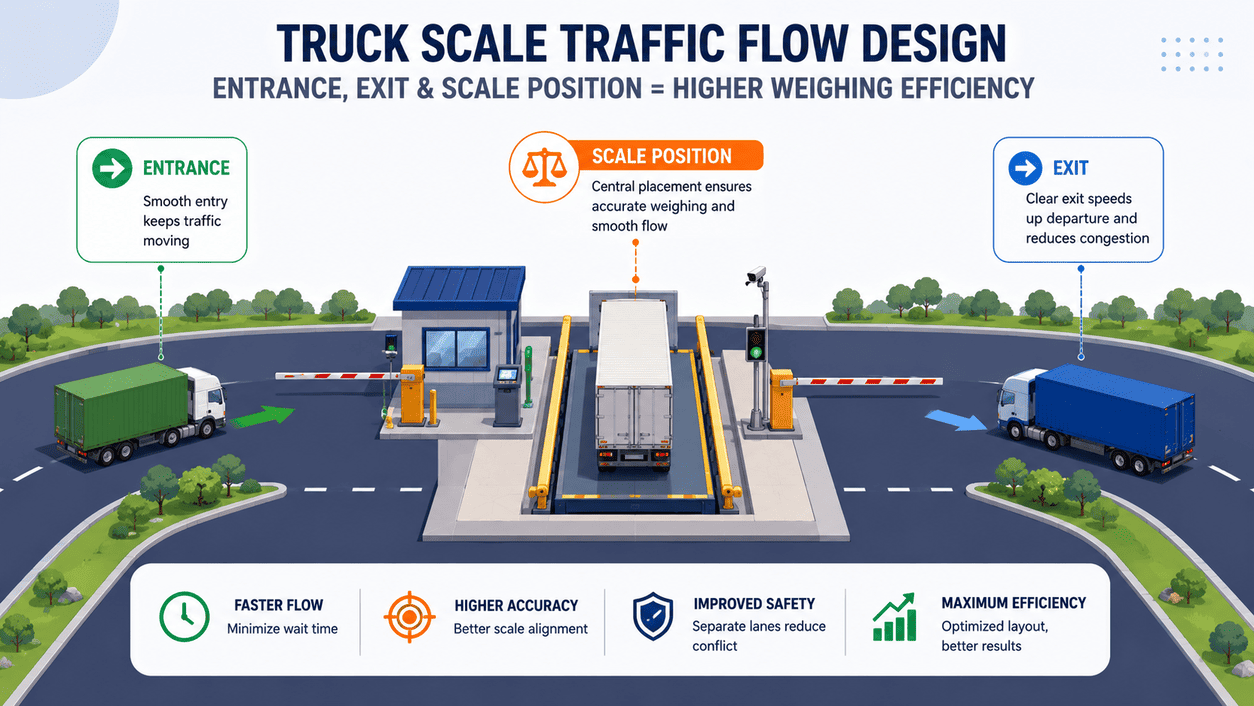
Entrance, exit, and scale position directly decide your weighing efficiency. A well-designed traffic flow eliminates blind spots, provides enough turning radius, and prevents traffic jams. When you place the scale along the natural path of vehicles, you cut down waiting times and increase your daily truck throughput.
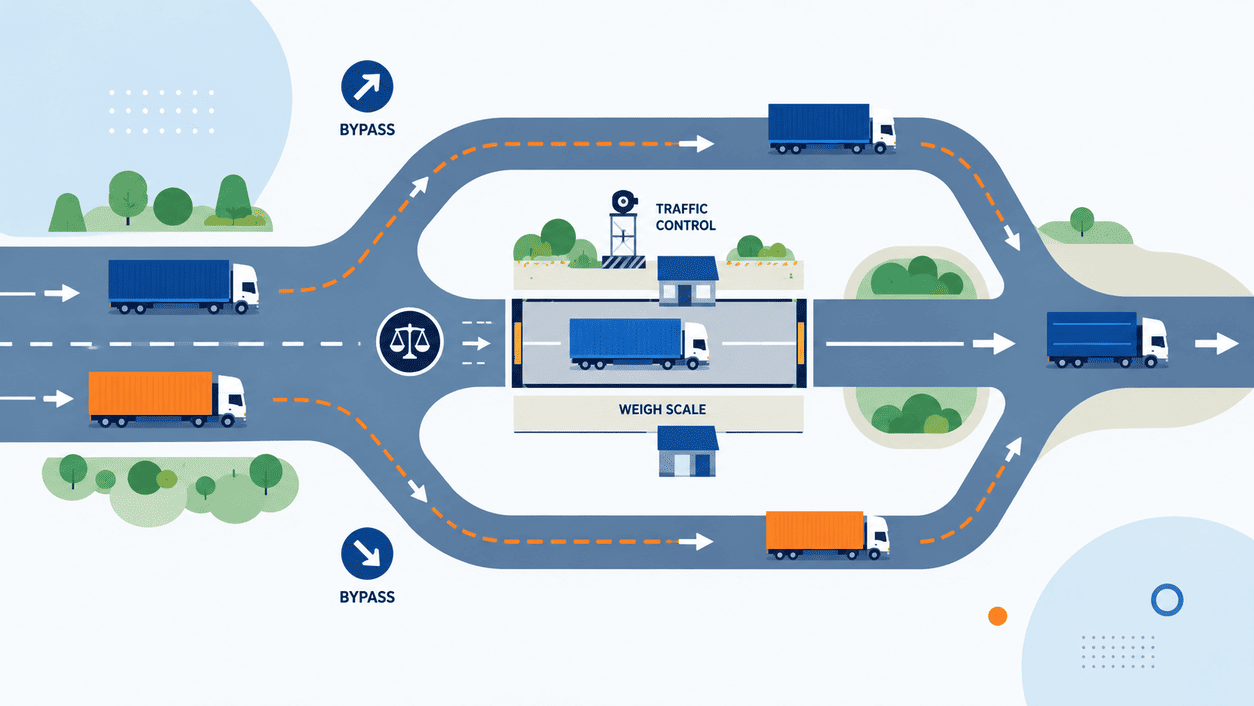
You might think a fast indicator is all you need for quick weighing. But if trucks struggle to enter or leave the platform, a fast scale means nothing. Let me show you how to plan the layout before you pour any concrete.
Why Does Truck Scale Efficiency Start Before the Vehicle Reaches the Platform?
Drivers hate tight turns. If trucks need to reverse just to align with the platform, you waste hours. You must plan the route before the truck even arrives.
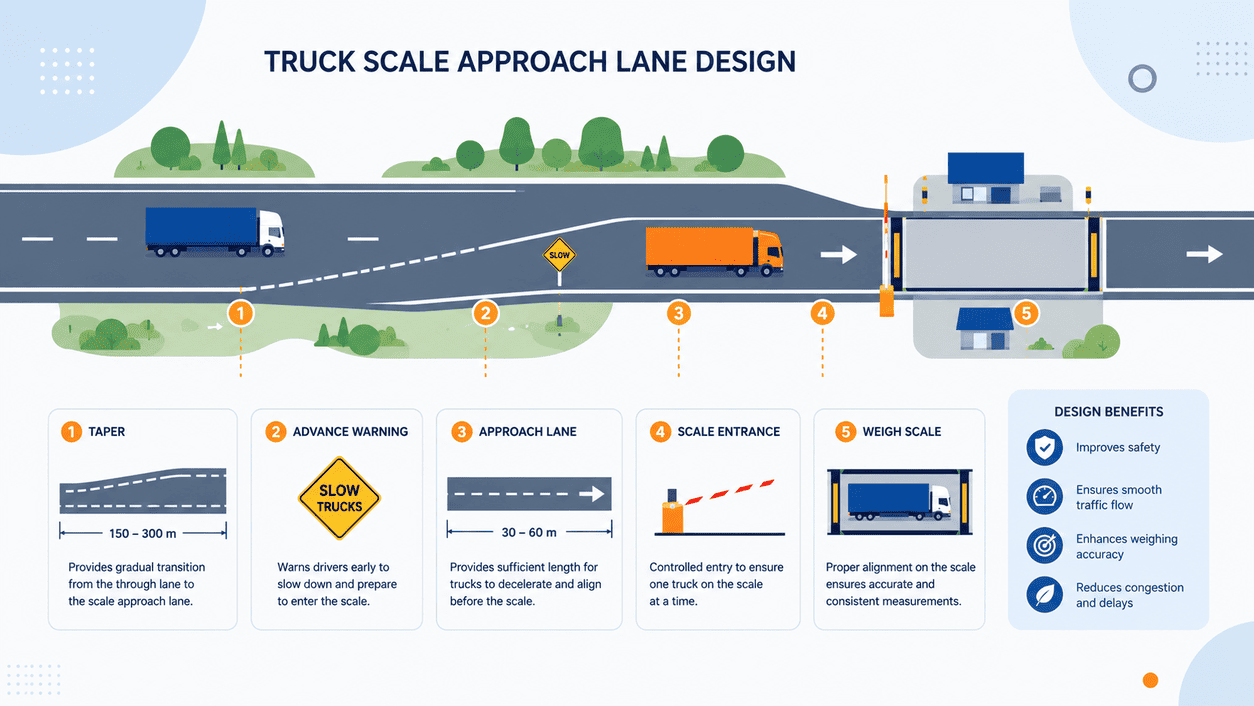
Efficient truck weighing starts with the approach path. A straight approach lane of at least one truck length ensures vehicles align properly. This prevents tire damage to the scale, stops traffic bottlenecks, and keeps your entire facility running without delays.
The Hidden Cost of Bad Approach Angles
Many clients buy a top-quality scale from HENER SCALE but put it in a tight corner. I see this often in busy grain depots. If a truck has to make a sharp turn right before the scale, the driver slows down. Sometimes they miss the center of the platform. This puts side pressure on the load cells. Over time, this breaks your equipment.
To solve this, you need a straight buffer zone. We must break down the space into three parts: waiting area, alignment zone, and the scale itself.
Space Planning Guide
| Zone | Minimum Length | Purpose |
|---|---|---|
| Waiting Area | 2x Truck Length | Keeps trucks off the public road |
| Alignment Zone | 1x Truck Length | Helps the driver drive straight onto the scale |
| Exit Zone | 1.5x Truck Length | Allows trucks to speed up and turn safely |
If your warehouse expects 50 trucks a day, you cannot ignore this. You need to map out the exact turning radius for the biggest truck you expect. When trucks move smoothly, your whole logistic chain speeds up. This is the project-based thinking we always use to help clients.
One-Way vs. Two-Way Traffic: Which Layout Reduces Congestion?
Empty and loaded trucks blocking each other is a nightmare. Head-on traffic creates dangerous backups. Choosing the right flow direction stops this daily chaos completely.
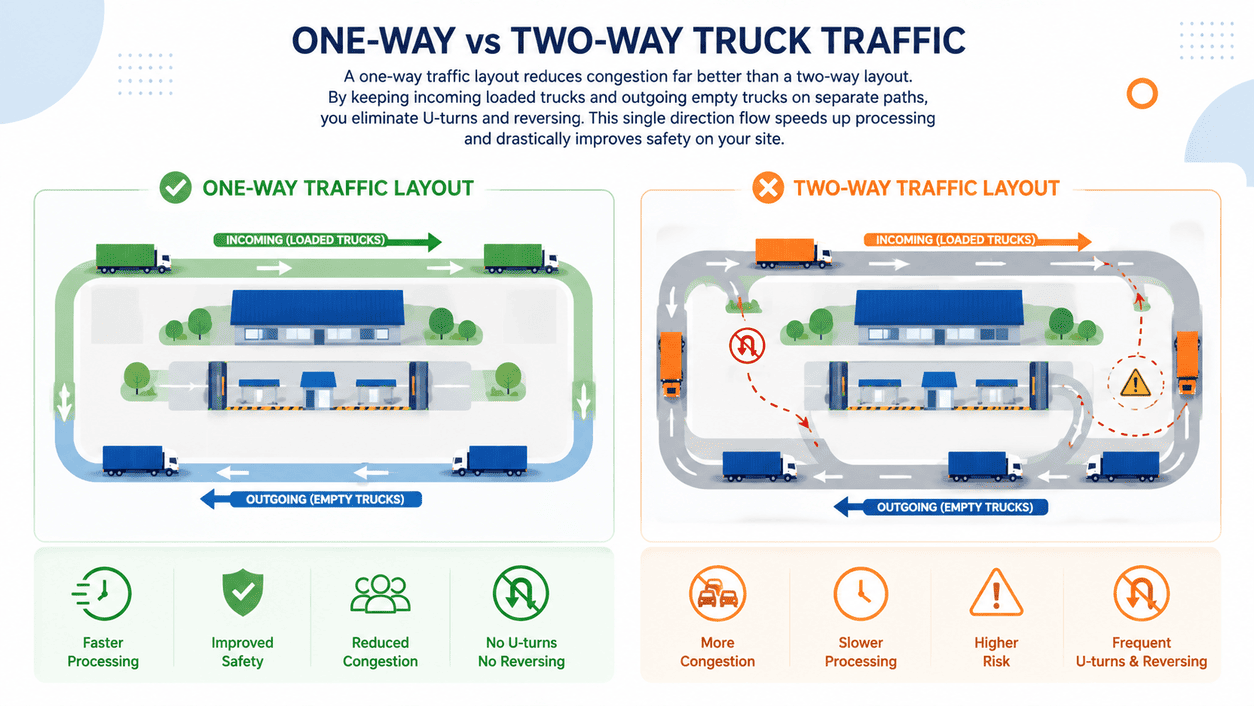
A one-way traffic layout reduces congestion far better than a two-way layout. By keeping incoming loaded trucks and outgoing empty trucks on separate paths, you eliminate U-turns and reversing. This single direction flow speeds up processing and drastically improves safety on your site.
Why Two-Way Traffic Fails in Busy Yards
I once visited an agricultural hub where heavy grain trucks and empty trucks shared one lane. The result was constant waiting. A driver would finish weighing, but could not leave because another truck was entering. They had to back up. This kills your operation speed.
A one-way system changes everything. The truck enters, weighs, unloads, weighs empty, and leaves from a different gate. It makes a big circle.
Comparing Traffic Layouts
| Feature | One-Way Traffic | Two-Way Traffic |
|---|---|---|
| Safety | High (No head-on risk) | Low (High risk of crashes) |
| Speed | Fast (Continuous flow) | Slow (Waiting for clearance) |
| Space Needed | Large (Circle route) | Small (Single lane) |
| Best For | High volume depots | Small sites with low traffic |
If you have limited space, you might have to use two-way traffic. If so, you must build bypass lanes. But for large operations, always choose one-way flow. It stops human error. It also prevents cheating, because trucks cannot easily return to the scale unnoticed. At HENER SCALE, we always design this circular flow first.
Scale House, Barrier Gate, Camera and Printer: Where Should They Be Placed?
Drivers jumping out of cabs to hand over paperwork wastes lot of time. Misplaced cameras miss license plates. You must position your control accessories perfectly to keep trucks moving.
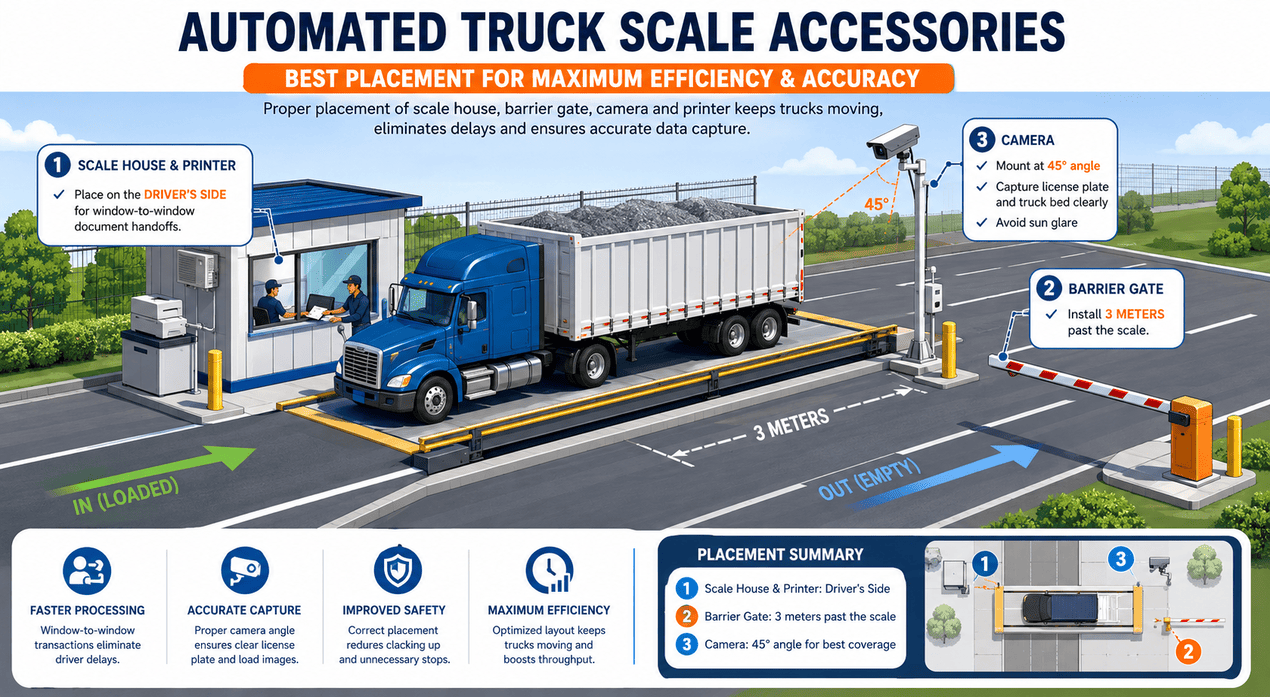
Place the scale house and printer on the driver's side to allow window-to-window document handoffs. Install barrier gates three meters past the scale. Mount cameras at a 45-degree angle to capture both the license plate and the truck bed clearly without sun glare.
Stop Forcing Drivers to Exit the Truck
The longest part of weighing is not the scale finding zero. It is the data exchange. If your scale house is on the passenger side, the driver has to get out. They walk across the scale. They hand over the paper. They wait for the printout. They walk back. This adds at least five minutes per truck.
You can fix this with smart placement and digital systems. If you want to modernize your receiving process, you need an automated kiosk.
Ideal Accessory Placement
| Equipment | Best Location | Why it Works |
|---|---|---|
| Scale House/Kiosk | Driver's side window level | No walking needed, fast ticket grab |
| Barrier Gate | 3m ahead of scale exit | Stops trucks before weight is fully captured |
| LPR Cameras | Front and back, high angle | Reads plates, checks loading bed inside |
When you put everything in arm's reach, the driver swipes an RFID card, grabs the ticket, and leaves in 30 seconds. The barrier gate lifts automatically at the end. This setup is the secret to moving hundreds of trucks every day smoothly.
How Do Poor Traffic Flow Creates Safety Risks and Data Errors?
Trucks sliding off the scale cause big accidents. Bad layouts cause trucks to stop partly on the scale, making your weight data completely wrong. Stop risking your money.
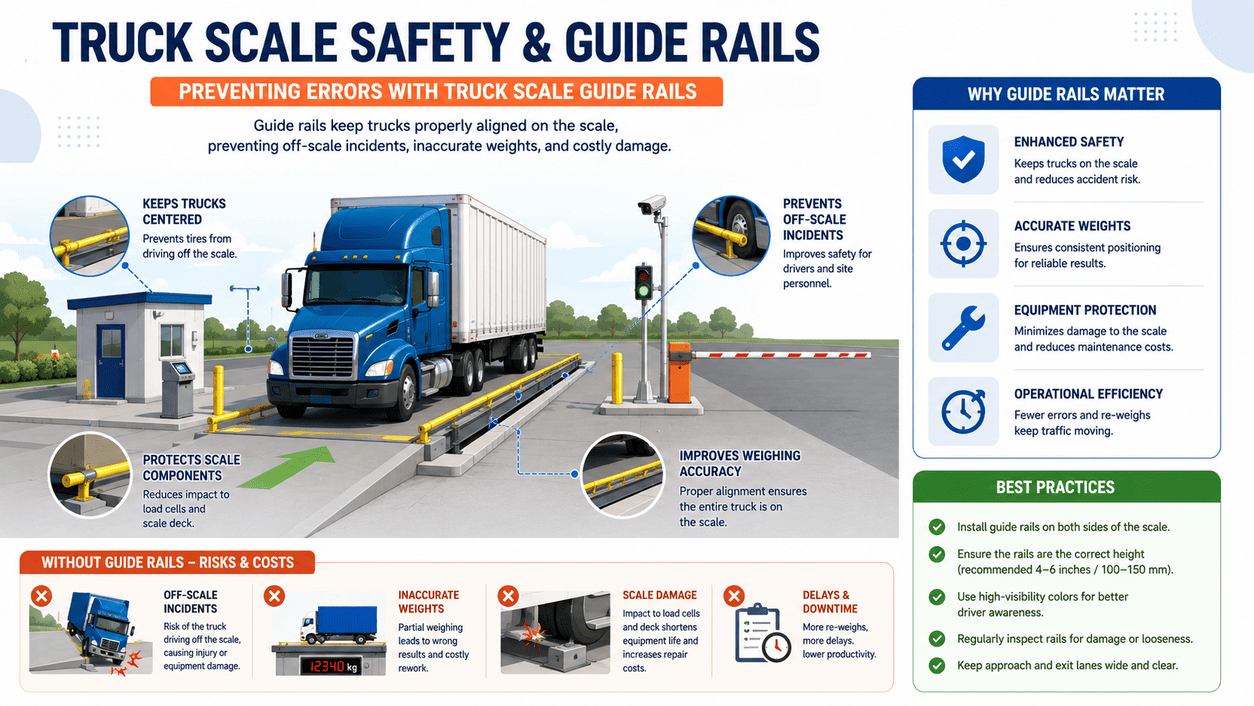
Poor traffic flow leads to uneven truck positioning, causing incorrect weight readings and lost profits. It also creates safety hazards like trucks hitting handrails or pedestrians. Clear lane markings, guide rails, and proper spacing ensure every truck aligns perfectly to protect your people and your data.
The Connection Between Bad Layouts and Bad Data
If a truck does not enter straight, its rear wheels might still touch the ground off the scale. I have seen this happen when the turn is too sharp. The scale shows a lighter weight. If you are buying grain, you just paid the wrong amount. This is a direct loss for your business.
Safety is the other big issue. When drivers are stressed by tight spaces, they make mistakes. They hit the sides of the scale. Replacing damaged load cells shuts down your operation.
Common Layout Risks and Fixes
| Risk Factor | The Bad Result | How to Fix It |
|---|---|---|
| Tight entrance turns | Trucks stop halfway off scale | Add a straight approach lane |
| Pedestrians near scale | High risk of fatal hits | Build a separate walkway |
| No guide rails | Trucks slide off the edge | Install strong yellow guide pipes |
At HENER SCALE, we know a scale is a node in your system. It is not just metal and wires. It must process vehicles safely. By fixing these flow errors, you protect your workers. You also make sure every single transaction is accurate and repeatable under proper legal metrology thinking.
Conclusion
Traffic flow design is the secret to true weighing efficiency. By planning your lanes, gates, and scale position correctly, you save time, improve safety, and protect your profits.