













On this page

When a load cell fails, most people blame the sensor. But after years on factory floors, I can tell you the real cause is often somewhere else entirely.
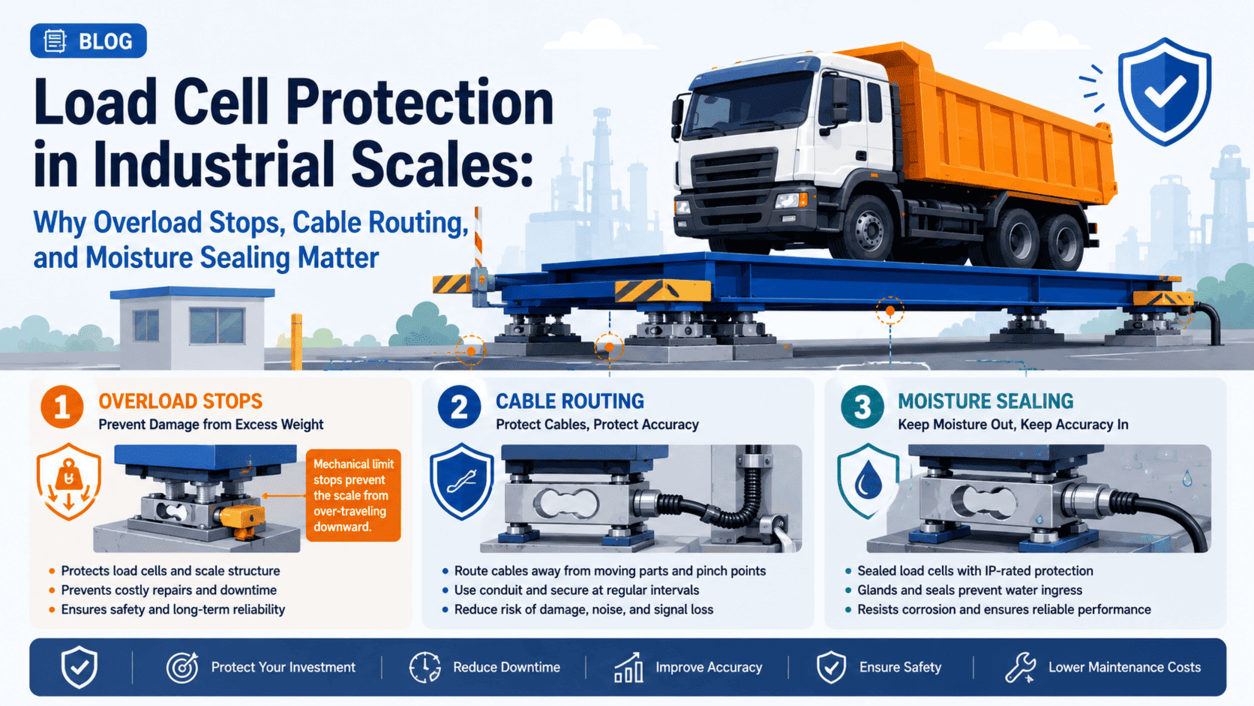
Load cell protection matters because most sensor failures come from outside the sensor body. Overload stops absorb shock loads, proper cable routing prevents physical damage from forklifts and rodents, and moisture sealing keeps water out of junction boxes. Together, these three details decide how long your scale lasts.
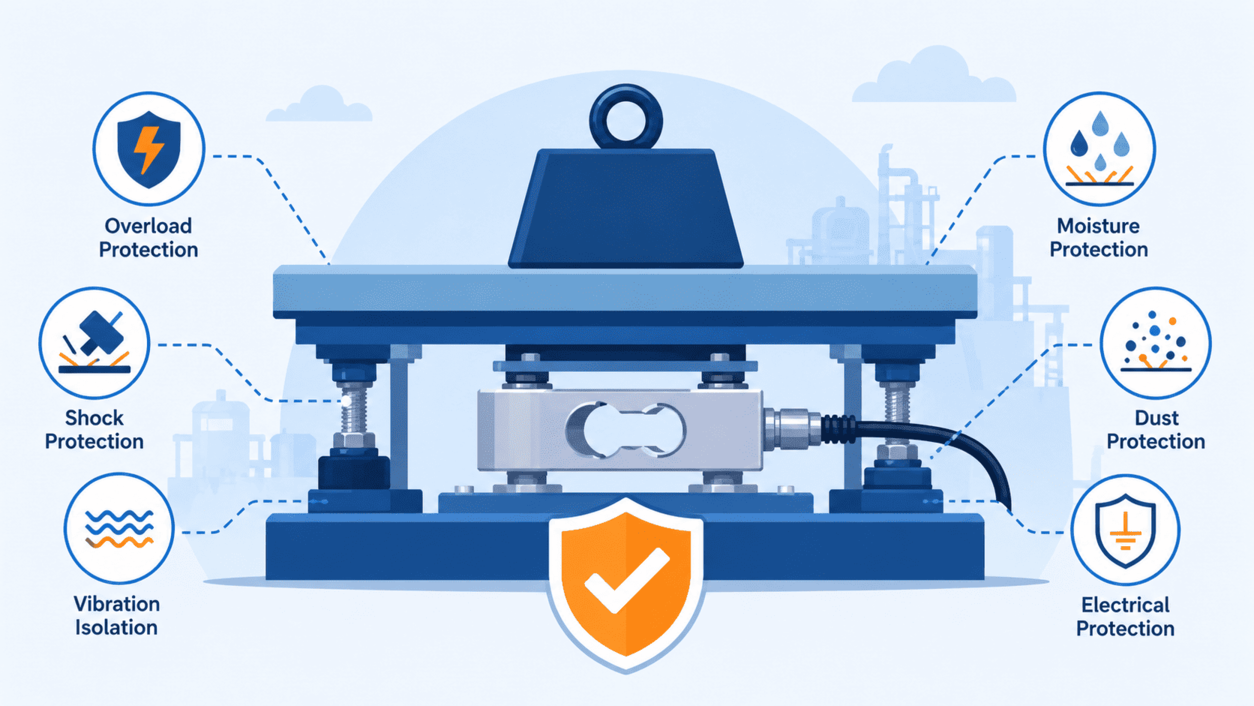
I have seen too many clients replace expensive load cells when the real fix was a five-dollar cable gland or a small mechanical adjustment. Let me walk you through what really keeps load cells alive in tough industrial environments.
Why Do Most Load Cell Failures Start Outside the Sensor Body?
A truck scale stops giving stable readings. The first reaction is always the same: "the load cell must be bad." But the sensor is rarely the first thing to fail.
Most load cell failures start outside the sensor itself. Common causes include water in junction boxes, crushed cables, missing overload stops, lateral shock from trucks, dust buildup, and welding currents during repairs. The sensor is usually the victim, not the cause.
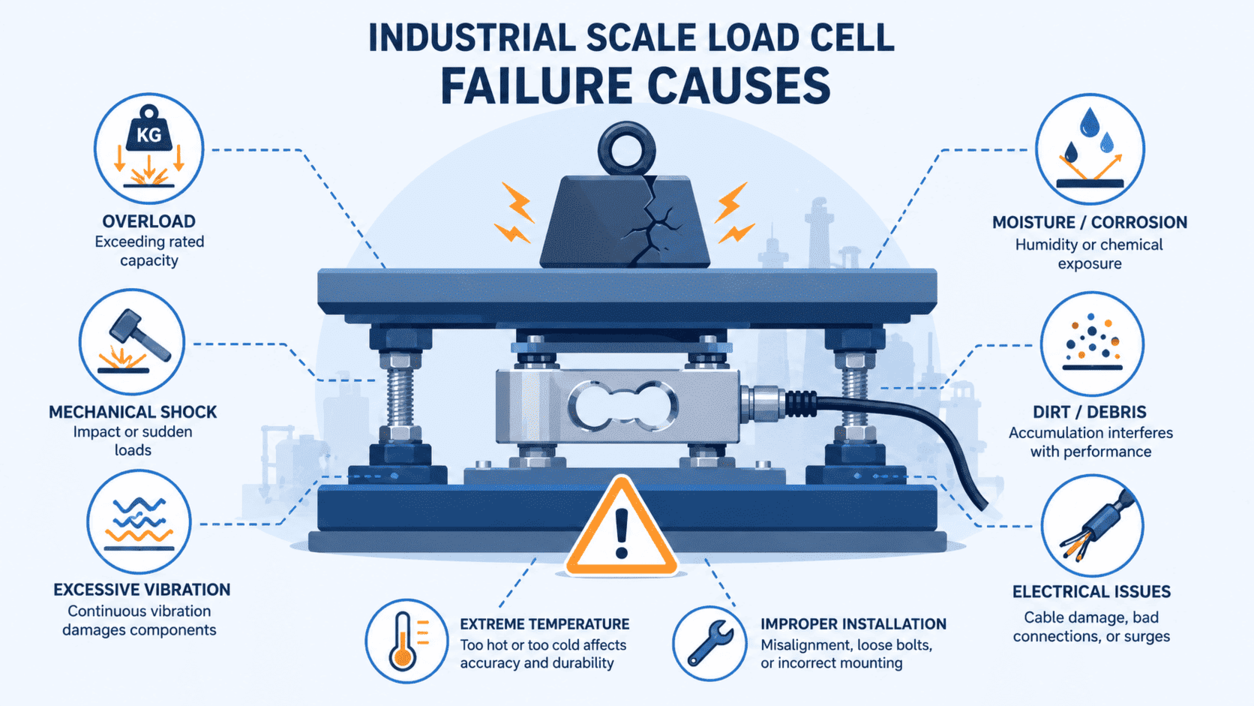
When I visit a site with repeated sensor failures, I always check the surroundings first.
The Real Failure Map
Here is what I usually find when I open the scale pit:
| Failure Source | What Actually Happens | How Often I See It |
|---|---|---|
| Junction box moisture1 | Water enters, signals drift | Very common |
| Cable damage | Forklift or rodent cuts wire | Common |
| Missing overload stop | Shock load cracks sensor | Common |
| Welding current | Repair current burns circuit | Sometimes |
| Dust and debris | Scale platform cannot move freely | Common |
One client in a grain plant kept replacing sensors every six months. He thought my products were the problem. I flew to his site. The junction box was sitting in a small puddle after every rain. We moved the box up 30 cm and added a drip loop. Three years later, no more failures. The sensors were never the issue.
How Do Overload Stops and Mechanical Limits Save Expensive Repairs?
A truck slams onto a weighbridge at speed. Without protection, that shock goes straight into the load cell2. The sensor cracks. You lose thousands of dollars in minutes.
Overload stops and mechanical limits are small metal parts placed under or beside the scale platform. They block the platform from moving too far down or sideways. When shock loads hit, the stops take the force instead of the load cell, saving the sensor from permanent damage.
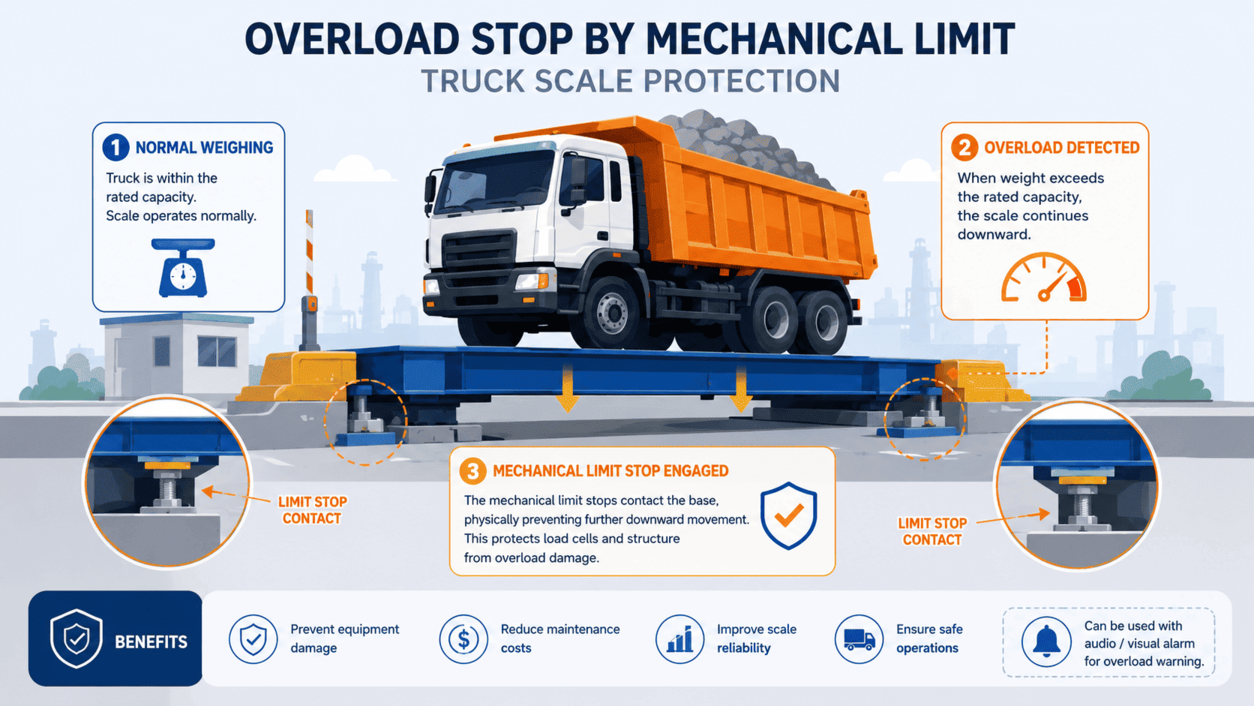
These parts cost very little. But they protect the most expensive component in your scale.
Setting the Right Gap
The gap between the stop and the platform is the key detail. Too tight, and the stop carries weight all the time, which kills accuracy. Too loose, and it cannot protect against shock.
| Scale Type | Vertical Gap | Lateral Gap |
|---|---|---|
| Truck scale | 2–4 mm | 3–5 mm |
| Floor scale | 1–2 mm | 2–3 mm |
| Platform scale | 0.5–1 mm | 1–2 mm |
| Bench scale | 0.3–0.5 mm | 0.5–1 mm |
I once worked on a 60-ton truck scale where the installer set the overload gap at 8 mm. Trucks were bouncing on the deck. Two sensors broke in a year. We adjusted the gap to 3 mm. Problem solved. The lesson: capacity numbers on a datasheet mean nothing if the mechanical limits are wrong.
What Cable Routing Mistakes Cause the Most Load Cell Damage?
Cables look simple. People treat them like they do not matter. Then a forklift drives over one, or a rat chews through the insulation, and the whole scale goes down.
The most common cable routing mistakes are running cables on the floor where forklifts cross, leaving them exposed to rodents3, placing junction boxes in low spots where water collects, and skipping conduit protection. Each of these can destroy a working scale in seconds.
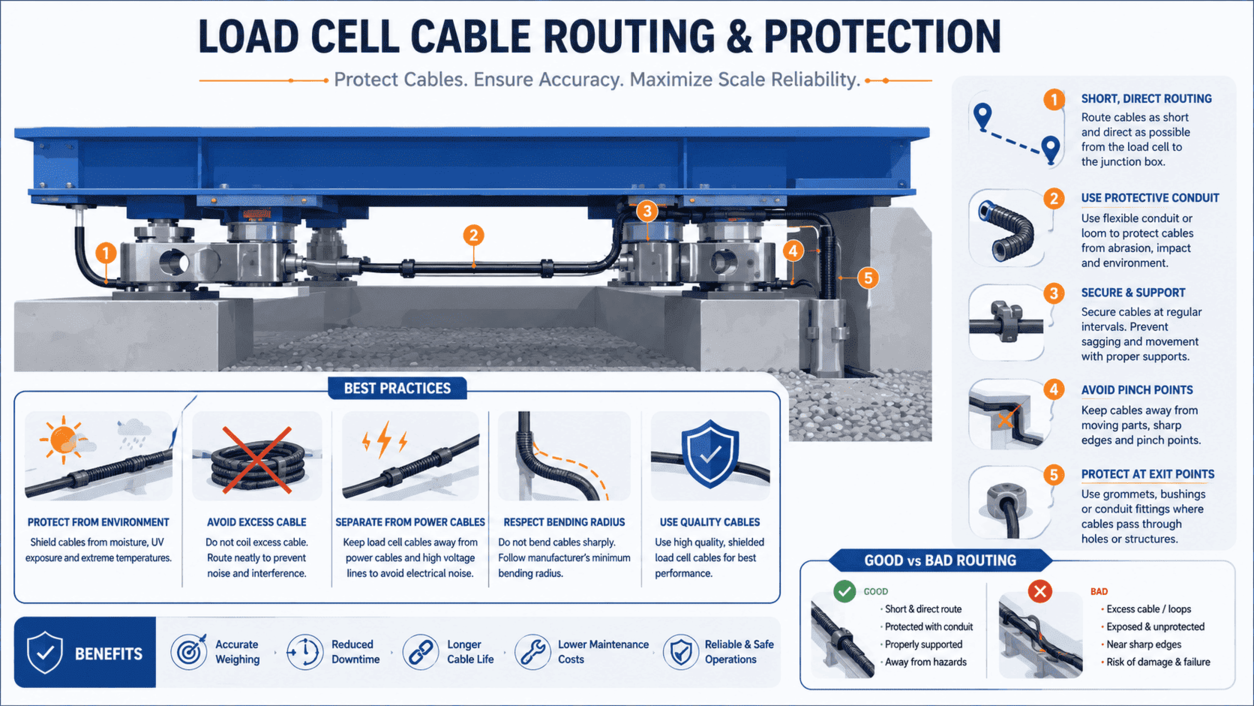
Good cable routing is boring work. But it saves more money than any premium sensor upgrade.
The Routing Checklist I Use
When I install or audit a scale, I check every cable against this list:
| Risk | Solution |
|---|---|
| Forklift traffic | Steel conduit or cable tray above ground |
| Rodents | Metal armor or rodent-resistant jacket |
| Water pooling | Junction box raised, with drip loop |
| Welding repairs | Disconnect cable before any welding nearby |
| Sharp edges | Grommets at every entry point |
In Mexico, I had a client whose scale failed every dry season. We thought it was heat. It was rats. They were chewing cables for moisture during dry months. We added galvanized conduit. The failures stopped. Sometimes the answer has nothing to do with technology. It has to do with knowing your environment.
Why Is Moisture Sealing and IP Protection Critical in Harsh Environments?
Water is the silent killer of industrial scales. It enters slowly, builds up over months, and then one morning the readings go wrong and nobody knows why.
Moisture sealing and IP protection block water, dust, and humidity from reaching the load cell circuit and junction box. For outdoor scales like truck scales, IP68 sensors and properly sealed junction boxes with potting compound or hermetic seals are not optional. They are the difference between a 2-year and a 10-year scale.
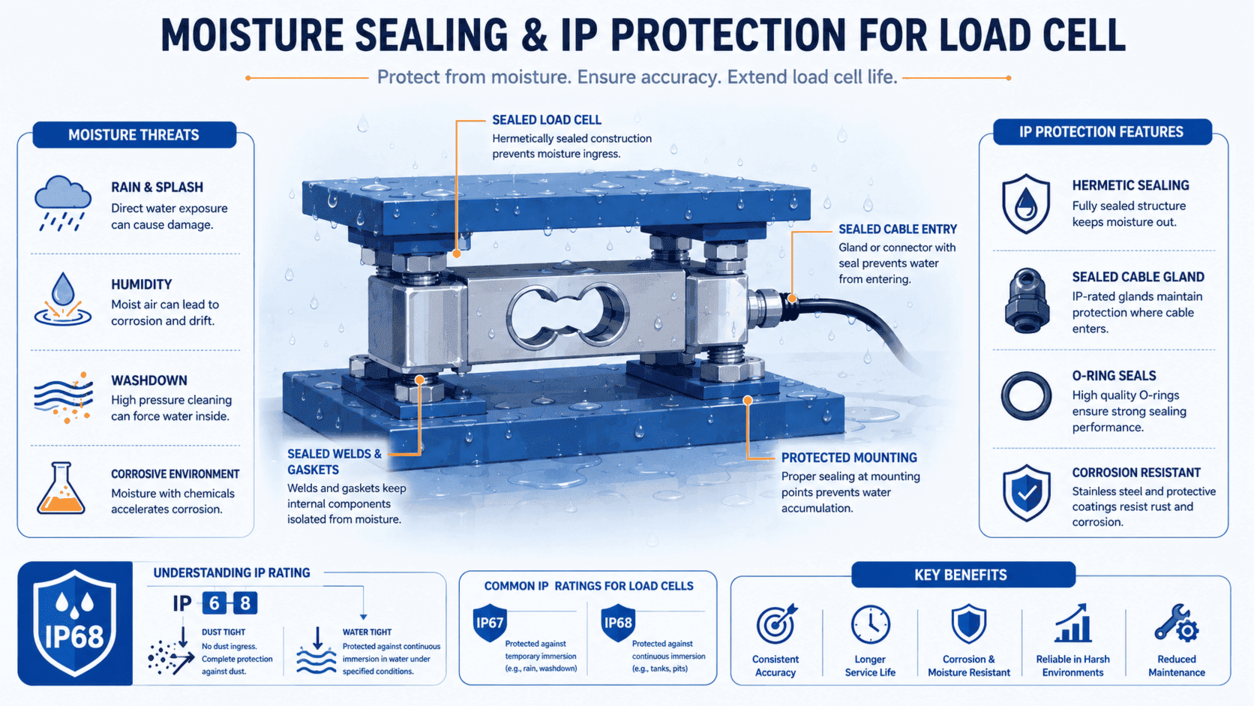
Sealing is more than picking an IP rating from a catalog. It is about how the system holds up over time.
Choosing the Right Protection Level
| Environment | Recommended IP Rating | Sealing Method |
|---|---|---|
| Indoor dry warehouse | IP65 | Standard rubber seals |
| Indoor wet area | IP67 | O-rings plus cable glands |
| Outdoor truck scale | IP68 | Welded seal plus potted junction box |
| Washdown food plant | IP69K4 | Stainless steel, hermetic seal |
The story I shared earlier, about the grain plant, is the perfect example. The client thought IP67 sensors were enough. But the junction box was only IP65. Water did not enter the sensor. It entered the box. Then it traveled through the cable into the sensor. The whole chain has to match the environment, not just one part.
Conclusion
Load cell protection is not about buying more expensive sensors. It is about overload stops, cable routing, and moisture sealing working together every day.