














On this page

Returned goods create a quiet problem. The box looks fine, but one small missing part can turn a simple refund into a costly dispute.
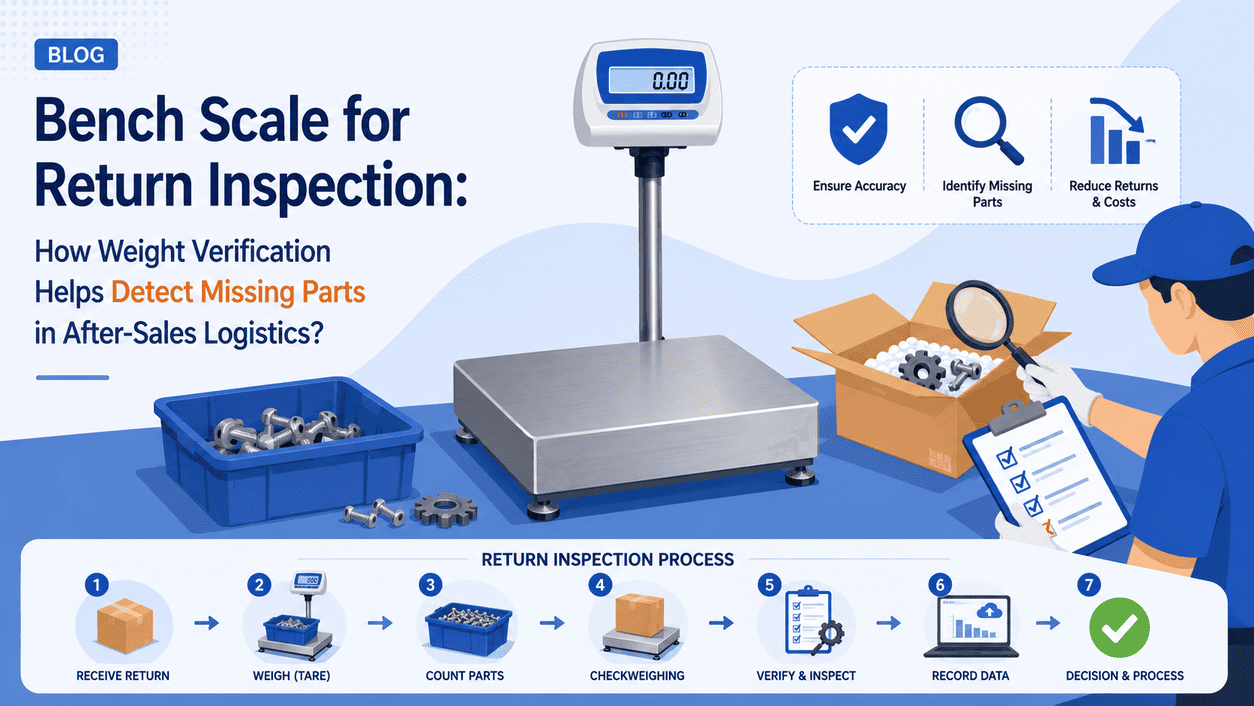
A bench scale helps return teams check whether returned goods match the expected weight range. I use it to spot missing accessories, mixed items, damaged packaging, or incomplete kits before they move deeper into after-sales handling.
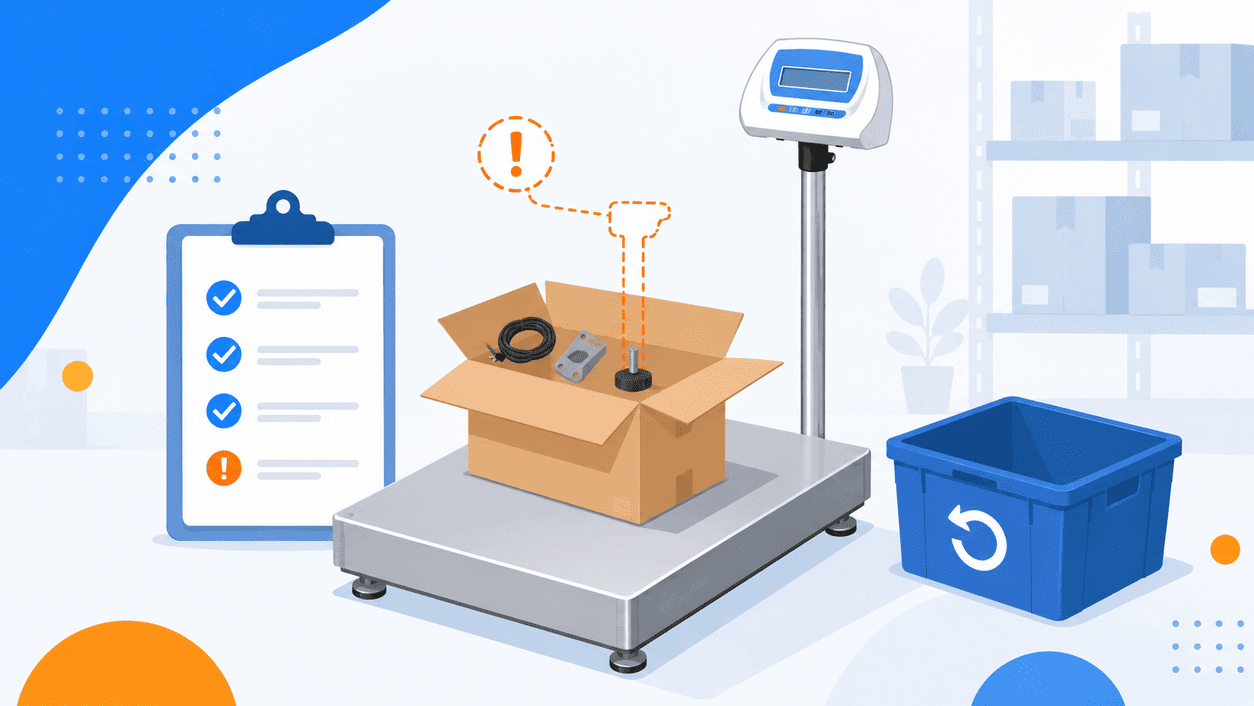
Most companies care about weighing before shipment. I understand why. Outbound orders affect delivery, billing, and customer trust. Yet I have seen many warehouses ignore the return side. That is where the real confusion often starts. A returned product is no longer a clean order. It may be opened, repacked, damaged, mixed, or partly missing. So I see the bench scale as more than a packing line tool. I see it as a simple quality control gate for after-sales logistics.
Why Returned Goods Are Harder to Inspect Than Outbound Orders?
Returned goods are harder to inspect because they come back in an uncertain condition. The item may be incomplete, repacked, damaged, or mixed with other parts.
A returned product is not the same as an outbound product. When I ship an order, I know what should be inside. When I receive a return, I need to prove what actually came back.
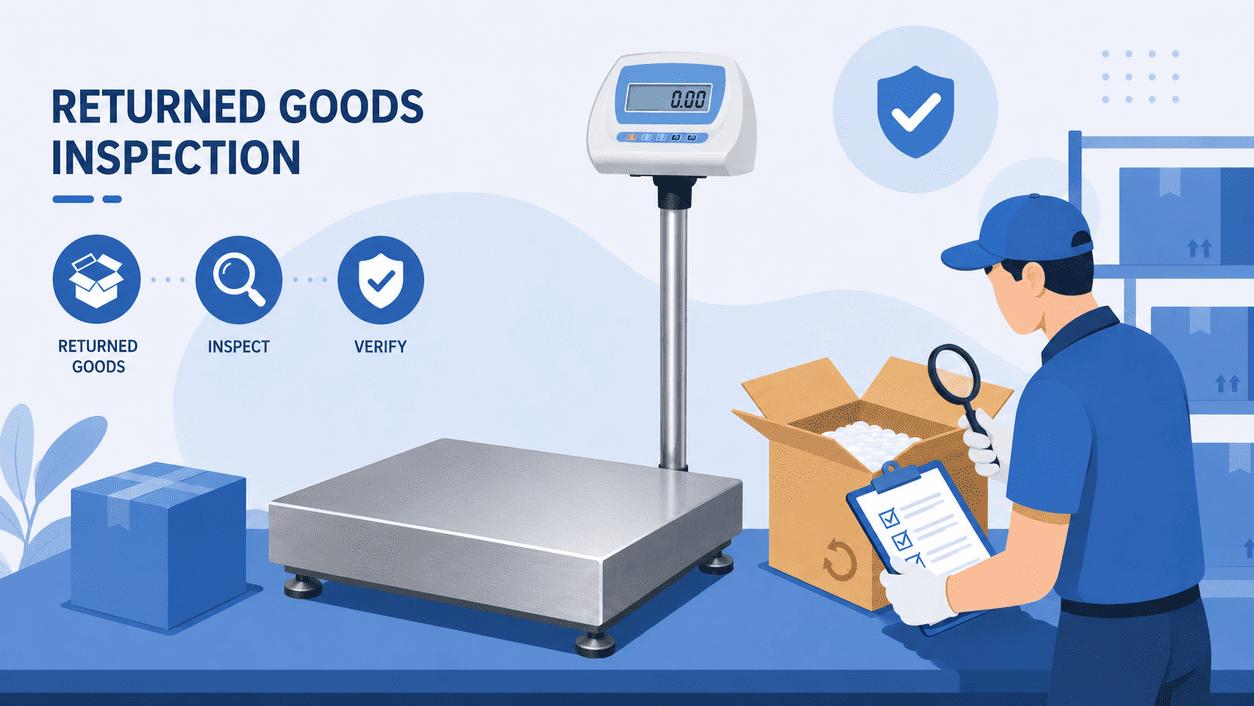
Returned goods create more risk because the warehouse loses control after shipment. A product may pass through the customer, a repair team, a carrier, or a reseller before it comes back. Each step adds a chance for missing parts or wrong items. I have seen returns where the main product was inside, but the power cable was gone. I have also seen repair kits come back with extra screws from another machine. These cases are hard to catch with only visual checks.
What makes return inspection different?
| Inspection Point | Outbound Order | Returned Goods |
|---|---|---|
| Package condition | Usually new and sealed | Often opened or damaged |
| Item list | Known before packing | Must be confirmed again |
| Accessory status | Picked from stock | May be missing or mixed |
| Inspection speed | Standard process | More judgment needed |
| Error risk | Lower | Higher |
A bench scale gives me a fast first signal. It does not replace human inspection. It helps me decide where to look. If the returned box is far below the reference weight, I know I should check for missing accessories. If the weight is too high, I know the package may include wrong or extra parts. This saves time because I do not treat every return in the same way. I use weight to separate normal returns from suspicious returns. That small step can make the whole after-sales process more stable.
How Weight Standards Help Identify Missing Accessories or Mixed Items?
Weight standards help by giving each product, accessory pack, or repair kit a normal weight range. When a return falls outside that range, the team can flag it for detailed inspection.
Without a reference weight, I am only guessing. With a reference weight range, I can turn return inspection into a repeatable process.
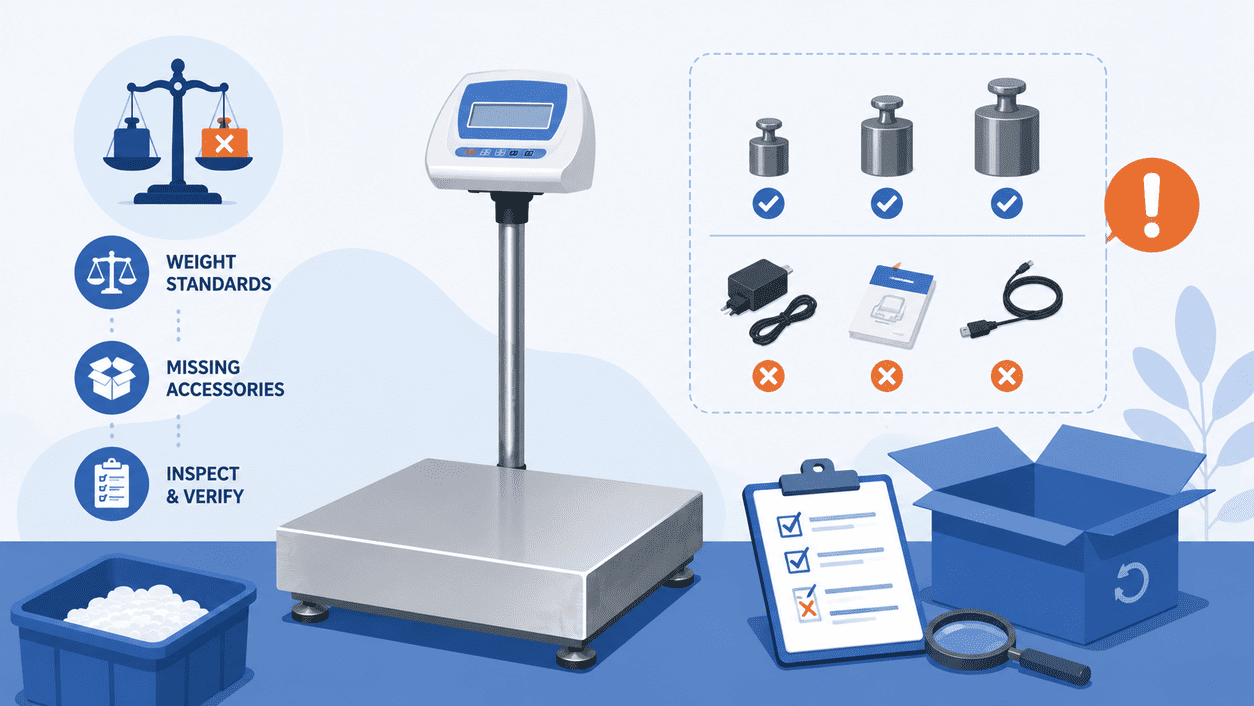
The key is not only weighing the returned item. The key is knowing what the correct weight should be. I always suggest building a basic weight table for standard products, spare parts kits, accessory bags, and repair sets. The table does not need to be complex at the start. It can include item code, product name, standard weight, allowed tolerance, and common missing parts. This simple table gives the operator a clear rule.
A simple reference weight table can look like this
| Item Type | Standard Weight | Allowed Range | Possible Issue if Too Low | Possible Issue if Too High |
|---|---|---|---|---|
| Product with accessories | 3.20 kg | 3.15–3.25 kg | Missing cable or manual | Extra item inside |
| Screw pack | 0.18 kg | 0.17–0.19 kg | Missing screws | Wrong screw type mixed |
| Repair kit | 1.45 kg | 1.42–1.48 kg | Missing small parts | Non-original parts added |
| Control module set | 2.60 kg | 2.55–2.65 kg | Missing bracket | Extra packaging or part |
I remember one mechanical parts distributor that often received returned repair kits. Before they used weight checking, each kit needed several minutes of manual checking. The operator had to open the bag, count parts, compare labels, and decide whether the kit was complete. Later, they built a standard weight list for common kits. The operator first placed each returned kit on a bench scale. Normal-weight kits moved to the next step. Abnormal-weight kits went to detailed inspection. The team did not remove manual inspection. They made it smarter. The scale became the first filter. This helped them catch missing screws, mixed accessories, and incomplete repair sets much faster. The result was simple. Less time was wasted on normal returns, and more attention went to the returns that needed it.
Building a Simple Return-Inspection Workflow with Bench Scales?
A simple return-inspection workflow starts with receiving, weighing, comparing, labeling, and routing. The bench scale should be placed at the first inspection point.
The best return process is not always the most complex one. I prefer a workflow that warehouse teams can follow every day without confusion.
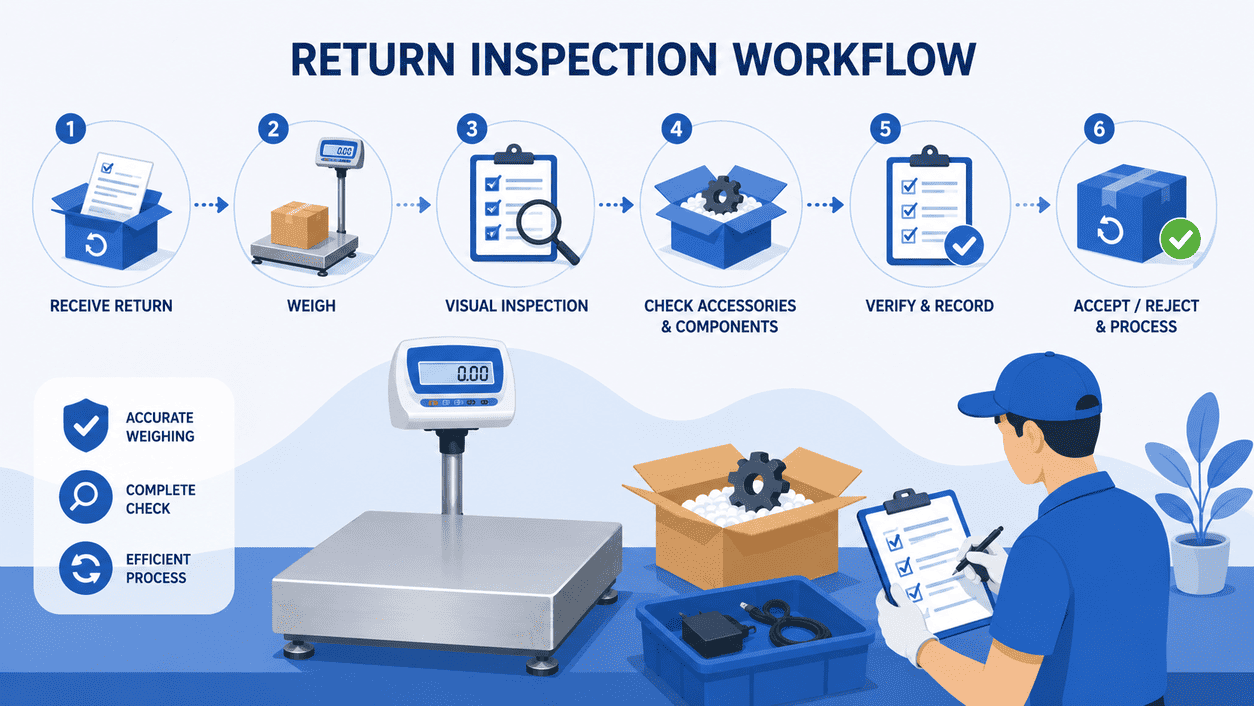
When I design a return-checking process, I start from the operator’s real work. The operator may receive many parcels in a short time. Some returns are complete. Some need repair. Some need refund approval. Some need to be rejected. If every parcel goes into full inspection, the warehouse becomes slow. A bench scale helps create a quick screening point.
A practical workflow can follow these steps
| Step | Action | Purpose |
|---|---|---|
| 1 | Scan return order or item code | Link the parcel to the return record |
| 2 | Place item on bench scale | Get actual return weight |
| 3 | Compare with standard range | Check if the weight is normal |
| 4 | Mark result as pass or abnormal | Separate normal and risky returns |
| 5 | Send abnormal returns to detailed check | Focus labor where it matters |
| 6 | Record data with photo or note | Support after-sales decisions |
I do not want operators to make too many choices. A good workflow should tell them what to do next. For example, if the weight is within range, the system or form can mark it as “weight passed.” If the weight is lower than the range, the operator can choose “possible missing parts.” If the weight is higher than the range, the operator can choose “possible mixed item.” This creates a clean record.
In my experience, the biggest gain comes from reducing repeated manual checks. A return clerk should not spend several minutes checking every complete kit. The bench scale helps the clerk identify which package deserves attention. This is useful for e-commerce warehouses, spare parts warehouses, after-sales centers, and distributors. These teams often handle many similar items. They also face customer disputes. Weight data gives them a neutral record. It is not only one person’s opinion. It is a measured result.
What Functions Matter: Tare, Counting, Checkweighing and Data Recording?
The most useful bench scale functions for return inspection are tare, counting, checkweighing, and data recording. These functions help teams weigh faster, check parts, and keep clear return records.
A return bench scale does not need to be complicated. It needs the right functions for daily after-sales work.
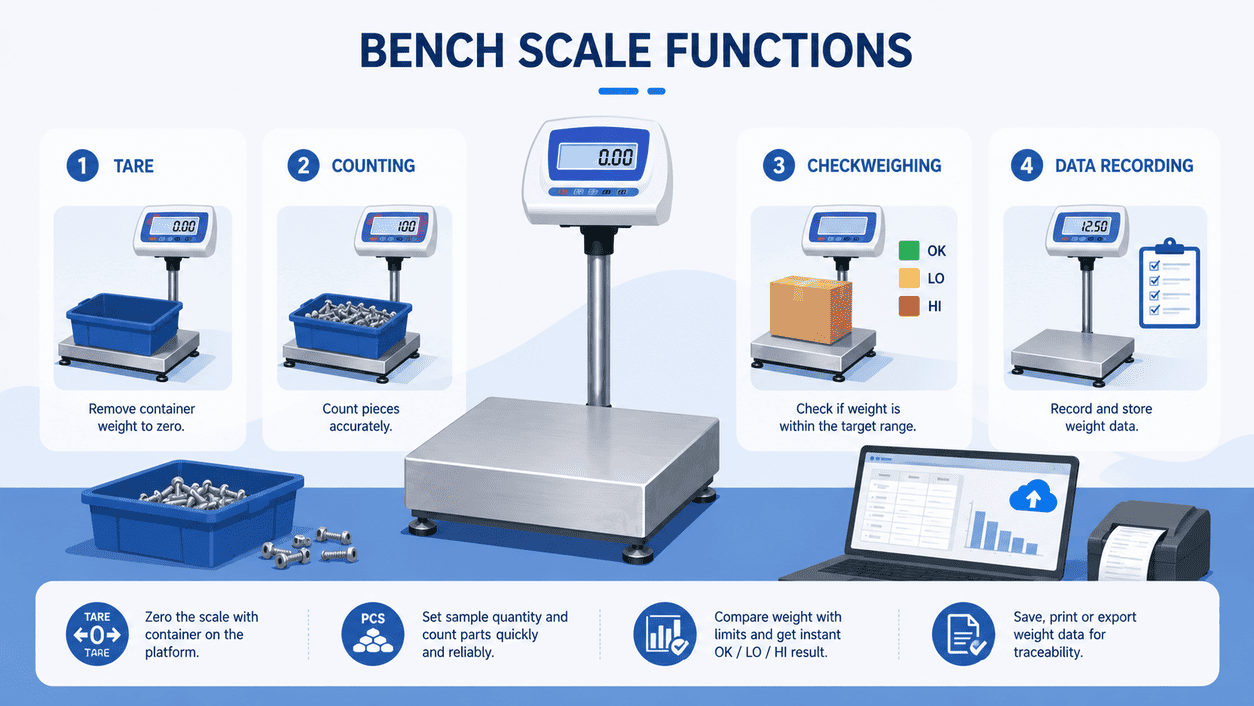
When I choose a bench scale for return inspection, I first look at the work scene. The operator may weigh products in trays, boxes, plastic bags, or return cartons. So tare is important. It allows the operator to remove the weight of a container and focus on the product itself. This is useful when returned parts are loose or repacked.
Counting is also useful for small parts. If a repair kit should include 100 screws, the operator can use counting mode after setting a sample weight. It is not perfect for every mixed item, but it works well when parts are uniform. Checkweighing is one of the most important functions. It lets the scale show whether the weight is below, within, or above the target range. This makes the result easier for operators to understand.
Key functions for return inspection
| Function | How I Use It | Why It Matters |
|---|---|---|
| Tare | Remove box or tray weight | Gives a cleaner product weight |
| Counting | Estimate quantity of small parts | Helps find missing screws or pieces |
| Checkweighing | Compare against weight limits | Flags abnormal returns quickly |
| Data recording | Save weight and result | Supports claims and quality records |
| Label printing | Print inspection label | Makes routing easier |
| Connectivity | Send data to a system | Reduces manual entry errors |
Data recording matters because return cases often become discussions. A customer may say the product was complete. The warehouse may find missing accessories. A simple weight record helps the after-sales team speak with facts. It can include return order number, item code, operator name, time, actual weight, and result. When this data connects to a warehouse system or export file, the process becomes stronger. It also helps managers find patterns. For example, one accessory may be missing often. One product may have more mixed returns than others. The scale data can show this trend before it becomes a bigger cost.
For HENER SCALE, this is where a bench scale becomes part of a larger control system. It is not only a weighing device on a table. It can become a return-quality checkpoint. It can help companies reduce human error, speed up return handling, and build better records. From my view, that is real value. It moves weighing from the factory floor to the after-sales center, where many hidden losses happen.
Conclusion
I use bench scales in return inspection because weight gives fast evidence. It helps teams find missing parts, mixed items, and costly after-sales errors.