













On this page

Many of my clients ask me the same question every week. They have boxes, drums, and pallets all moving through one warehouse. They don't know which scale fits. The wrong choice costs money and time.
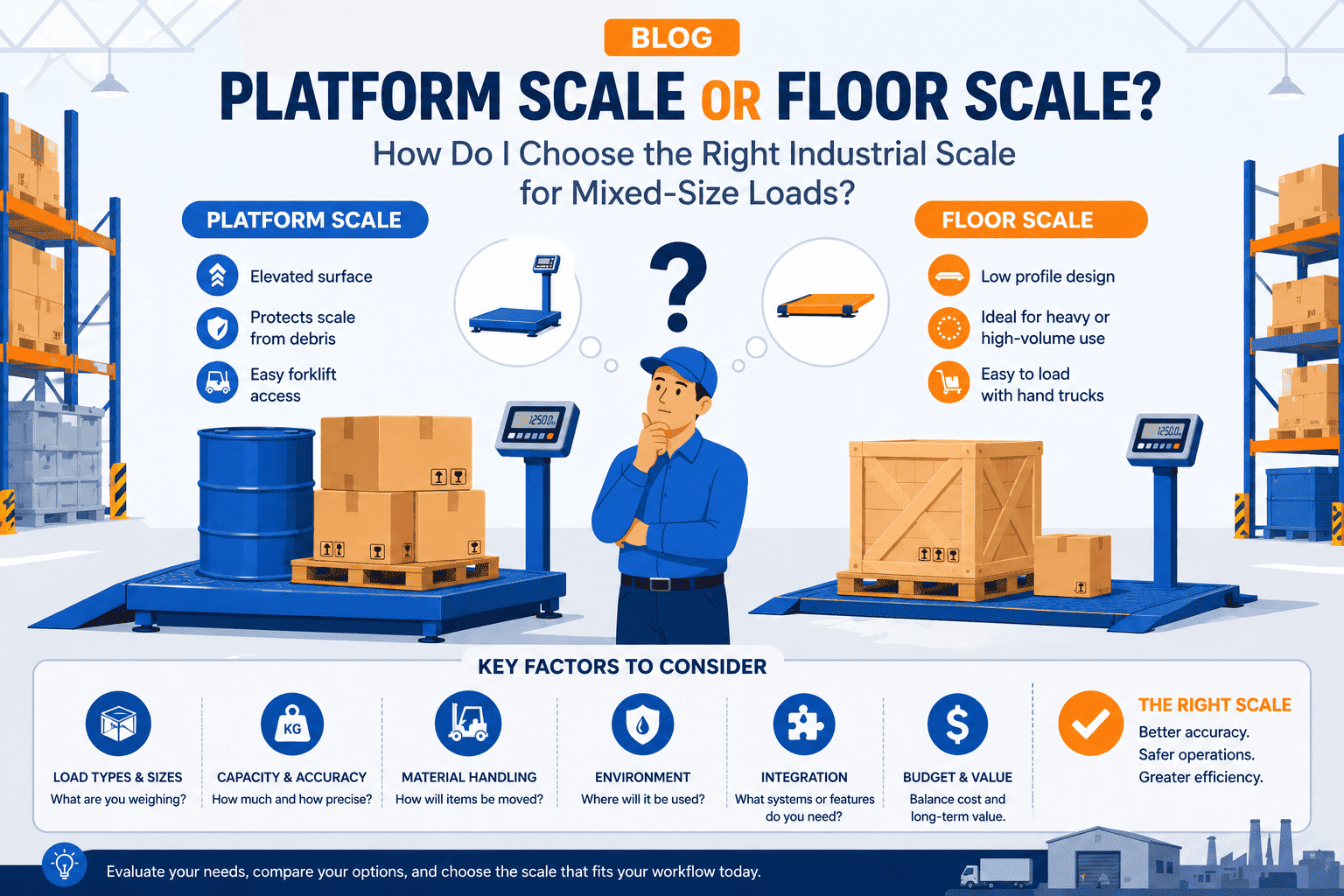
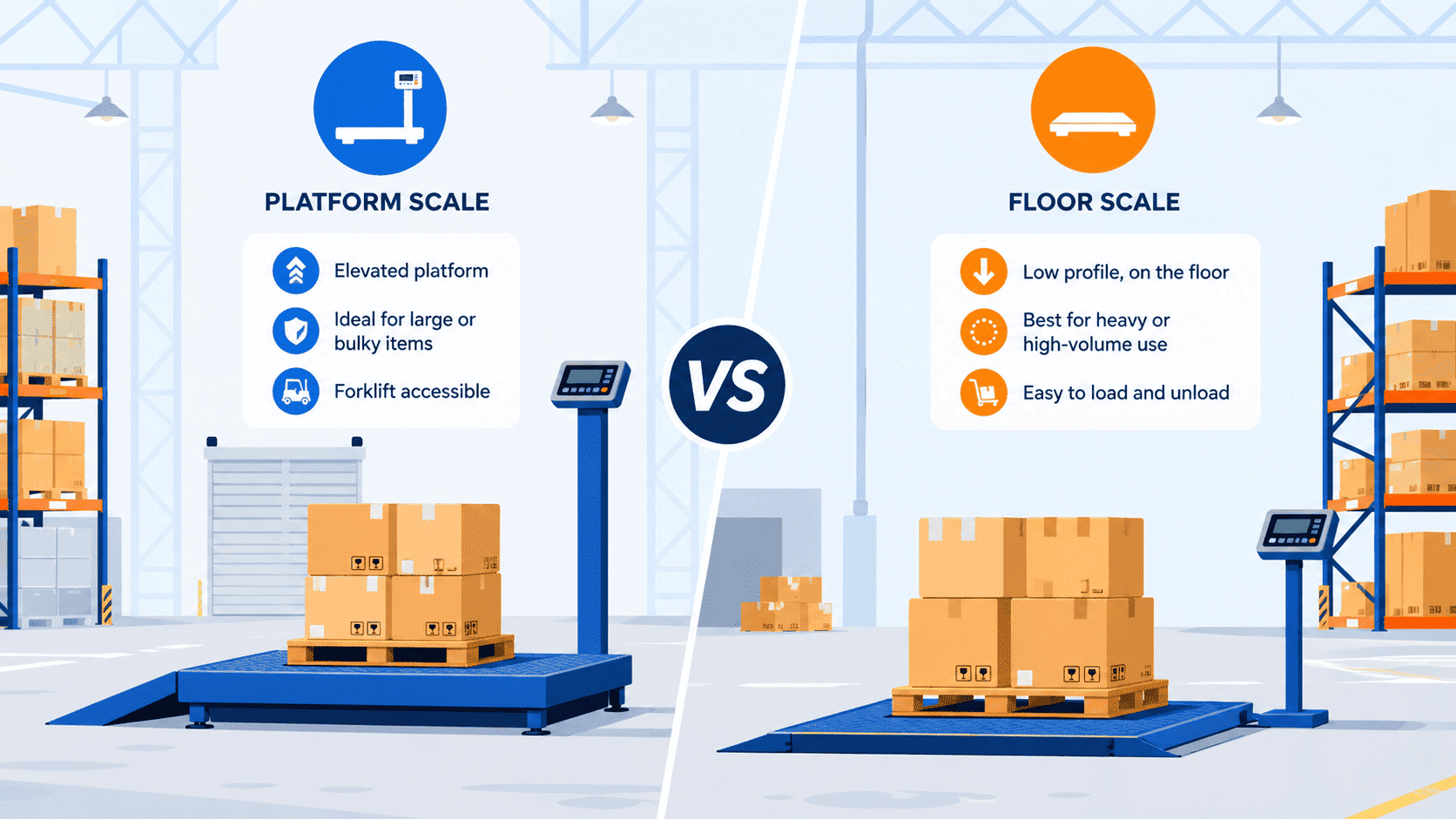
The real difference between a platform scale and a floor scale is not size — it is the loading method. A low-profile floor scale fits forklift and pallet jack traffic. A platform scale fits manual loading of boxes, drums, and small pallets. Always match the scale to how goods arrive at the weighing station.
I have seen too many buyers pick a scale based only on capacity. Then they call me three months later because the deck is bent or the load cells are damaged. Let me walk you through how I help my clients like Carlos make the right call.
The Real Difference Is Not Size — It Is Loading Method, Right?
Most people think a floor scale is just a bigger platform scale. That idea leads to wrong purchases and short product life. The truth lies in how goods get on the deck.
The loading method decides the scale type. Manual lifting suits a platform scale at waist height. Forklift or pallet jack loading needs a low-profile floor scale with a ramp. Roller conveyor lines need a flush-mounted scale built into the floor.
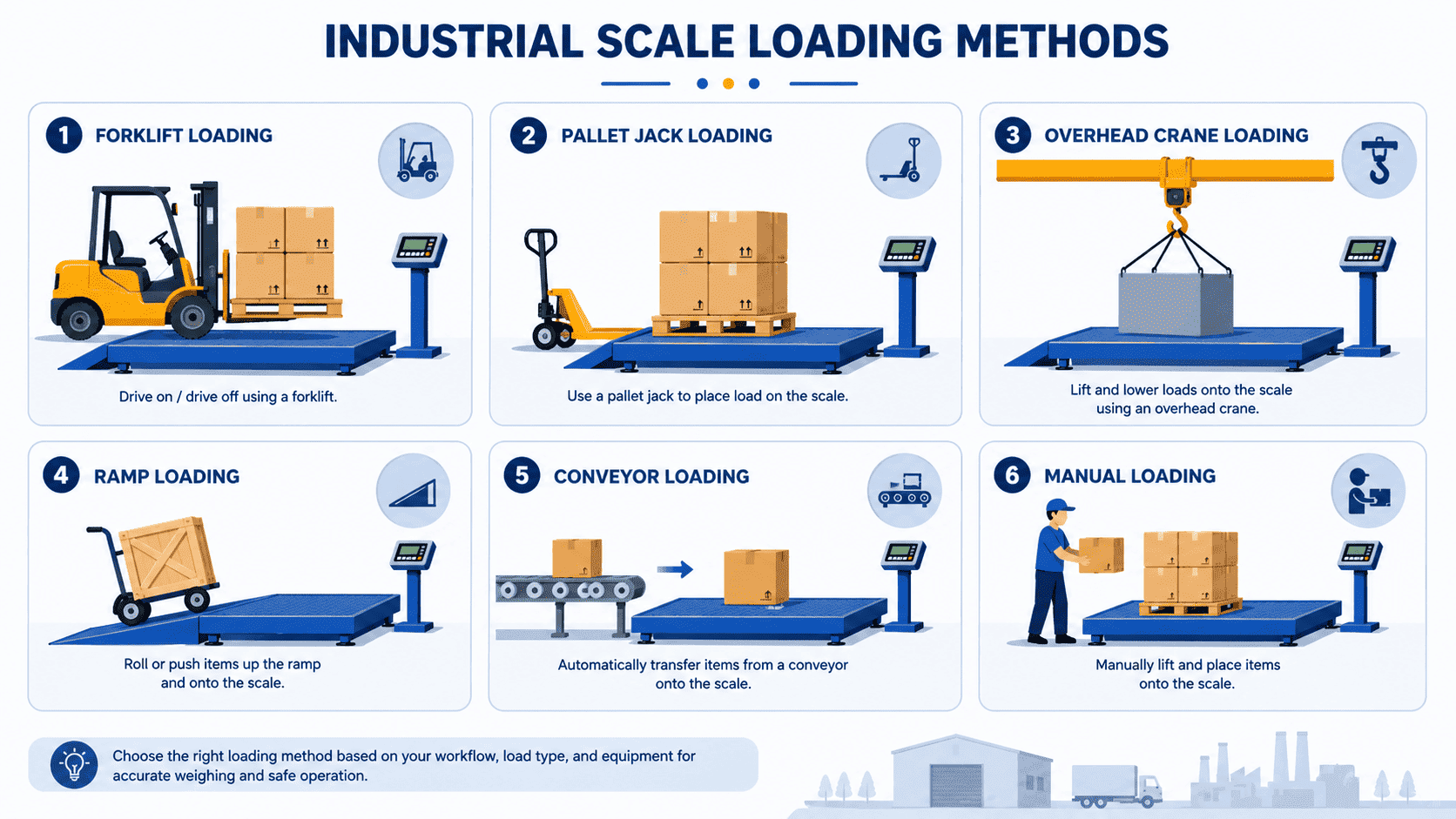
When I started as a technician, I learned this the hard way. A client in Monterrey bought a 1-ton platform scale for forklift use. The impact load broke the load cells in six weeks. Static weight is not the same as dynamic load.
Three Loading Methods I Always Check
| Loading Method | Best Scale Type | Key Risk |
|---|---|---|
| Hand carry / cart | Bench or platform scale | Operator back strain |
| Pallet jack | Low-profile floor scale + ramp | Ramp angle too steep |
| Forklift | Heavy-duty floor scale, pit-mounted | Impact load damage |
| Roller conveyor | Flush in-floor scale | Drainage and cleaning |
I always tell buyers to film a normal workday at the weighing spot. Watch the video together. The right scale becomes obvious once you see how goods really move.
When Is a Low-Profile Floor Scale Better for Forklift Operations?
Forklift drivers move fast. They drop pallets hard. A standard platform scale cannot handle this kind of daily abuse and will fail early.
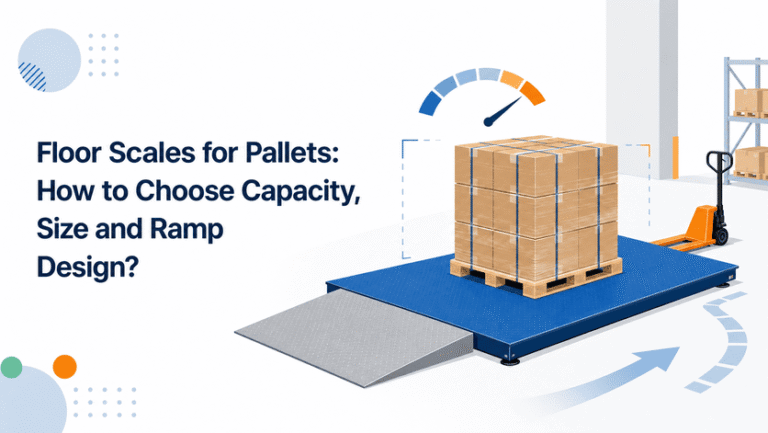
A low-profile floor scale works best when forklifts or pallet jacks load goods many times per day. The deck sits 75–100 mm above the ground, so ramps stay short. Heavy steel frames absorb impact. Capacity should be at least double the maximum static load.
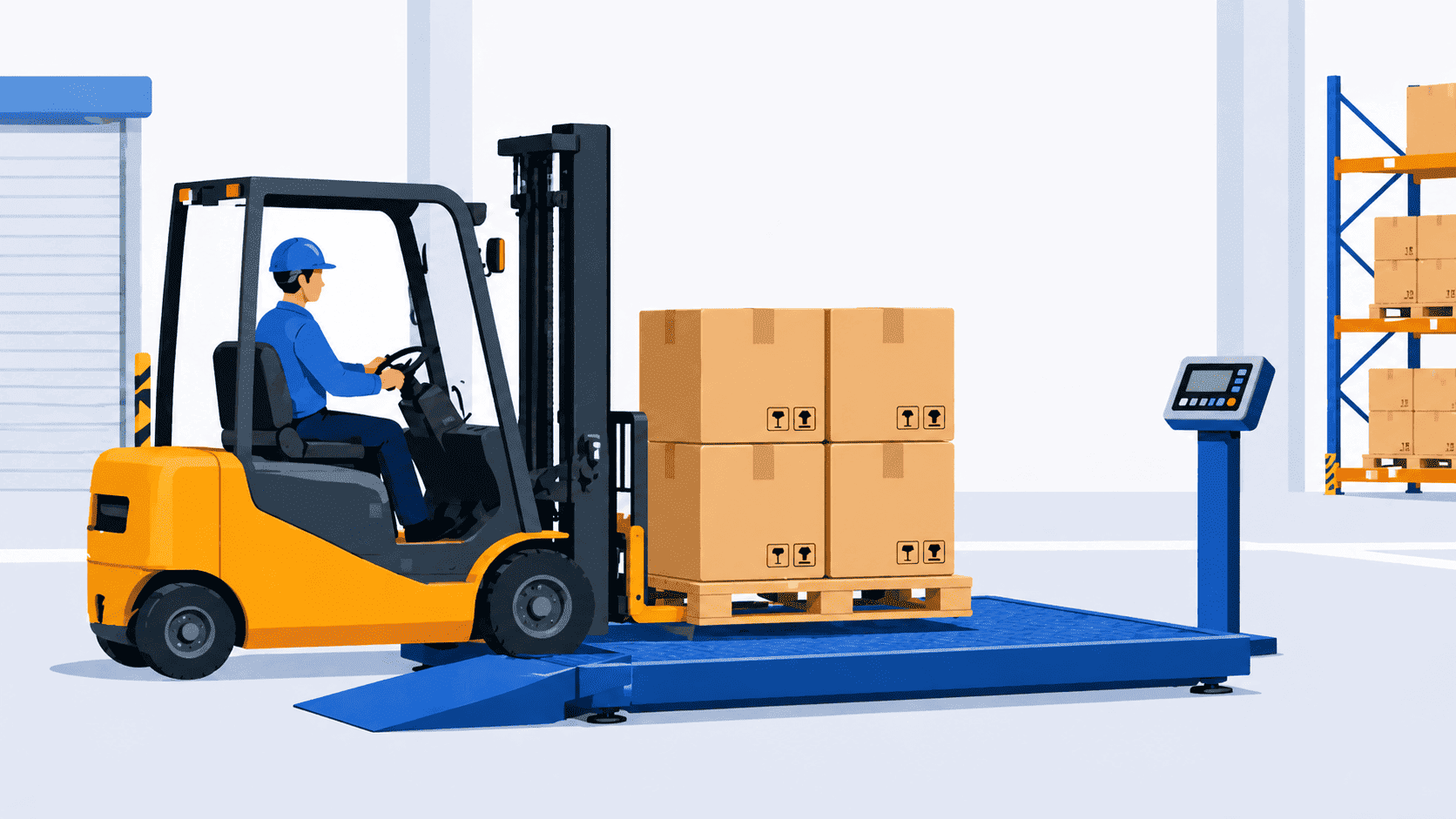
I once worked with a grain distributor near Guadalajara. They moved 80 pallets per shift with electric pallet jacks. Their old platform scale lasted four months. We replaced it with a 3-ton low-profile floor scale and a 1.2-meter ramp. Two years later, it still works fine.
What I Check Before Recommending a Floor Scale
| Factor | My Rule |
|---|---|
| Capacity safety margin | 2x max static load |
| Deck height | Below 100 mm for pallet jacks |
| Ramp length | At least 4x the deck height |
| Frame thickness | 6 mm steel or more for forklift use |
| Load cell rating | IP67 minimum, IP68 for wet zones |
Floor scales are not just bigger platforms. They are built for shock, vibration, and side loading. If your team uses forklifts, do not save money on the deck thickness. You will pay more later in repairs and downtime.
When Does a Platform Scale Work Better for Boxes, Drums and Small Pallets?
Not every job needs a heavy floor scale. For lighter goods loaded by hand, a floor scale is overkill and slows down the operator.
A platform scale works better for manual loading of boxes, drums, sacks, and small pallets under 500 kg. The raised deck saves the operator from bending. Smaller deck sizes fit tight spaces. Capacities from 60 kg to 1,500 kg cover most packaging and shipping tasks.
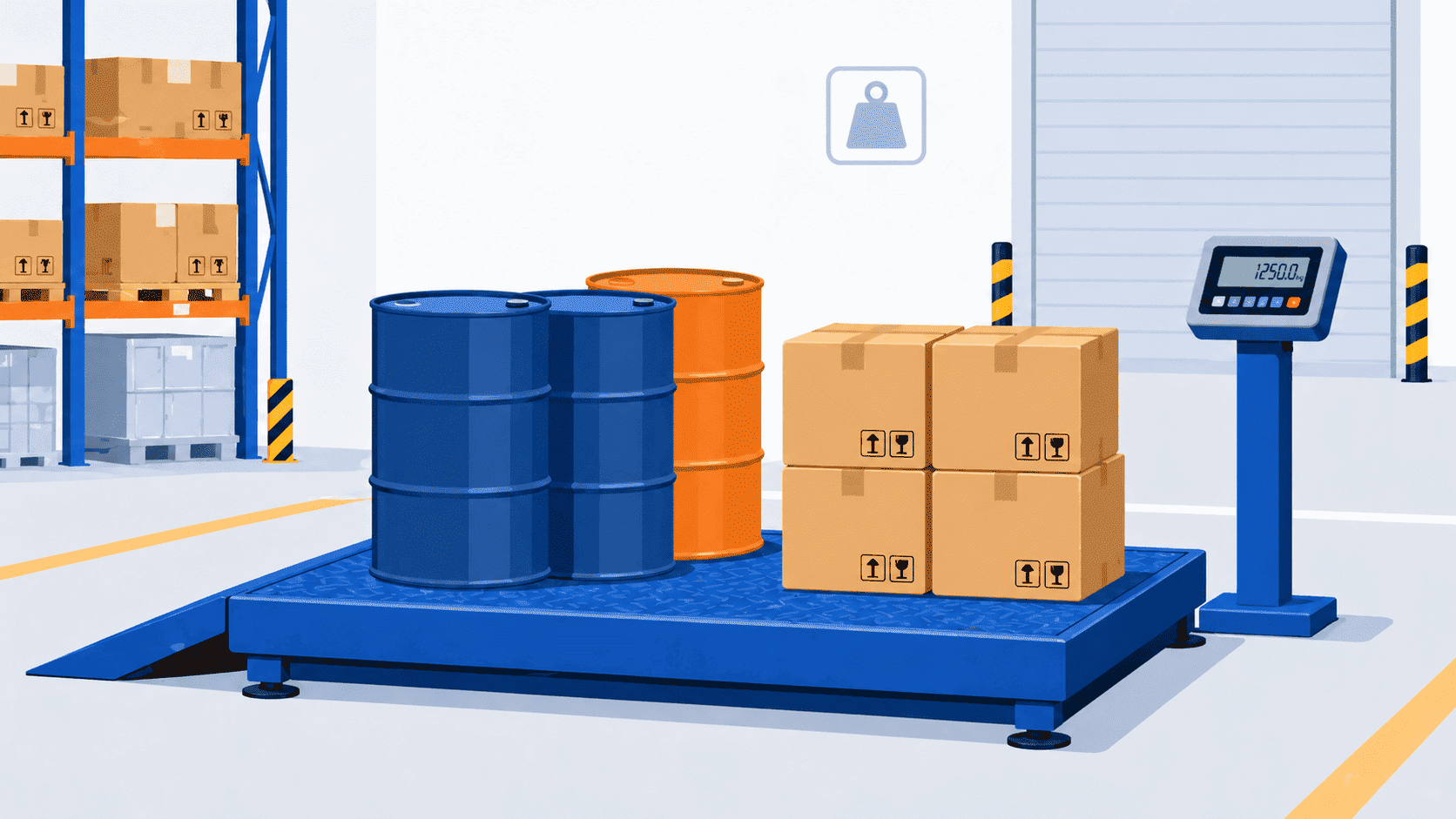
In food and chemical plants, I often recommend stainless steel platform scales. Drums leak. Powders spill. The scale must be easy to wipe down every shift. A floor scale with hidden corners traps residue and creates contamination risk.
Platform Scale Picks by Industry
| Industry | Typical Load | Recommended Deck |
|---|---|---|
| Food packing | Boxes, trays | Stainless 600x800 mm |
| Chemicals | 200 L drums | Stainless with drainage |
| Logistics | Parcels, small pallets | Painted steel 800x1000 mm |
| Light manufacturing | Bins, totes | Painted steel 500x600 mm |
A platform scale at the right height also protects worker backs. I tell my clients ergonomics is not a luxury. Fewer injuries means fewer sick days and lower insurance costs. The math always works out.
How Do I Decide by Capacity, Deck Size, Ramp Design and Cleaning Needs?
Buyers often look at price first and specs second. That order is wrong. I ask my clients to write down three numbers before we even talk about brands or models.
Decide by recording three data points first: maximum single-item weight, maximum item footprint, and daily weighing frequency. Then match capacity to 2x the max load, deck size to 1.2x the max footprint, ramp angle below 7 degrees, and cleaning needs based on industry hygiene rules.
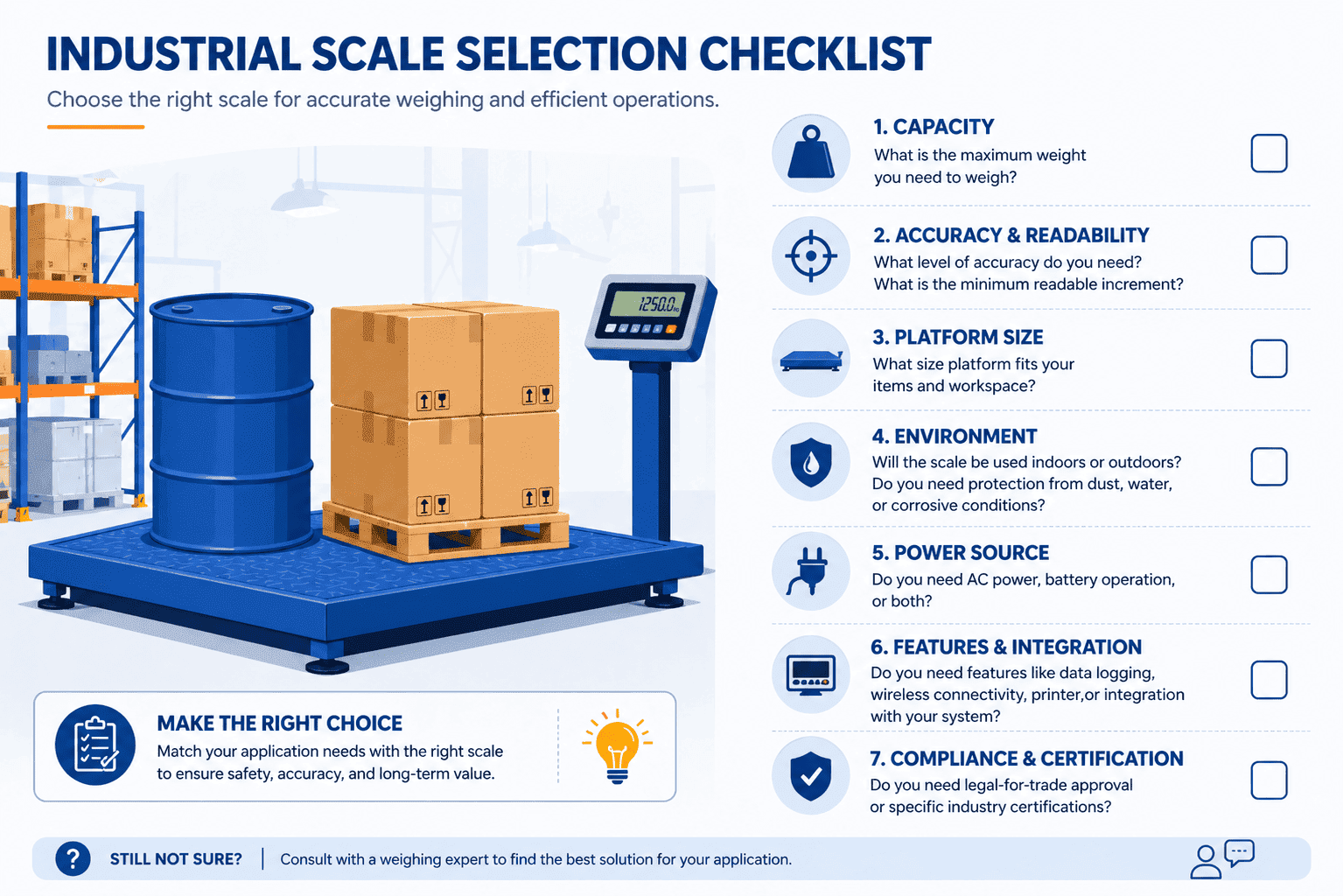
Carlos, one of my long-time clients, used this method last year. His team measured everything for one week. They found 90% of loads were under 800 kg, but one daily shipment hit 2.2 tons. We sized the scale at 5 tons. No surprises since.
My Four-Point Selection Framework
| Step | Question to Answer | Common Mistake |
|---|---|---|
| 1. Capacity | What is the heaviest load, plus impact factor? | Sizing for average, not peak |
| 2. Deck size | Will the largest pallet fit with margin? | Deck too small, edge errors |
| 3. Ramp | Can the pallet jack roll up safely? | Ramp too short and steep |
| 4. Cleaning | Can it be washed daily without damage? | Hidden corners, rust traps |
Price matters, but only after these four points are clear. A cheap scale that fails in one year costs more than a quality scale that lasts ten. I always remind buyers: you are not buying a product, you are designing a weighing station.
Conclusion
Choose your industrial scale by loading method, not size. Measure your loads, plan your station, and the right scale will be obvious.