













On this page

Heavy rains flood truck scales and stop your work. Broken scales cost you lost time and money. You need above-ground systems with waterproof parts to keep your business running.
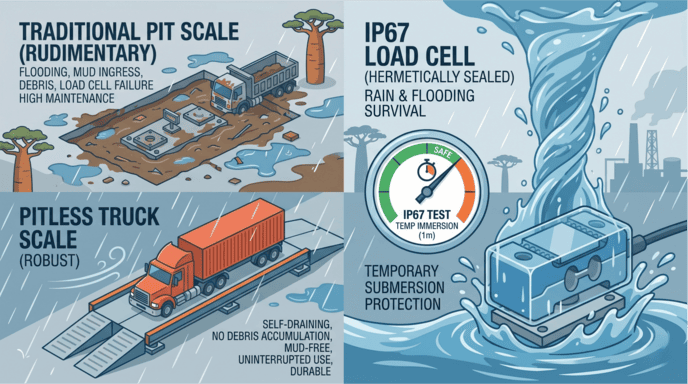
Pitless truck scales1 and IP67 load cells survive heavy storms because they sit high above the dirt on a concrete deck2. This design stops water from collecting, while the laser-welded IP67 load cells block out mud to give you accurate weight readings all year round.
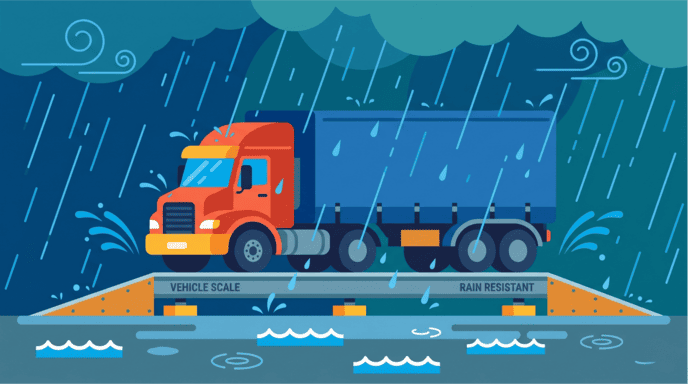
Do not let a bad storm wash away your hard work and profits. Read on to see exactly why these design choices stop scale failures before they can even start.
The Pit Scale Trap: How Torrential Rains Turn Traditional Weighbridges into Expensive Swimming Pools?
Pit scales sit below ground level and gather water fast. Flooded pits drown your weighing system. You must pull your scale out of the dirt to stop this damage.
Rain turns pit scales into swimming pools because gravity pulls water and mud down into the concrete hole. When drains fail during heavy storms, the water rises fast. This covers the load cells, shorts out the power, and stops all weighing operations immediately.
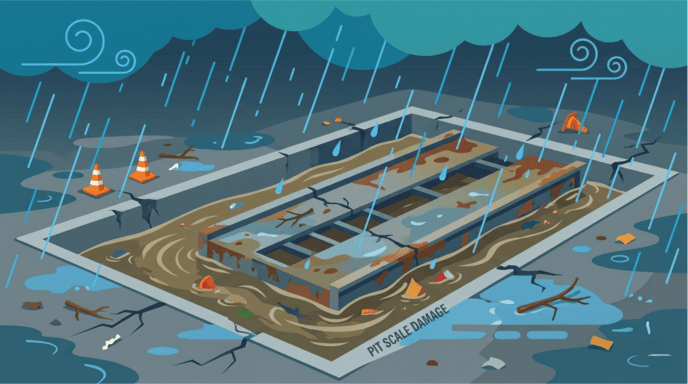
The High Cost of Pit Scale Flooding
I saw this disaster first-hand a few years ago at a busy cocoa export center in Accra, Ghana. A very heavy storm hit during the night. It filled the area with water and blocked the drains. When I got there, the operations manager was standing in the pouring rain. A tired crew was trying to pump dirty water out of their pit scale hole.
The junction box and load cells were under muddy water for six hours. We finally turned on the scale box. The screen flashed a negative 4,000 kg error. The cheap rubber seals broke down in the hot air. Water got inside and ruined the whole system. That one wet morning stopped their export work for a full week. They lost a huge amount of money.
Why Drains Are Never Enough
You might think a good drain will solve this problem. But in a big storm, drains clog with leaves and dirt in just a few minutes. Here is a clear breakdown of what fails in a pit scale during heavy rain:
| Component in Pit | Failure Cause | Effect on Business |
|---|---|---|
| Sump Pump3 | Power loss or blocked pipe | Pit fills with water rapidly |
| Thick Steel Beams | Sitting in deep wet mud | Rust spreads fast on metal |
| Core Electronics | Water pressure breaks basic seals | Full weighing system failure |
If you put your scale in a deep hole, you will always fight water.
Mud, Moisture, and Rust: The Structural Danger of Poor Drainage and Trapped Debris?
Wet mud sticks to steel beams inside a scale pit. This trapped moisture slowly eats the metal away. You need open air to keep the scale dry and strong.
Poor drainage traps mud and moisture under your weighbridge. This trapped dirt holds water against the metal parts of the scale for many weeks. The constant wetness causes deep rust, weakens the main steel beams, and forces you to pay for big repairs.
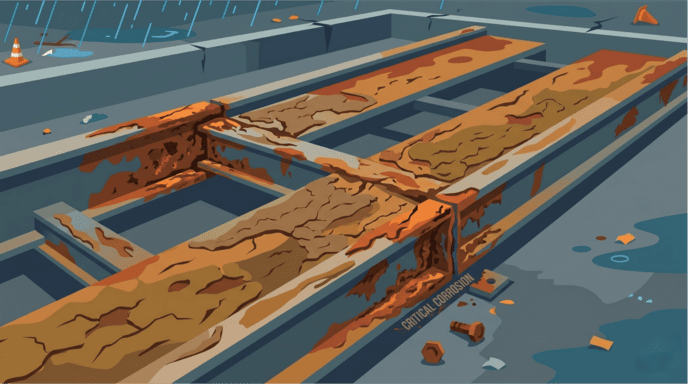
The Hidden Threat Under Your Trucks
Steel is very strong, but sitting water is its biggest enemy. In places with thick mud and heavy rain, the space under a truck scale collects a lot of dirt. Every time a big heavy truck drives onto the platform, it drops more soil, rocks, and leaves into the gap. Over time, this makes a thick wet blanket of mud that presses right against the steel supports.
I have crawled under old scales to look at the damage. The top platform often looks fine. But underneath, the muddy water creates a perfect space for bad rust. The metal turns soft and breaks off in big flakes. You do not see the problem until a heavy truck bends the rusty frame entirely.
The Life Cycle of Trapped Moisture
When metal stays wet, it breaks down. Good air flow is the best way to stop rust. Let us look at how wet dirt kills a truck scale over time:
| Time Passed | State of the Mud | Result on the Steel |
|---|---|---|
| Day 1 | Wet dirt drops from truck tires | Dirt rests fresh on metal beams |
| Week 2 | Mud stays wet in the dark pit | Surface rust starts to form |
| Month 6 | Mud packs hard against the steel | Deep rust eats into the metal |
You must remove the mud quickly to save your scale, but a deep dark pit makes daily cleaning physical and very hard.
Beyond Water Resistance: The Crucial Engineering Difference Between IP65 and IP68 Electronics?
Standard IP65 sensors let water sneak inside during big floods. Dead sensors mean you can not weigh anything. You need IP68 ratings to survive fully underwater loads safely.
IP65 load cells only stop light spraying water from a cleaning hose. IP68 load cells can sit totally deep underwater for a long time and still work perfectly. IP68 uses special laser welding to create a solid metal barrier that absolutely no water can pass through.
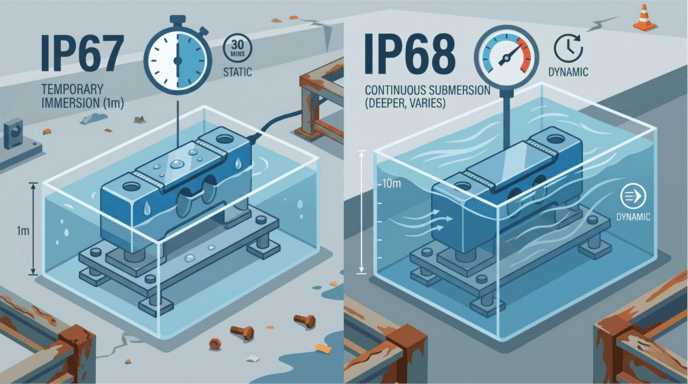
Why Cheap Rubber Seals Fail Fast
Think back to the ruined scale I saw in Ghana. That factory used simple IP65 load cells with standard rubber rings for seals. In cold dry rooms, rubber works fine. But in hot and wet tropical climates, rubber breaks down fast. It cracks, gets hard, and pulls away from the metal case. When the flood water rose that hot night, it pushed right past those weak rubber rings.
Water and electronics do not mix at all. Even one tiny drop of water inside a load cell will change the electrical signal. This gives you bad weight readings. For true protection in bad weather, the scale seal must be made of metal, not rubber.
The Power of Laser Welding
To make a part truly waterproof, we use laser welding. The IP68 design melts the metal edges together so the case becomes one single solid piece of steel.
| Protection Rating | Water Test Type | Best Use Case |
|---|---|---|
| IP65 | Light spray of water | Indoor dry warehouse floor |
| IP67 | Short drop in shallow water | Basic outdoor platform scale |
| IP68 | Deep water for long periods | Heavy rain truck scales |
An IP68 load cell holds up to the worst weather because it simply has no holes for water to get inside.
Above-Ground Reliability: How HENER’s Pitless Design Defeats the Monsoon Season?
You cannot control the heavy weather or stop floods. Hoping for no rain is a bad business plan. A HENER pitless scale removes the risk of water damage completely.
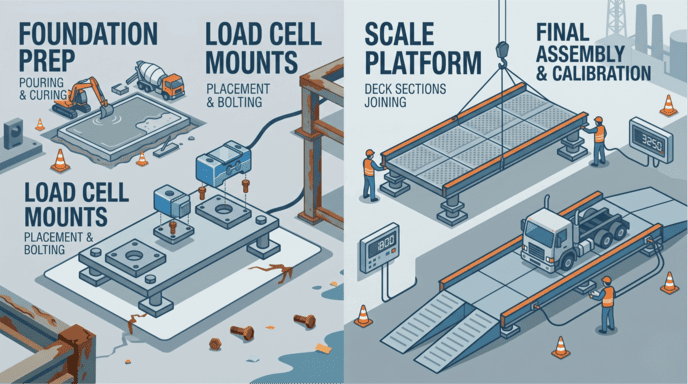
HENER pitless scales defeat monsoon seasons because they sit high above the ground. This open design lets wind dry the steel and allows easy cleaning with a water hose. Even if a flash flood hits, the water flows right past the raised platform and IP68 load cells.
Elevating Your Weighing Operations
I tell every client that to beat bad weather, you must change your building plan. The HENER above-ground design fixes the flooding problem by taking the scale out of the hole. When the rain pours down loudly, it does not collect around the important electronic parts. The water just runs away over the flat ground and into the yard.
This above-ground design also cuts your daily maintenance time. The space under the platform is completely open. Your team can wash out the dirt and mud in a few short minutes with a simple pressure washer. You never need to hire a truck to pump out a flooded pit again.
Engineered for Peace of Mind
Our systems are built to not care if it rains. We marry the above-ground approach with the best waterproof parts on the entire market.
| Design Feature | Immediate Benefit | Long-Term Advantage |
|---|---|---|
| Above-Ground Frame | Rain water flows away | No structure rust from standing mud |
| Open Side Access | Fast and easy hose cleaning | Lower daily labor and repair costs |
| IP68 Electronics | Fully impervious to flash floods | Zero downtime during heavy rain storms |
When you build a system that works with the environment, you make sure your hard work never stops.
Conclusion
Heavy rains will destroy pit scales and halt your business. By choosing above-ground truck scales and fully sealed IP68 electronics, you protect your profits and guarantee smooth operations every day.
Explore how this design reduces flooding risk, simplifies cleaning, and keeps weighing operations running during severe storms. ↩
Understand how the deck supports elevation, drainage, and durability to protect your scale from water buildup and structural issues. ↩
Discover why pumps often become weak points in pit systems and what this means for flooding risk and maintenance costs. ↩