













On this page

Struggling to track massive vehicle weights accurately? Inaccurate measurements can lead to costly fines1, lost revenue, and disputes. A truck scale is the professional solution for precise, reliable business data.
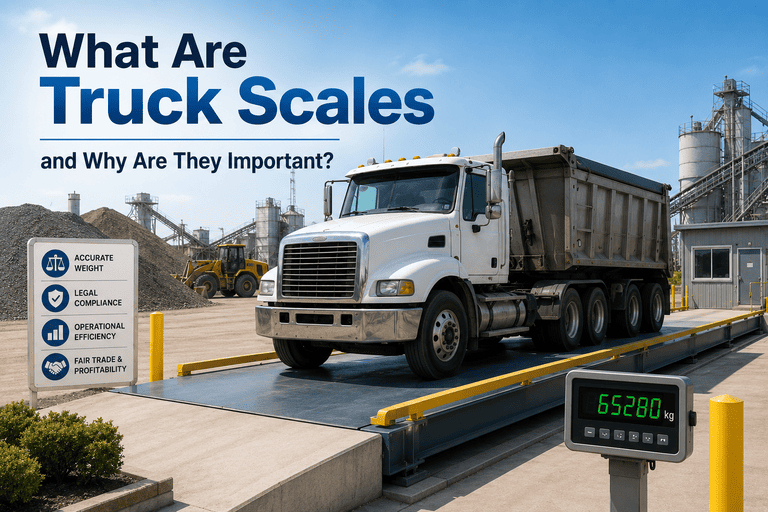
A truck scale, also known as a weighbridge, is a large set of scales permanently installed on a concrete foundation to weigh entire vehicles. Its importance lies in ensuring fair trade2, legal compliance, and efficient operational control in industries like logistics, mining, agriculture, and manufacturing.
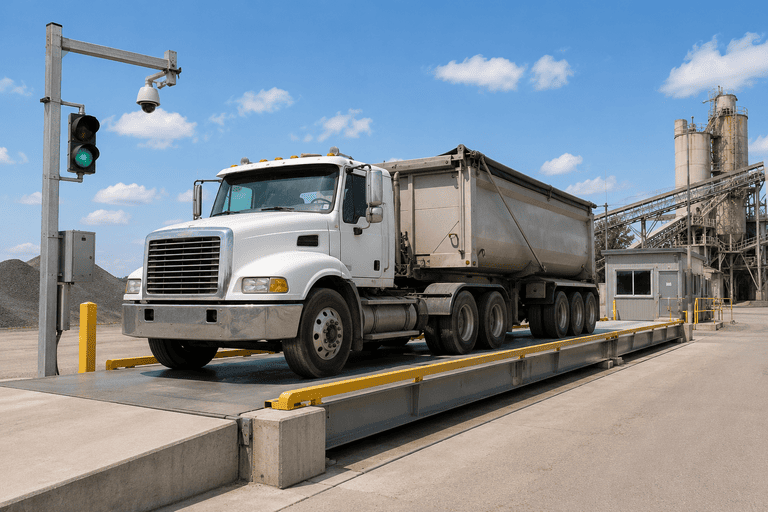
When people first hear about what I do, they often picture a giant bathroom scale for trucks. In a way, they're not wrong. But the reality is so much more interesting. A truck scale isn't just a weighing tool; it's a critical piece of infrastructure that sits at the heart of many businesses. It can be a cash register, a compliance officer, and an inventory manager all in one. But to really understand its value, we first need to look under the hood and see how these powerful systems actually work. Let’s dive into what makes them tick and why they are so essential.
How Does a Truck Scale Actually Work?
You see a flat steel platform, a truck drives on, and a number appears. It seems simple, but the real work is hidden. Without understanding the basics, you can't judge quality.
A truck scale works using load cells, which are sensors placed under the steel platform, or deck. When a truck's weight presses down, the load cells convert that force into an electrical signal. This signal is then sent to a weighing indicator, which translates it into a readable weight.
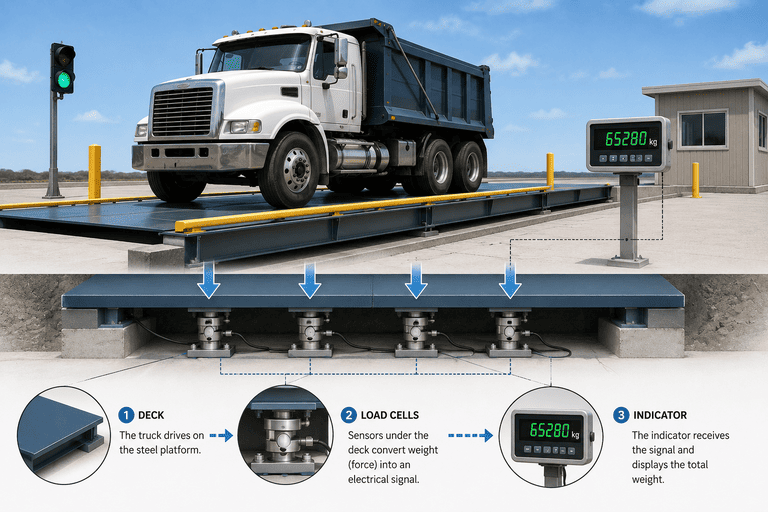
A question I often get from first-time buyers is about what makes one scale better than another. It really comes down to how its core parts work together. Think of it as a team where each member has a specific job.
The Core Components of a Truck Scale
| Component | What It Is | Why It Matters |
|---|---|---|
| The Platform (Deck) | The steel surface the truck drives onto. | Its strength and size must match your heaviest and longest trucks. Thicker steel means more durability3 for heavy, constant use. |
| Load Cells | The electronic sensors underneath the platform. | These are the heart of the scale. High-quality load cells ensure accurate and repeatable measurements, even in harsh weather4. |
| Weighing Indicator | The digital display that shows the weight. | This is the brain. It not only shows the weight but can also connect to printers, computers, or software to record data. |
| Junction Box | A box that connects all the load cell cables. | It gathers signals from all load cells and sends a single, stable signal to the indicator, ensuring a balanced reading5. |
The process is simple and reliable. A truck drives onto the platform, its weight pushes down on the load cells, and the junction box combines their signals. Finally, the weighing indicator displays a precise weight. I always tell my clients that investing in quality load cells is like choosing a good engine for a car. It's the part you don't see, but it determines the performance and reliability of the whole system.
Why Is a Truck Scale So Important for Different Businesses?
You might think a truck scale's purpose is just to get a weight. But that weight means different things to different people. Misunderstanding its role could mean you're missing out on key benefits.
Truck scales are vital for business operations. In logistics, they prevent overloading and fines. In mining and agriculture, they ensure fair payment for bulk goods. In manufacturing, they track inventory and production output. Essentially, they provide the trusted data needed for financial transactions and operational control.
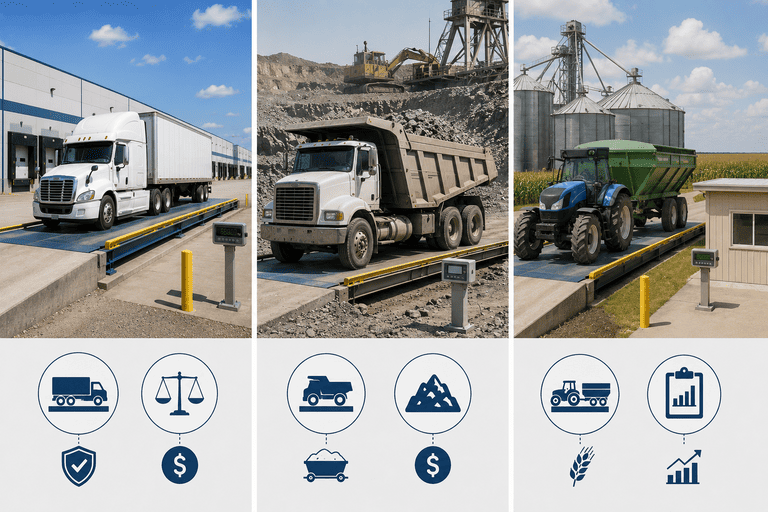
The "importance" of a truck scale is all about context. The same piece of equipment serves completely different goals depending on the industry. When a potential customer asks me why they need one, my first question is always, "What business are you in?" The answer tells me everything I need to know about what the scale will do for them. It’s not about buying a scale; it’s about investing in a solution for a specific business problem. This is where a truck scale proves its true value.
The Role of a Truck Scale Across Industries
| Industry | Primary Use Case | Business Impact |
|---|---|---|
| Logistics & Transportation | Checking vehicle weight before hitting the road. | Avoids expensive overweight fines and ensures road safety6. Optimizes load capacity without breaking the law. |
| Mining & Agriculture | Weighing bulk materials (like grain, ore, or gravel). | Ensures fair trade. You pay for or get paid for the exact amount you transport. This is often called a "legal-for-trade7" application. |
| Manufacturing & Warehousing | Tracking raw materials coming in and finished goods going out. | Provides accurate data for inventory management, production control, and preventing material loss or theft8. |
| Waste Management | Weighing garbage trucks to calculate disposal fees9. | Creates a fair and transparent billing system based on the weight of the waste collected from customers. |
For a scrap metal yard, the scale is their cash register, ensuring every transaction is fair. For a transport company, it's their compliance tool, protecting them from fines and legal trouble. Understanding this distinction is the first step toward making a smart purchase. It shifts the focus from the hardware itself to the business results it delivers day in and day out.
What Key Factors Should You Consider Before Buying a Truck Scale?
Choosing the right truck scale can feel overwhelming with so many options for size, capacity, and type. Making the wrong choice can lead to a scale that doesn't fit or wears out quickly.
Before buying a truck scale, consider four main things: weighing capacity (the heaviest truck you'll weigh), platform size (the longest truck), installation type (pit or pitless), and the working environment (indoor, outdoor, wet, or corrosive). These factors will determine the right model for your specific needs.
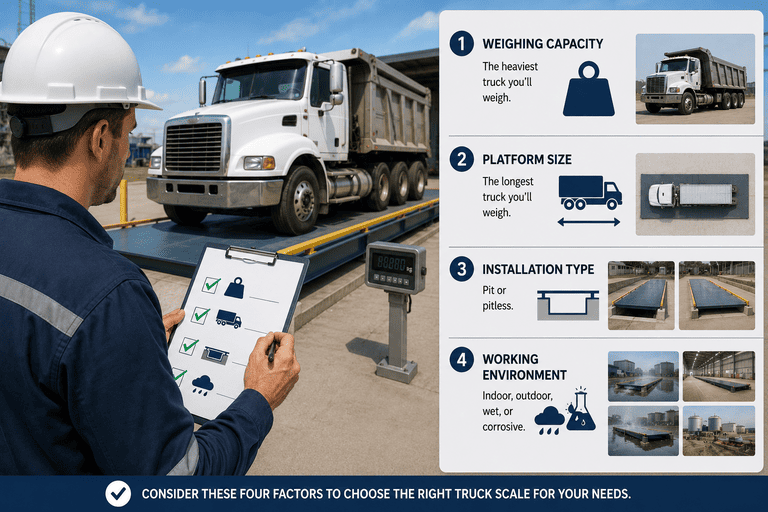
The most common misunderstanding we see is the assumption that one "standard" truck scale fits all situations. Nothing could be further from the truth. I always guide customers through a few simple questions to narrow down what they truly need. Answering these questions honestly will protect your investment and ensure you get a tool that is perfectly matched to your operation. A scale for a coastal port handling corrosive sea spray needs different protection than one in a dry, indoor warehouse.
Making the Right Choice: Key Questions to Ask
| Factor | Question to Ask Yourself | Why It's Important |
|---|---|---|
| Weighing Capacity | What is the absolute heaviest vehicle, fully loaded, that will use this scale? | You need a scale that can handle your peak loads safely. It's always wise to choose a capacity slightly higher than your heaviest expected load10. |
| Platform Size | What is the longest truck or vehicle combination that needs to be weighed? | The entire vehicle must fit on the platform to get an accurate weight. Measure the wheelbase of your longest truck to be sure. |
| Installation Type | Do you have enough space for ramps (pitless), or do you need a flush installation (pit-mounted)? | Pitless scales are easier to clean and maintain but require more space. Pit-mounted scales are space-saving but require proper drainage to prevent water damage11. |
| Working Environment | Will the scale be outdoors, exposed to rain and snow? Is the area dusty or corrosive? | The environment dictates the materials (e.g., steel vs. stainless steel) and the level of protection needed for electronic components (like an IP rating12). |
Thinking through these points ensures you get a tool that works for your specific job for years to come. It prevents costly mistakes and guarantees your scale will be a reliable asset, not a constant headache.
Conclusion
A truck scale is more than just a large weighing device. It's a vital business tool that provides the trust and data needed for commerce, compliance, and operational control.
References
- What are the consequences of overloading your car or truck? - Quora
- Legal-for-Trade vs. Non-Legal-for-Trade | SWSCALE (Southwestern ...
- [PDF] Engineering Specification Low Profile Steel Deck Truck Scale
- [PDF] Observed Temperature Effects on Load Cells - OSTI
- How Different Truck Scales and Truck Weigh Stations Work - B-TEK
- [PDF] Heavy and Overweight Vehicle Brake Testing - ROSA P
- Legal-for-Trade vs. Non-Legal-for-Trade | SWSCALE (Southwestern ...
- Top Benefits of Truck Scales for Industrial Operations - AERM
- Annual Solid Waste Fee and Frequently Asked Questions
- How To Calculate the Proper Truck Scale Capacity
- Weighbridge Cleaning: An Owner's Guide | PDF
- IP code - Wikipedia