













On this page

I have seen good axle scale readings turn unstable fast. The problem looked like equipment failure, but the real cause was often the site.
Portable axle scale accuracy depends on ground flatness, surface hardness, scale level, ramp setup, vehicle speed, braking behavior, wheel position, and cable or display placement. I always check these field conditions before I judge the scale itself.
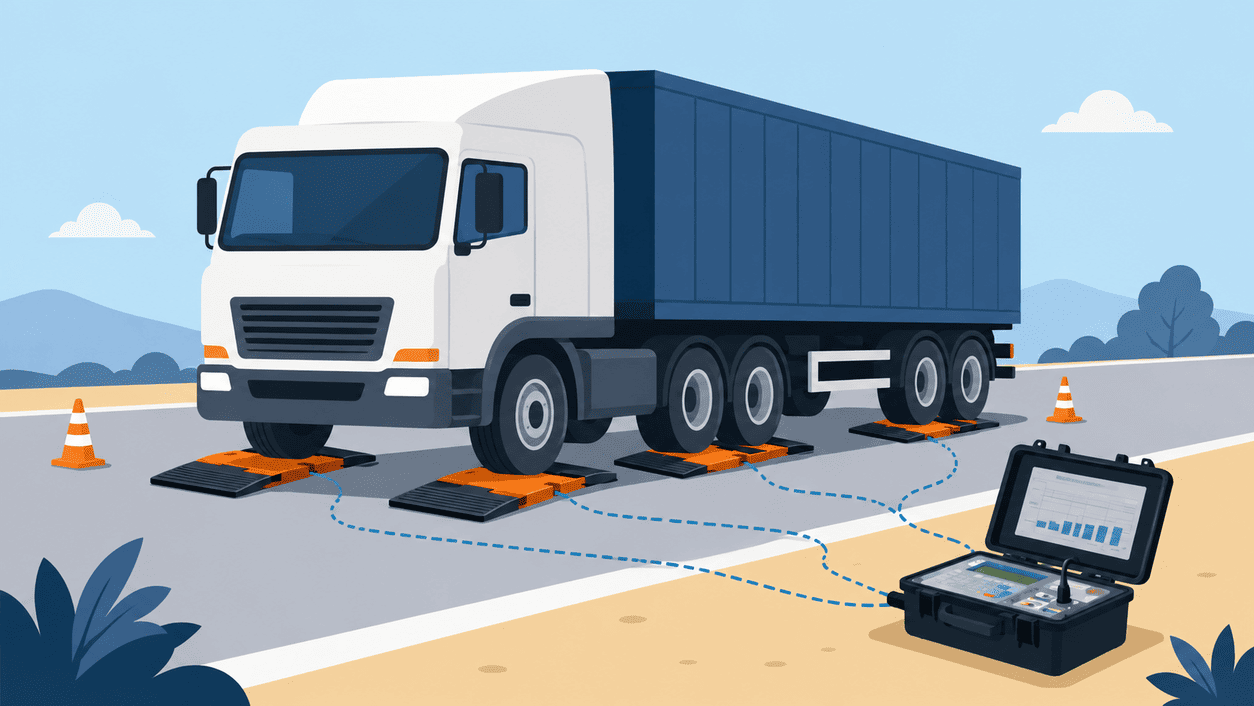
I like portable axle scales because I can move them where the work happens. I can weigh trucks near a farm gate, a mine road, a timber yard, or a temporary loading area. Still, I never treat “portable” as “place anywhere.” Axle weighing is more sensitive than many people expect. I measure one axle or one axle group at a time, so the vehicle position and movement can change the result. If I ignore the site, I may blame the load cell, the indicator, or the scale pad. If I check the site first, I often find the real answer.
Ground Flatness: Why Do Uneven Surfaces Create Axle Load Errors?
I often start with the ground. If the surface is uneven, the axle load can shift before the driver even reaches the scale.
Uneven ground creates axle load errors because the truck body tilts and suspension moves. I need a flat, hard, and level surface so each wheel applies force to the scale pad in a stable way.
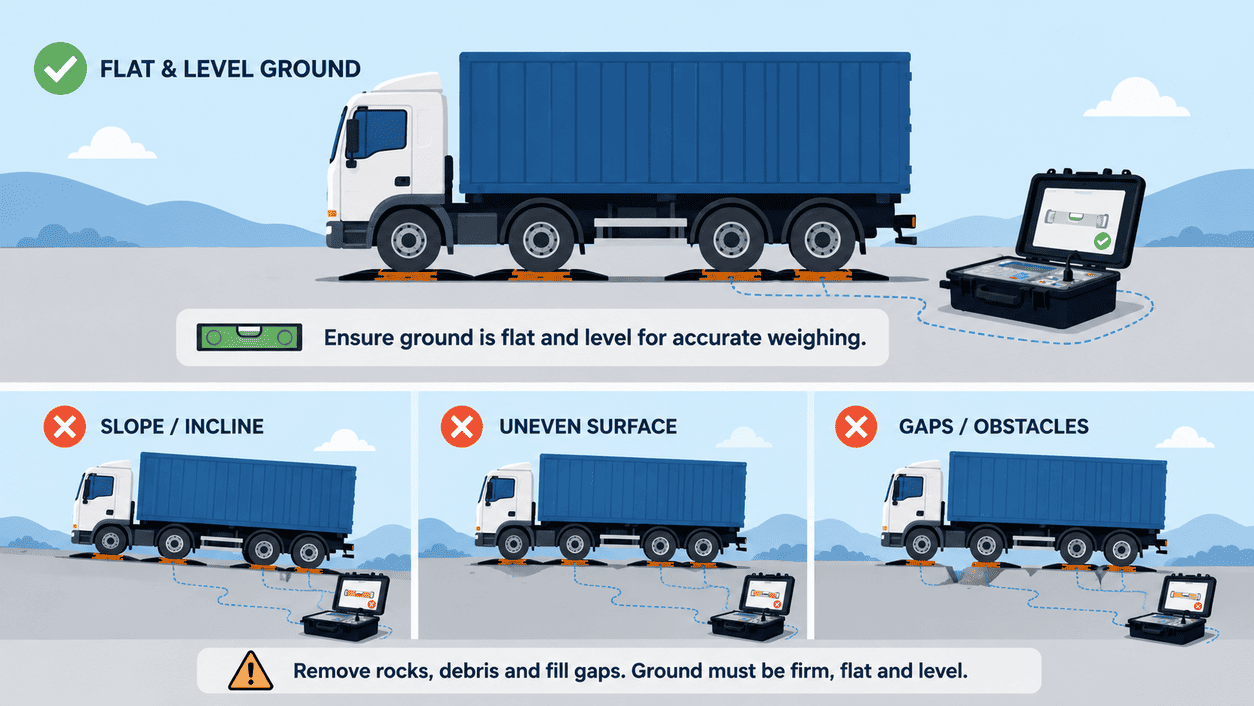
I check three ground conditions first
I check flatness, hardness, and level before I power on the indicator. I do this because a portable axle scale reads the force applied at that moment. It does not correct a bad road by itself. A small slope may look harmless, but it can move part of the load forward, backward, left, or right. Soft soil creates another problem. The scale pad may sink a little when the truck wheel comes on it. Then the pad angle changes, and the load cell no longer sees the same force path. I have seen this on farms after rain and on construction sites with loose gravel.
| Field check | What I look for | Why I care |
|---|---|---|
| Surface flatness | No bumps, holes, or twisted ground | I want both wheels to sit evenly |
| Surface hardness | Concrete, compacted asphalt, or strong steel plates | I do not want the pad to sink |
| Scale level | Pads sit at the same height | I want stable axle load transfer |
I treat left and right wheel height as one condition
I do not only check the pad under one wheel. I check both sides. If the left wheel is higher than the right wheel, the truck leans. Then the axle group does not load both pads evenly. This issue becomes worse on wide trucks, high center loads, and vehicles with stiff suspension. I usually use a simple level tool and visual check. If the ground is rough, I place steel plates or choose another spot. I prefer to fix the site before I start weighing, because repeated wrong readings waste more time than setup.
Approach and Exit Area: What Role Do Ramps, Speed and Wheel Alignment Play?
I do not only look at the scale pad. I also look at the road before and after it, because the truck is still moving.
The approach and exit area affect accuracy because the wheel must enter, stand, and leave the weighing zone smoothly. I use matched ramps, steady speed, and straight wheel alignment to reduce load shift.
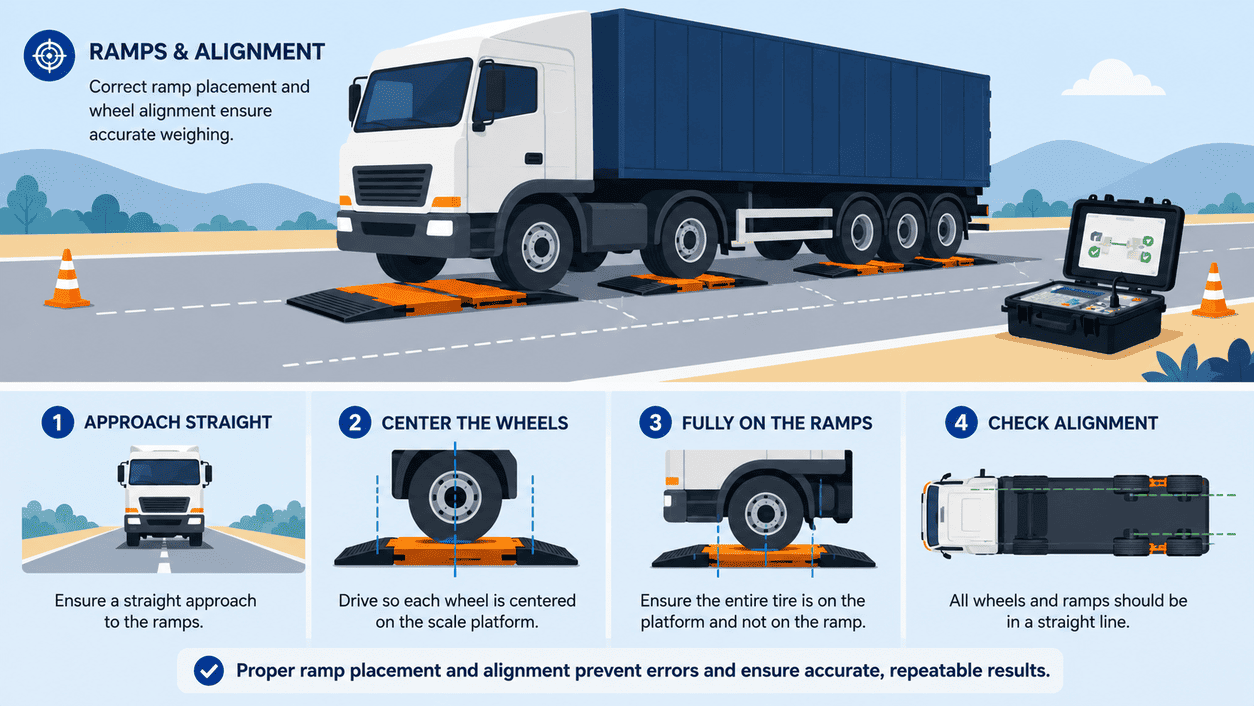
I make the truck path smooth
A portable axle scale needs a clear approach area. I want the driver to move in a straight line. I also want enough distance for slow and stable movement. If the driver has to turn sharply just before the pads, the wheels may not land in the active weighing area. If the driver climbs a ramp too fast, the suspension may bounce. If the exit area drops away, the load can shift as the axle leaves the pads. These details look small, but they matter because axle weighing records the load in a short moment.
| Setup item | Good practice | Common field problem |
|---|---|---|
| Approach length | Enough straight distance before pads | Driver turns at the last second |
| Ramp height | Ramp matches pad height | Wheel hits pad edge |
| Exit area | Flat and clear after pads | Truck drops off or twists |
| Wheel alignment | Wheels centered on pads | Tire touches edge or misses active area |
I match the ramp to the scale height
I do not like steep, short, or mismatched ramps. A ramp is not only a bridge. It controls how the tire transfers weight onto the pad. A sudden tire impact can create a short high reading. A tire that stops half on the ramp and half on the pad can create a low or unstable reading. I also check ramp width. If the ramp is too narrow, the driver may correct steering while the axle is on the scale. That can add side force and reduce repeatability.
I use speed control as a setup rule
I prefer slow and steady movement. I do not want the driver to crawl with stop-and-go motion, and I do not want the driver to rush. A smooth low speed helps the suspension settle. It also helps the operator record the same weighing point each time. When I train a team, I give one simple instruction: enter straight, keep steady speed, and stop only when the full axle is on the effective weighing area. That one sentence prevents many field complaints.
Vehicle Behavior: How Do Braking, Acceleration and Suspension Movement Affect Results?
I pay close attention to the driver. A careful driver can make a normal site work better, while poor driving can ruin a good site.
Braking, acceleration, and suspension movement affect axle readings because they change how weight moves across the vehicle. I need calm driving and full wheel contact to get repeatable axle weight results.
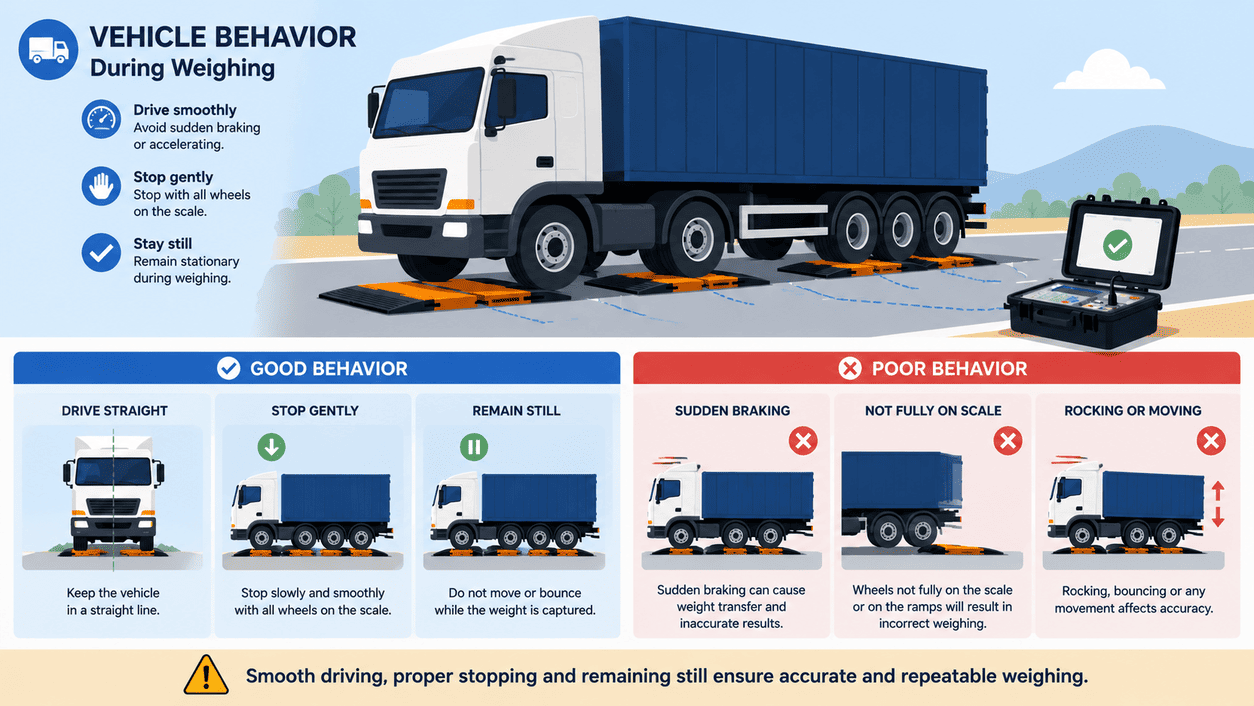
I watch the axle load shift
A truck is not a static block. It has springs, tires, brakes, and load movement. When the driver brakes, weight moves toward the front axle. When the driver accelerates, weight moves toward the rear axle. When the truck body rocks, each axle can show a different value even if the real cargo weight has not changed. I see this often with tankers, grain trucks, livestock trucks, and high-sided vehicles. The load may move inside the body, and the suspension may need time to settle.
| Vehicle action | What happens | What I do |
|---|---|---|
| Hard braking | Front axle reading may rise | I ask for gentle approach |
| Sudden acceleration | Rear axle reading may rise | I ask for steady throttle |
| Steering correction | Side load may appear | I guide the driver straight |
| Suspension bounce | Reading may fluctuate | I wait for the vehicle to settle |
I never record a reading during vehicle movement that is not stable
Some portable axle scales support dynamic weighing. Some field work uses static axle weighing. I still need clean movement in both cases. For static weighing, I wait until the wheel is fully on the pad and the value is stable. For dynamic weighing, I keep the speed within the recommended range. I do not mix both methods without a clear plan. If the team weighs one truck while stopping and the next truck while rolling, the data will not compare well.
I check full wheel contact as a basic rule
The tire must sit fully inside the effective weighing area. If only part of the tire is on the pad, the reading can be wrong. Dual tires need special care. Both tires must be supported correctly, and both sides of the axle must contact the pads at the same time. I have seen one wheel reach the pad before the other because the truck approached at a slight angle. The indicator then showed numbers, but the number did not represent the true axle load. I prefer a marked wheel path on the ground. Paint, chalk, cones, or guide boards can help the driver repeat the same path.
Cables, Power Supply and Display Position: Which Small Setup Details Matter?
I have learned not to ignore cables and indicators. Many “accuracy problems” start from simple setup details around the scale.
Cables, power supply, and display position matter because poor connections, crushed cables, weak batteries, and hard-to-read screens can cause unstable readings or wrong operation decisions. I check them before weighing starts.
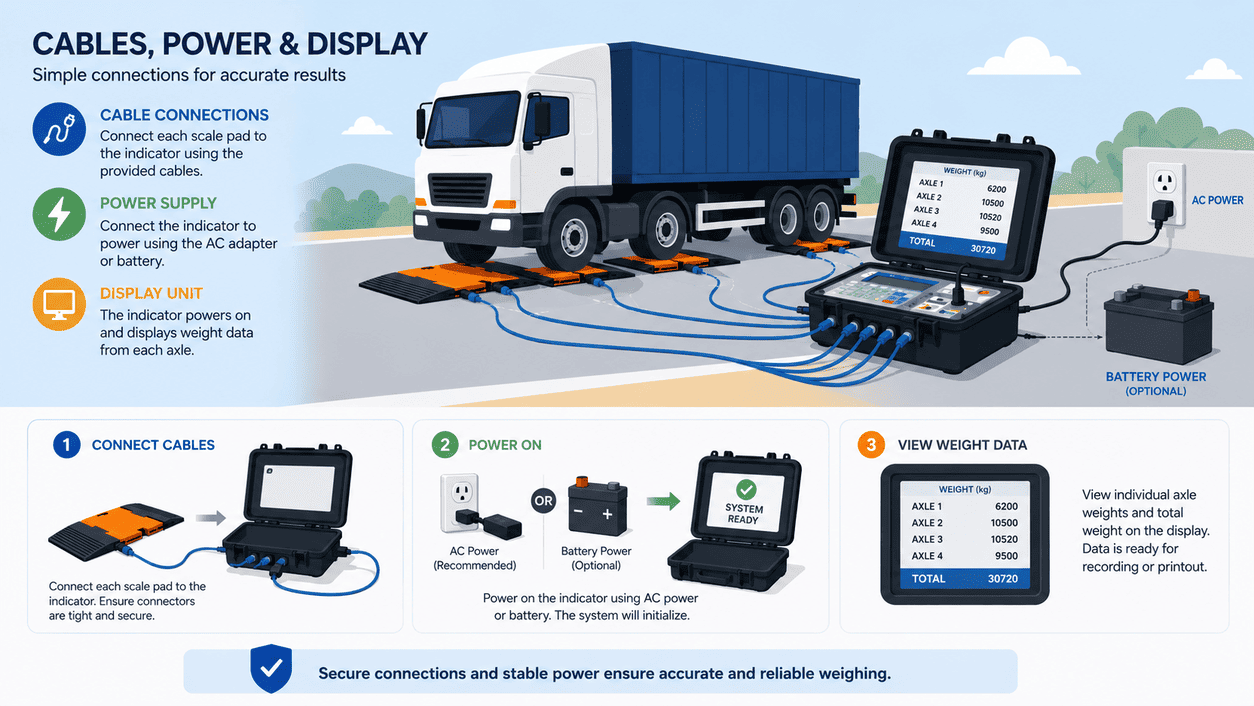
I protect the signal path
A portable axle scale works in a busy place. Trucks move. Forklifts pass. Workers walk across the site. Cables can be dragged, bent, or crushed if I do not plan their route. I never place signal cables where wheels can press them. I also avoid sharp edges, standing water, and high-traffic paths. A damaged cable may not fail at once. It may create intermittent readings that appear only when the cable is moved. This kind of fault is hard to trace during a busy loading day.
| Detail | My field check | Risk if ignored |
|---|---|---|
| Cable route | Away from tires and sharp edges | Signal loss or unstable values |
| Connectors | Clean, tight, and dry | Bad contact or drifting readings |
| Battery or power | Enough charge before work | Shutdown during weighing |
| Display location | Easy for operator to see | Late recording or wrong value |
I place the indicator where the operator can act fast
The display position affects operation quality. If the operator cannot see the indicator clearly, the operator may record too early or too late. I place the display where the operator can see the truck, the scale pads, and the reading. If the site has sun glare, rain, or dust, I use shade or a protected stand. I also make sure the driver and operator can communicate. A simple hand signal or radio call can prevent sudden braking or poor wheel placement.
I build one short pre-use checklist
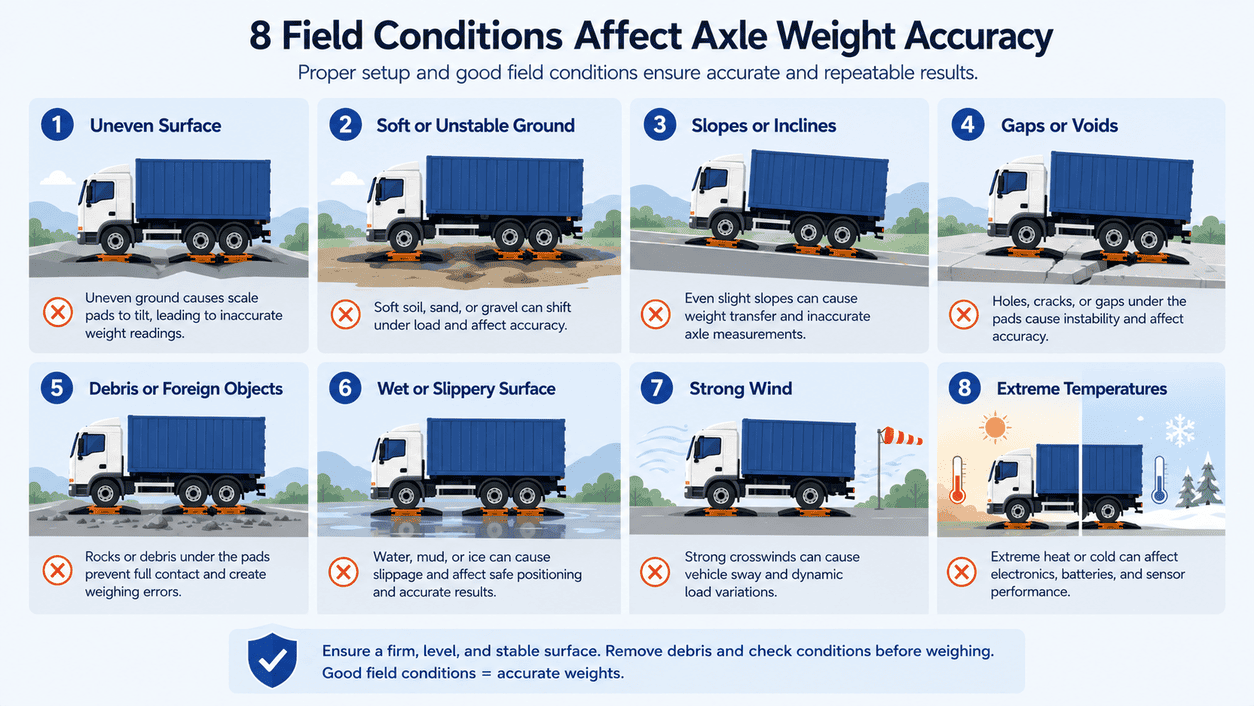
I like checklists because they remove guesswork. Before I begin, I check the ground, pad level, ramp fit, approach line, wheel path, speed plan, cable route, and display view. These are the 8 field conditions I care about most. I also check zero return before weighing and after several trucks. If the zero changes, I stop and inspect the site. I do not keep weighing just because the line is busy. Bad data creates bigger problems later, especially when the weight is tied to payment, compliance, or export records.
For HENER SCALE work, I see this as part of customer success. A portable axle scale should make field weighing faster, but it should also make the process clearer. I do not want a customer to doubt the scale when the real issue is a soft road, a steep ramp, or a driver who brakes on the pad. I would rather teach the setup method early. Then the scale performs closer to its design, and the customer trusts the numbers.
Conclusion
I trust portable axle scales when I control the site, guide the driver, protect the setup, and check the 8 field conditions before weighing.