













On this page

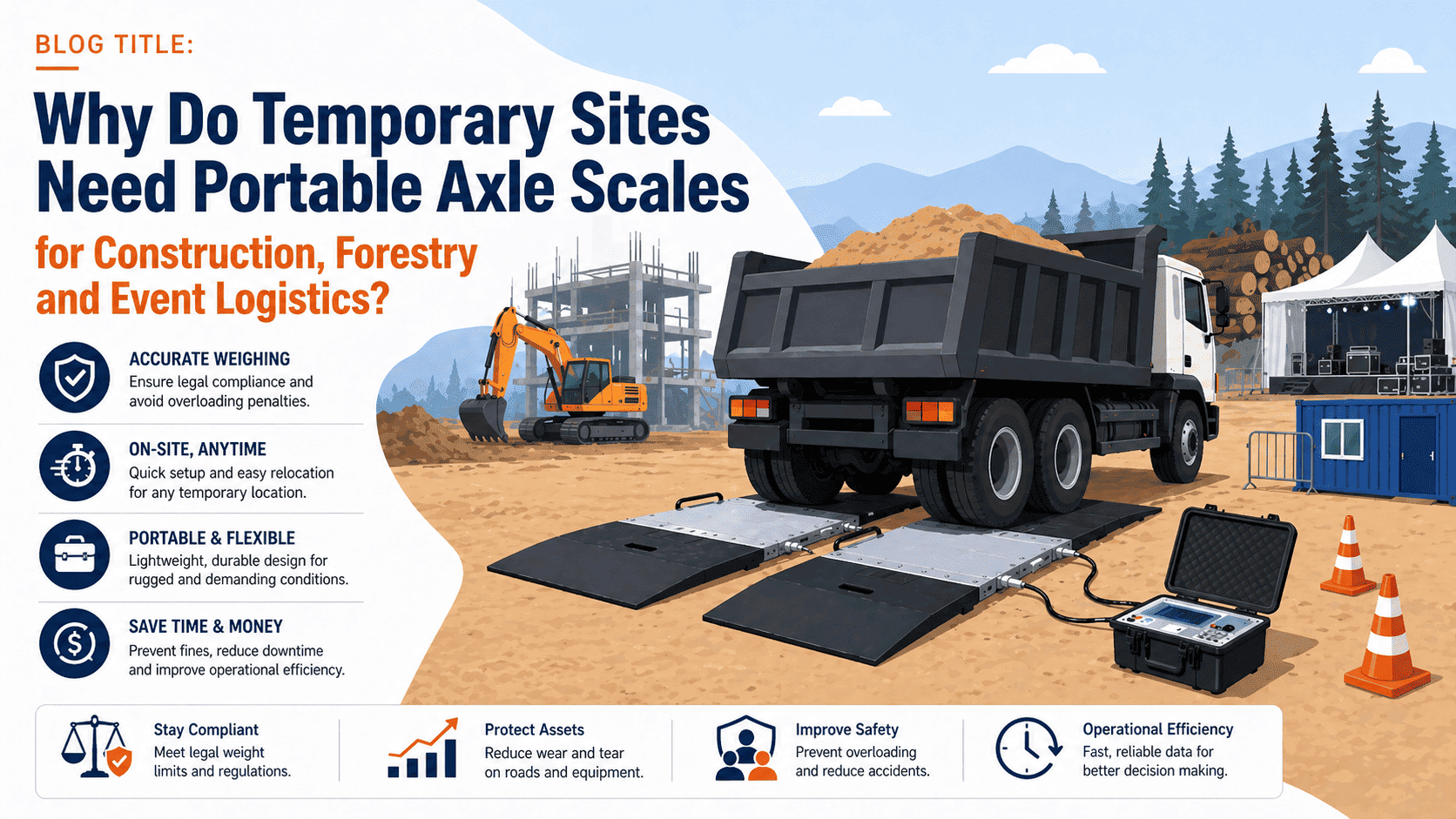
Every temporary site faces the same headache. Trucks come and go, loads vary, but overload fines and safety risks never take a break. A fixed truck scale is not always the answer.
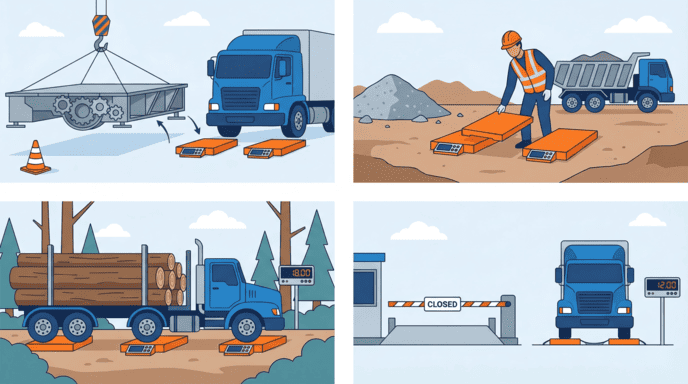
Portable axle scales give temporary sites a movable weight check point. They help construction, forestry and event logistics teams catch overloaded trucks before they hit public roads, avoid fines, protect safety, and record load data — all without the cost or construction time of a permanent truck scale.
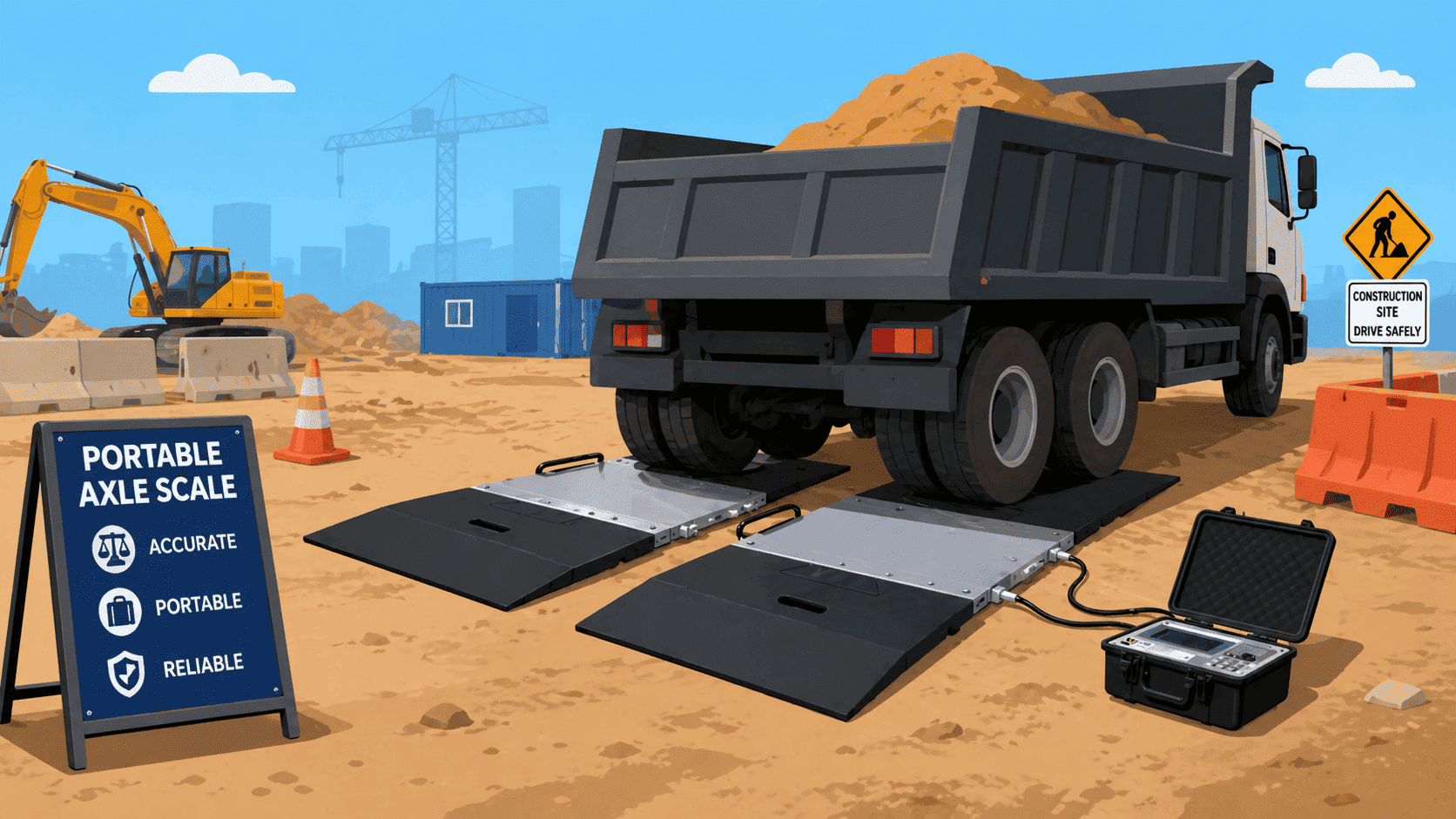
I have spent years walking through job sites, forest roads and event load-in zones. The one thing I keep seeing is the same gap: trucks leave without any weight check. Let me break down why portable axle scales fit these sites so well.
Why Can Temporary Sites Not Always Justify a Permanent Truck Scale?
A six-month project does not need a twenty-year scale foundation. But going without any weighing tool is also a risk I would not take.
Permanent truck scales need land, concrete work, cabling and often a long approval process. Temporary sites rarely run long enough to pay that investment back. Portable axle scales1 fill the gap with low setup time and full mobility.
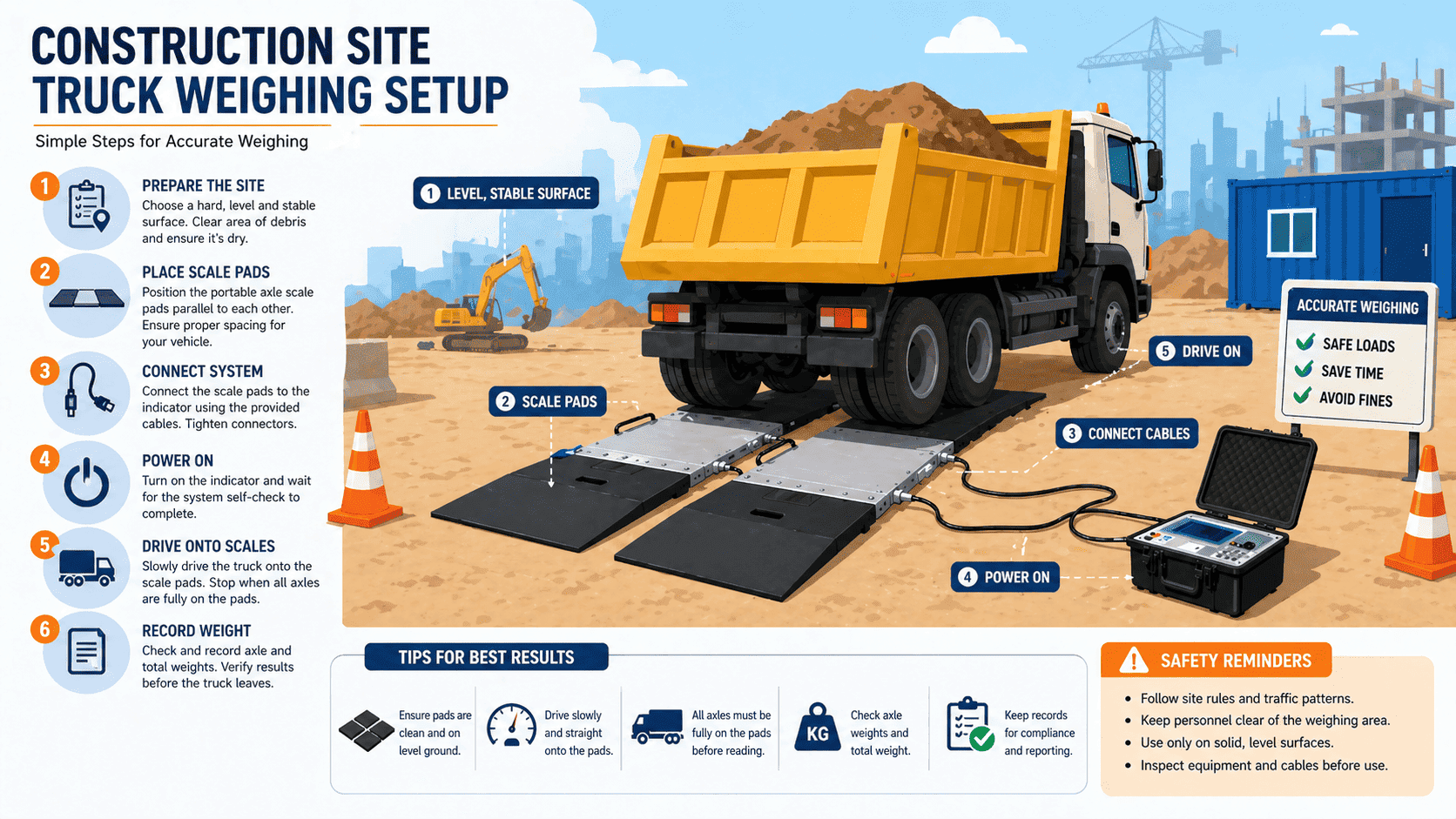
When I talk with site managers, the math is simple. A fixed scale can take weeks to build and cost a lot in civil works. A forestry cutting zone might move every three months. An event build-out may last only ten days. The return on a permanent scale is just not there.
Cost and Timeline Comparison
| Factor | Permanent Truck Scale | Portable Axle Scale |
|---|---|---|
| Setup time | 3–8 weeks | 30 minutes |
| Civil works | Required | Not required |
| Site mobility | Fixed | Fully movable |
| Best for | Long-term sites | Temporary or rotating sites |
| Initial investment | High | Moderate |
I always tell clients this: the question is not "which scale is better" but "which scale matches your site life cycle." A portable axle scale is built for sites that move, change or close within a short window.
How Do Portable Axle Scales Help Control Overloads Before Trucks Reach Public Roads?
Once a truck leaves the site, the overload becomes someone else's problem — and often your fine. I have seen this play out many times.
Portable axle scales2 act as a final check point at the site exit. They measure each axle group, total the gross weight, and let the driver adjust the load before entering public roads. This stops fines, road damage claims and safety incidents at the source.
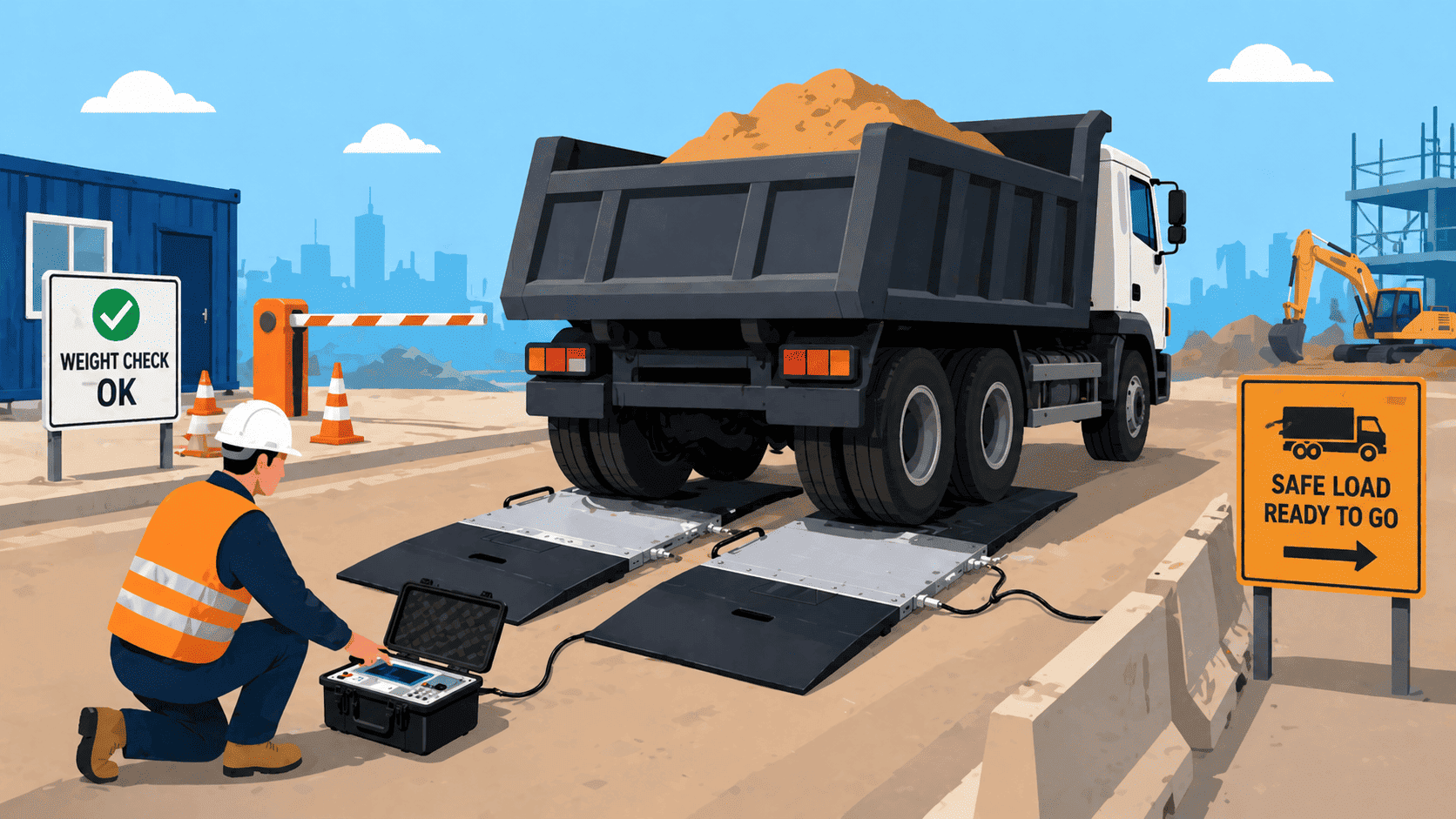
Where I Place the Scale On Site
In my experience, the best spot is the last flat section before the site gate. Drivers stop, drive slowly across the pads, and the operator reads each axle weight. If a truck is over limit, the load goes back to the yard for adjustment. No argument, no guessing.
| Site Type | Recommended Check Point |
|---|---|
| Construction site | Exit gate before public road |
| Forestry landing | End of haul road before highway |
| Event logistics | Loading dock exit |
| Material transfer yard | Between yard and truck lane |
This simple flow protects the carrier, the shipper and the site owner. One overload ticket often costs more than the scale itself.
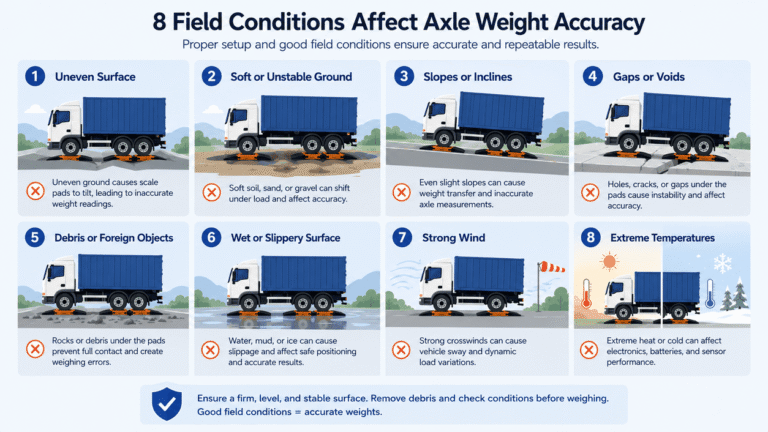
What Site Conditions Matter: Ground Flatness, Ramps, Cables and Power?
This is the part most buyers skip. They ask me about accuracy class, but forget that the ground under the pads decides the real result.
A portable axle scale needs a flat, firm surface, enough ramp length on both ends, protected cables and a stable power source. Without these, even the best scale pad gives readings you cannot trust.
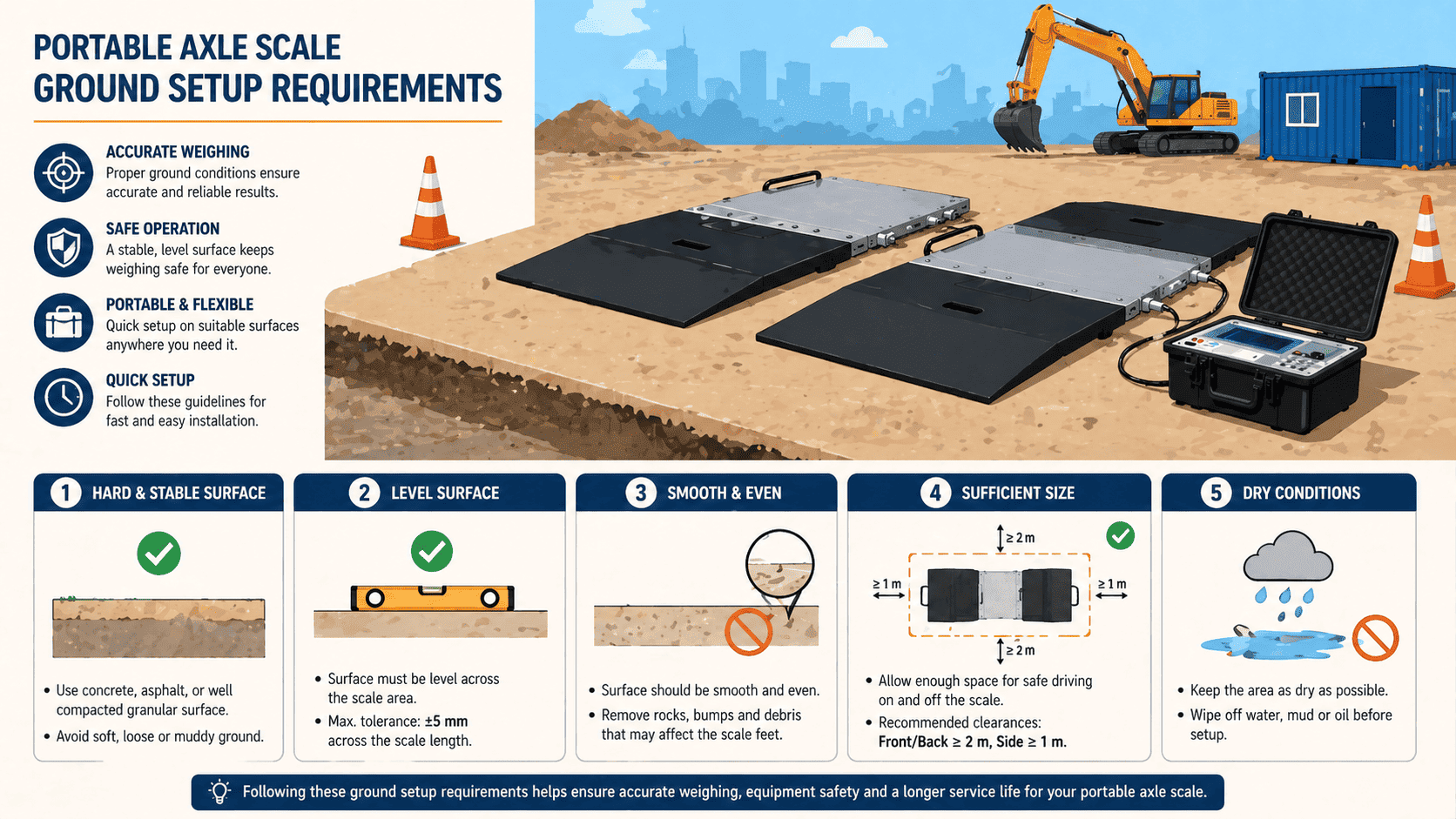
The Four Site Conditions I Always Check
| Condition | What I Look For |
|---|---|
| Ground flatness | Less than 1% slope, no loose gravel |
| Ground hardness | Compacted soil, asphalt or concrete |
| Ramp length | Long enough for smooth axle roll-on |
| Cable protection | Covers or trenches to prevent truck damage |
| Power supply | Stable mains or fully charged battery |
I had one client in a forestry zone who kept getting odd readings. The pads were fine. The ground was soft mud. Once we laid steel plates under the pads, the numbers matched the fixed scale within 0.5%. The equipment does its job. The site process decides whether you can trust the number.
What Should Buyers Prepare Before Using Portable Axle Scales in the Field?
Buying the scale is only half the story. The other half is building a simple, repeatable on-site routine that anyone on the team can follow.
Buyers should prepare a level staging area, trained operators, a standard weighing procedure, backup power, and a record system for every weighing event. This turns a portable scale into a reliable weight check point, not just a piece of hardware.
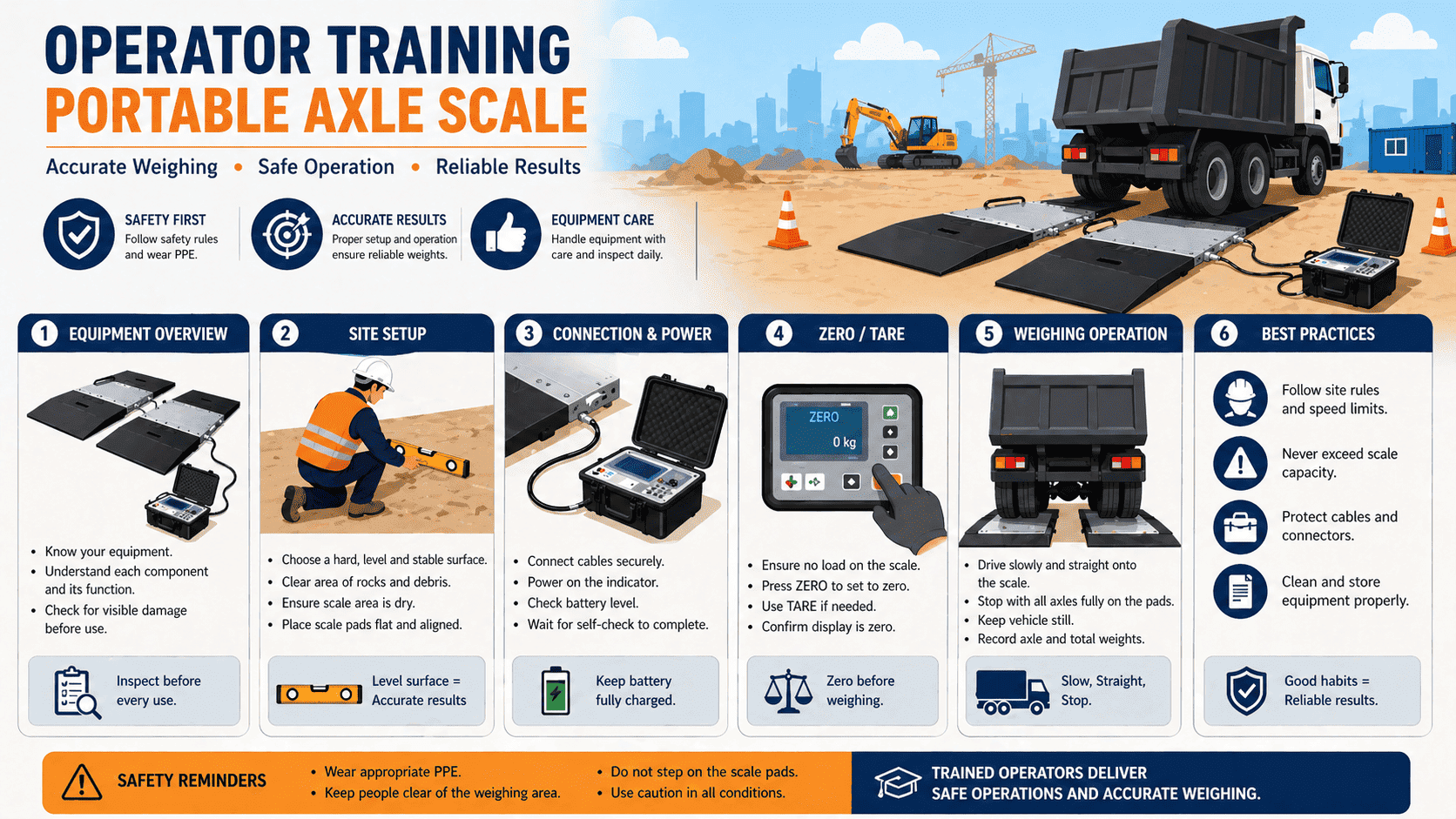
My Pre-Deployment Checklist
| Item | Why It Matters |
|---|---|
| Trained operators | Consistent results across shifts |
| Written procedure | Same method every time |
| Level staging area | Reliable axle readings |
| Backup battery | No downtime during power loss |
| Calibration weights | Quick field checks |
| Data logging method | Proof for disputes and compliance |
I always push clients to write down a one-page procedure: where the truck stops, how the operator places the pads, which axle gets weighed first, and how the result is recorded. When the process is standard, the results are defensible. This matters most when a customer or an inspector questions the weight.
Conclusion
Portable axle scales turn temporary sites into controlled weighing points. Low setup, full mobility, fewer overload risks — the smart choice when a fixed scale does not fit.