













On this page

Many buyers compare truck scales by size and capacity. I see the risk when the same scale starts bending, drifting, or rusting after years of work.
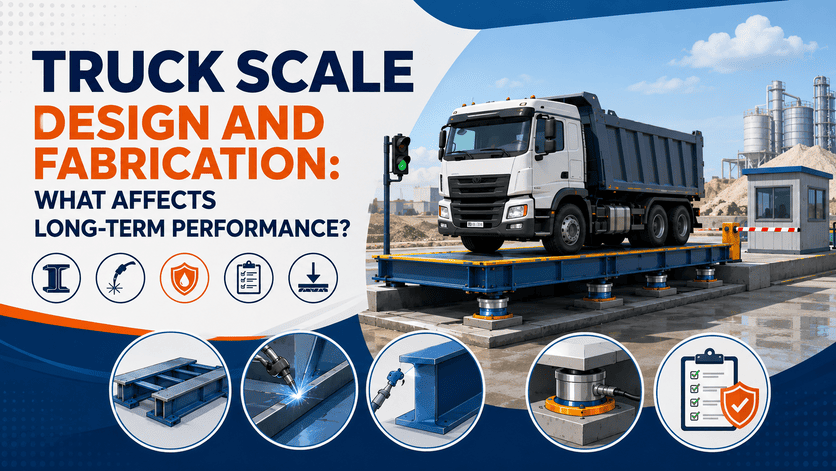
A truck scale performs well for years when structural design, welding quality, corrosion protection, installation, and site use work together. Capacity, platform size, steel thickness, and load cells matter, but they do not explain fatigue resistance, load distribution, foundation behavior, drainage, or long-term weighing stability1.
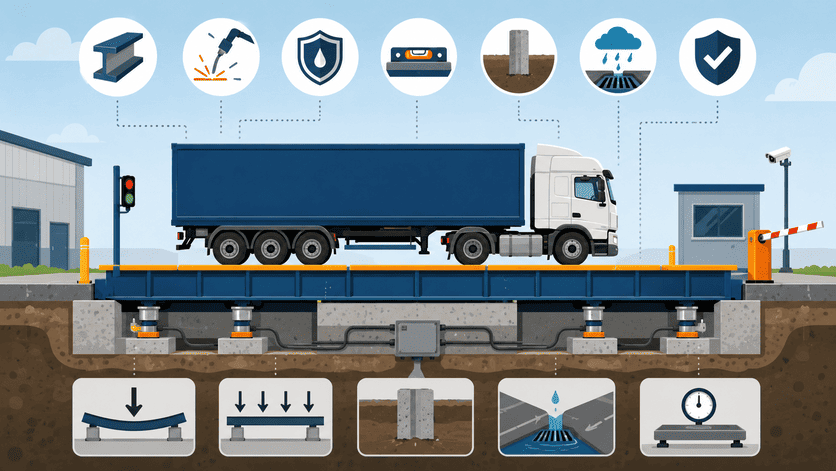
I learned this lesson on factory floors and in long calls with dealers. A quotation can make two truck scales look almost the same. The same length, the same width, the same capacity, and the same load cell brand can sit side by side on paper. I still do not see the full story there. I need to understand how the structure carries repeated axle loads. I need to know how the beams are arranged. I need to check how the welding is controlled. I need to ask where the scale will work. A truck scale in a dry logistics yard does not face the same life as one in a mining site, a coastal port, or a wet farm entrance. That is why I look at the full chain before I approve a design.
Why Do Two Truck Scales With the Same Size and Capacity Perform Differently?
Many buyers think “same size, same capacity” means the same performance. I see after-sales trouble when hidden design details carry the real load.
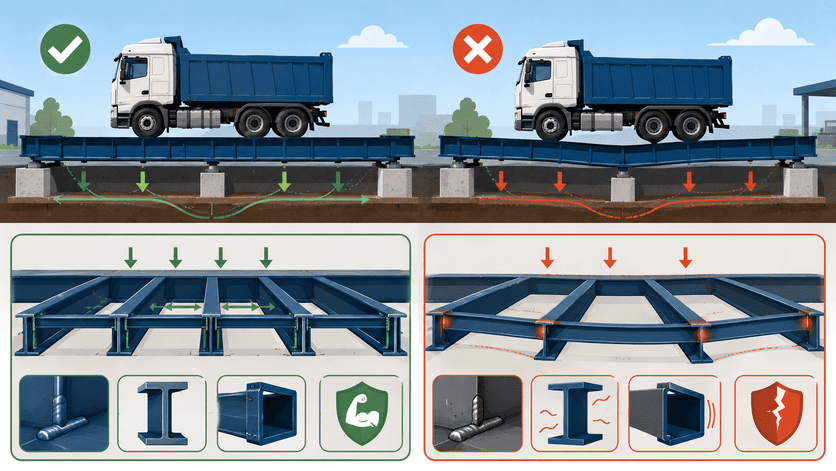
Two truck scales with the same nominal size and capacity can perform differently because beam layout, load path, fatigue resistance, welding consistency, and anti-deformation design are not shown clearly in a simple quotation. These details decide how the scale reacts to repeated truck traffic over time.2
What I Check Beyond the Quotation
When I review a truck scale design, I do not stop at the platform size or rated capacity. I look at how the load moves from the deck plate into the main beams, cross beams, load cell seats, and foundation. I also look at how the structure handles wheel loads, not only total vehicle weight.3 A 100-ton truck scale does not always fail because a 100-ton truck used it. It may suffer because axle loads hit the same narrow path every day.4 It may suffer because the driver brakes hard on the deck. It may suffer because the vehicle enters at an angle.
| Visible item in a quotation | Hidden factor I still check | Why it matters over years |
|---|---|---|
| Capacity | Axle load path | It affects local stress on the deck and beams |
| Platform size | Beam spacing | It affects deflection and stability |
| Steel thickness | Structural layout | It affects stress spread, not only weight |
| Load cell brand | Load introduction design | It affects signal stability and corner behavior |
| Surface paint | Surface preparation | It affects corrosion resistance |
Why Load Distribution Matters
I often tell dealers that a truck scale is not a flat steel box. It is a repeated load structure. The structure must guide force in a controlled way. If the design sends too much stress into one weld zone, one support point, or one weak section, the scale may still pass basic factory checks at first. The problem may appear later. The deck may deform. The corner adjustment may become unstable. The load cell mounts may shift slightly. The weighing value may start to drift.
I do not treat these problems as load cell problems first. Load cells are important, but the structure around them decides how cleanly the force reaches them. A good load cell cannot fully correct a poor load path. A strong indicator cannot make a moving structure stable. I always prefer to see the truck scale as one system. The system includes steel structure, welding, load cells, junction box, indicator, foundation, grounding, drainage, and daily use.
Is Thicker Steel Always Better for a Truck Scale?
Many buyers ask me for thicker steel first. I understand the concern, but I also know that weight alone does not create a durable scale.
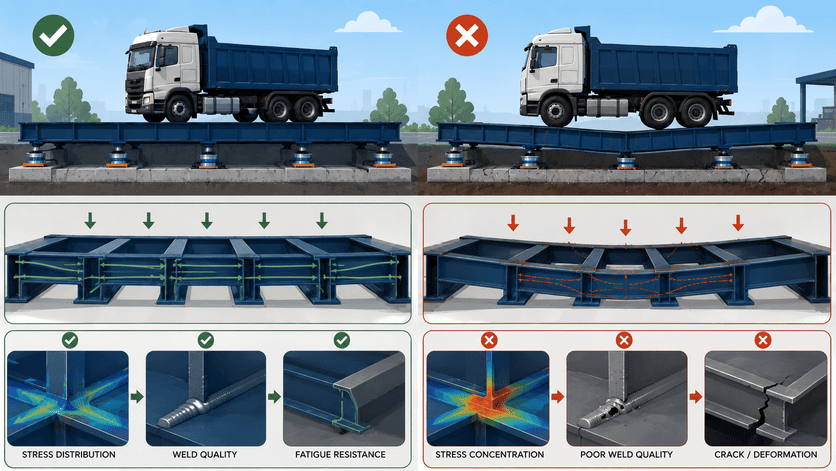
Thicker steel is not always better for a truck scale.5 Long-term durability depends on structural logic, stress distribution, beam design, welding quality, and fatigue resistance. A poorly designed heavy platform can still deform, crack, or create unstable weighing under repeated vehicle loading.
Why Steel Quantity Is Not the Same as Strength
I work with steel every day, so I respect material thickness. I also know its limit. A thicker deck plate can help in some applications. A heavier beam can help in some designs. But extra steel does not automatically solve poor stress distribution. If the main beams are not arranged well, the structure may still twist. If the cross beams do not support the wheel path, the deck may still flex. If the welds create high stress points, the heavier structure may still crack.
| Buyer question | My practical answer | Better question |
|---|---|---|
| Is the deck plate thick enough? | Thickness matters, but support matters too | How is the deck supported under wheel paths? |
| Is the main beam heavy enough? | Beam size matters, but layout matters too | How does the beam layout spread axle loads? |
| Is the scale stronger because it is heavier? | Weight can help, but it can also hide weak logic | How does the design resist fatigue? |
| Can thicker steel prevent all deformation? | No, repeated loads still find weak points | Where are the high-stress zones? |
How I Think About Fatigue
Truck scales do not face one perfect load in a textbook. They face thousands of real loads. Some trucks stop suddenly. Some drivers do not center the truck well. Some sites run day and night. Some sites weigh heavy vehicles with mud, vibration, and impact. This is why fatigue resistance matters. Fatigue means the structure gets weaker after repeated stress.6 A design may look strong on day one, but it must also stay stable after years of traffic.
I look for simple and strong structural logic. I want the deck plate, beams, and support points to work together. I want the load cell seats to stay aligned. I want welding positions to be easy to control and inspect. I want the structure to resist twisting, because twisting can disturb weight transfer. I also want the fabrication process to repeat the same quality from one unit to the next. A design that only works when one senior welder handles it is not enough for stable supply. Dealers need repeatable products. Project customers need predictable behavior. I need both.
Why Is Corrosion Protection a Performance Factor, Not Just a Finish?
Some buyers see paint as appearance. I see corrosion as a slow performance risk that changes structure, maintenance cost, and weighing stability.
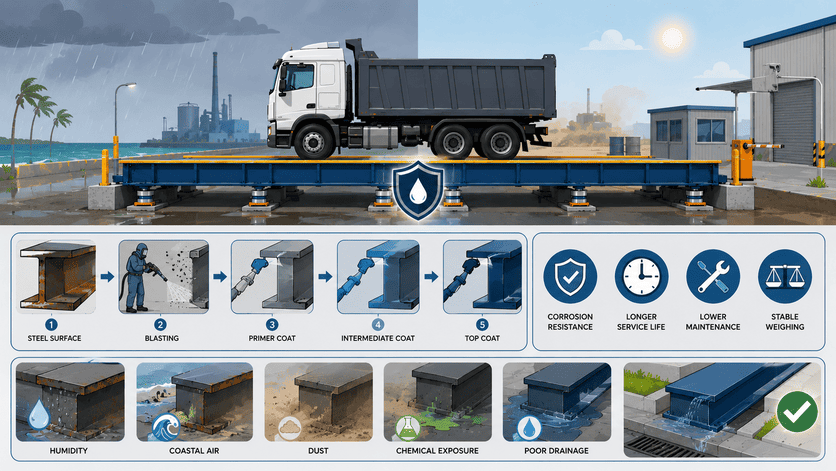
Corrosion protection affects truck scale performance because rust weakens steel surfaces, damages coating layers, increases maintenance work, and can affect structural life. Blasting quality, coating process, drainage, humidity, dust, coastal air, and site chemicals all influence how long the scale remains reliable.
Why Surface Treatment Starts Before Painting
I do not judge coating quality only by color. A bright surface can still hide poor preparation. For me, corrosion protection starts with blasting, cleaning, and surface profile. If oil, rust, dust, or mill scale remains on the steel, the coating may not bond well.7 It may peel, crack, or allow rust to grow under the surface. In a dry warehouse, this may take longer to show. In a port, mine, fertilizer plant, feed mill, or wet outdoor yard, it can appear much faster.
| Site condition | Corrosion risk I consider | Design or process response |
|---|---|---|
| Coastal air | Salt speeds up rust8 | Better blasting, coating, and inspection |
| Mining site | Dust and impact damage coating | Stronger coating plan and easy cleaning |
| Farm entrance | Mud and water stay on the platform | Better drainage and regular cleaning |
| Chemical area | Corrosive material attacks coating | Special surface treatment may be needed |
| Humid climate | Moisture stays in gaps | Better sealing and structural drainage |
Why Drainage Matters As Much As Paint
I often ask where water will go. If water stays inside a structure, corrosion begins in places that users cannot see. If mud gathers around the scale pit, the underside can stay wet. If drainage is poor, even a good coating faces constant attack. I do not want to rely only on paint. I want the structure to reduce water traps where possible. I want access points for cleaning and maintenance when the project allows them. I also want the customer to understand that corrosion control is a shared job between factory process and site care.
I have seen dealers focus on steel thickness and ignore coating details. I understand why. Thickness is easy to compare. Coating process is harder to explain. But corrosion changes long-term performance. Rust can reduce section strength. It can attack weld edges. It can make covers hard to remove. It can increase maintenance time. It can also hurt the local reputation of a dealer when customers think the whole product is poor. For this reason, I treat anti-corrosion work as part of performance design, not decoration.
How Does Factory Fabrication Quality Affect Long-Term Truck Scale Stability?
A good drawing is not enough. I see stable performance start when cutting, welding, assembly, inspection, and calibration follow controlled factory steps.
Factory fabrication quality affects long-term truck scale stability because welding consistency, dimensional control, surface treatment, assembly accuracy, load cell seat alignment, and final inspection decide whether the scale leaves the factory as a stable system, not only as a steel platform.
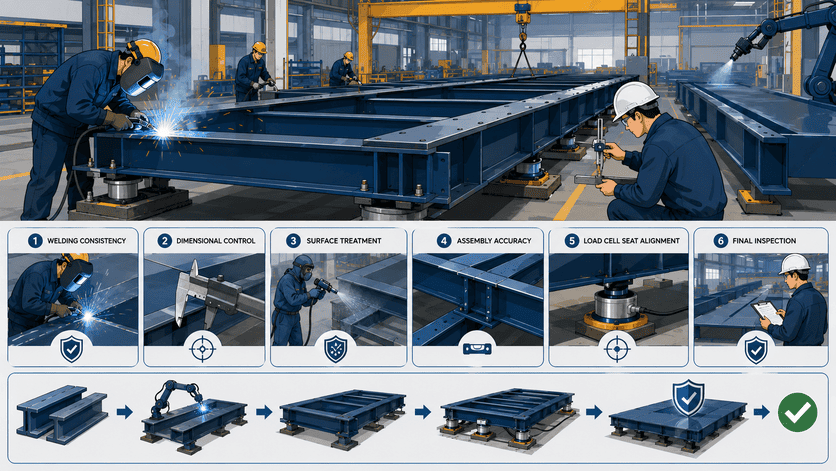
Why Welding Consistency Matters
Welding is one of the most important parts of truck scale fabrication. A weld does more than connect steel. It also changes local stress. Poor welding can create cracks, distortion, or weak load paths.9 Too much heat can bend parts. Uneven welding can pull the platform out of shape. Poor fit-up can create gaps that are filled by weld metal instead of proper joint design. I care about welding sequence, fixture control, operator skill, and inspection.
| Factory step | What I look for | Long-term reason |
|---|---|---|
| Cutting | Clean and accurate parts | Good fit-up starts here |
| Beam assembly | Controlled alignment | Load paths stay predictable |
| Welding | Stable sequence and quality | Fatigue risk is reduced |
| Blasting | Clean steel surface | Coating bonds better |
| Painting | Correct coating coverage | Corrosion resistance improves |
| Final assembly | Proper load cell seat position | Weighing signal stays stable |
| Inspection | Repeatability and corner check | Shipment risk is reduced |
Why Inspection Is Only the Starting Point
I support factory inspection, but I do not pretend that factory inspection can replace real site thinking. A truck scale can pass inspection before shipment and still face problems if the foundation is poor, if drainage is blocked, or if the site uses the scale beyond its working pattern. This is why I ask dealers and project customers about actual use. I want to know the truck type, axle load, daily weighing frequency, peak traffic, and environment. I also want to know whether the installation is pit-mounted or pitless. Each choice changes maintenance access and drainage behavior.
In our factory discussions, I often connect fabrication records with site questions. I want the platform to be straight. I want the load cell bases to match the design. I want the junction box and wiring to be protected. I want the indicator and grounding plan to fit the project. I also want clear installation documents, because even a strong scale needs correct installation. If the foundation settles unevenly, the scale may show corner errors.10 If cable protection is poor, water or rodents may create signal problems. If the approach road is bad, impact loading may increase. Good fabrication reduces risk. Good site preparation keeps that risk lower.
What Site Conditions Should Dealers Check Before Choosing a Truck Scale Design?
A dealer can lose profit after the sale if the site reality was not checked early. I see this risk in many replacement projects.
Dealers should check vehicle type, axle load, daily weighing frequency, overload risk, foundation quality, installation method, drainage, climate, dust, corrosion exposure, power supply, grounding, and data needs before choosing a truck scale design. These conditions decide whether the scale can stay stable in real service.
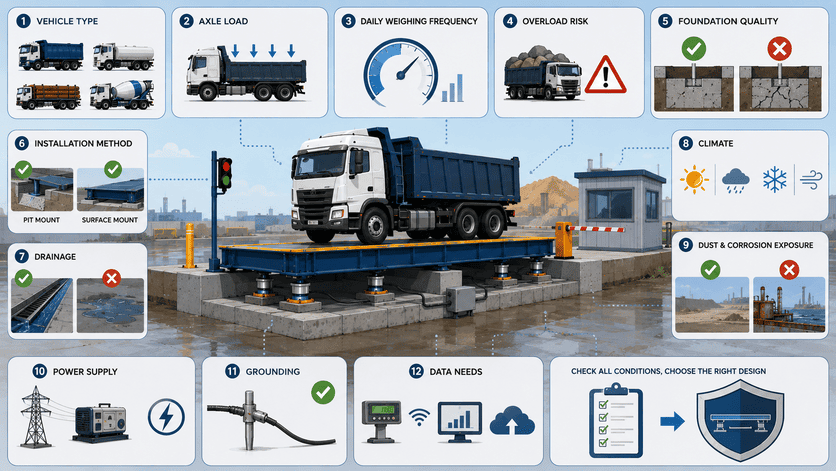
What I Ask Before I Recommend a Design
When a dealer asks me for a truck scale price, I can quote faster if I only ask for size and capacity. But I prefer to ask more questions when the project matters. I ask what vehicles will use the scale. I ask how many weighments happen each day. I ask whether the trucks carry stones, grain, containers, scrap, cement, coal, or livestock. I ask whether drivers enter slowly or quickly. I ask whether the site has enough space for straight entry and exit. These details are not small. They affect fatigue, accuracy, traffic safety, and maintenance.
| Site question | Why I ask it | Design impact |
|---|---|---|
| What vehicles use the scale? | Vehicle shape changes loading | Platform length and support plan |
| What is the axle load? | Axle stress can be high | Beam and deck design |
| How many weighments per day? | Frequency affects fatigue | Duty level and structure choice |
| Is overload common? | Impact risk rises | Safety margin and site control |
| Is the site wet or dusty? | Maintenance needs change | Coating, sealing, and cleaning plan |
| Is data integration needed? | System scope changes | Indicator, software, and communication |
Why Local Reputation Depends on Early Questions
Dealers and importers carry the after-sales burden in their market. I know a lower first price can look attractive. I also know one unstable truck scale can create many service visits. The customer may not care whether the issue came from structure, foundation, wiring, or misuse. The customer often calls the dealer first. That is why I tell partners to protect their local reputation with better project questions.
I also avoid one-design-fits-all thinking. A truck scale for a logistics warehouse does not need the same design as one for a quarry. A scale for a dry inland site does not face the same corrosion risk as one near the sea. A low-traffic farm scale does not face the same fatigue cycle as a busy port gate. Data needs also matter. Some sites need only a simple indicator. Some need remote display, printer, RS232 or RS485 output, Modbus, ERP link, PLC connection, camera, barrier gate, license plate recognition, or unattended weighing software. These system choices do not replace mechanical design, but they affect the full solution. I try to match the scale to the real site, because long-term performance comes from fit, not from one simple specification.
Conclusion
I choose truck scale design by structure, fabrication, coating, inspection, and site reality. I see long-term performance as a full system, not one specification.
References
- [PDF] NIST Handbook 44: Specifications, Tolerances, and Other Technical ...
- Microstructure, Fatigue Properties and Stress Concentration ... - PMC
- [PDF] Long-Term Effects of Super Heavy-Weight Vehicles on Bridges
- [PDF] How pavements are affected by axle loads
- [PDF] Design and Evaluation of Steel Bridges for Fatigue and Fracture
- Fatigue (material) - Wikipedia
- Types of Surface Preparation - Rust-Oleum
- Marine Atmospheric Corrosion of Carbon Steel: A Review - PMC
- Welding Defects Guide: Types, Causes and Prevention
- Truck Scale Civil Foundation Mistakes: Why Can a Good ...