












On this page

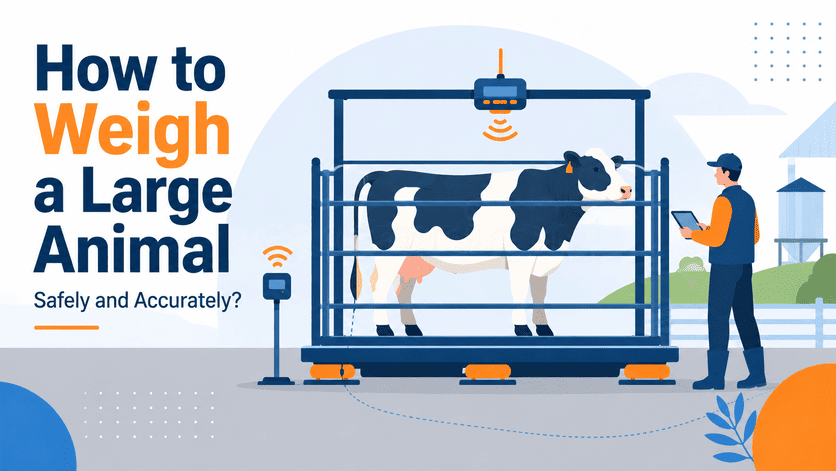
A heavy animal can move fast, slip, or turn. I see bad weighing become a safety problem and a data problem at the same time.
I weigh a large animal safely by using a calm path, side control, anti-slip footing, a stable platform, proper calibration, and a patient workflow. I do not trust capacity alone. I wait for a stable reading, check repeatability, and keep handlers away from kick and crush zones.
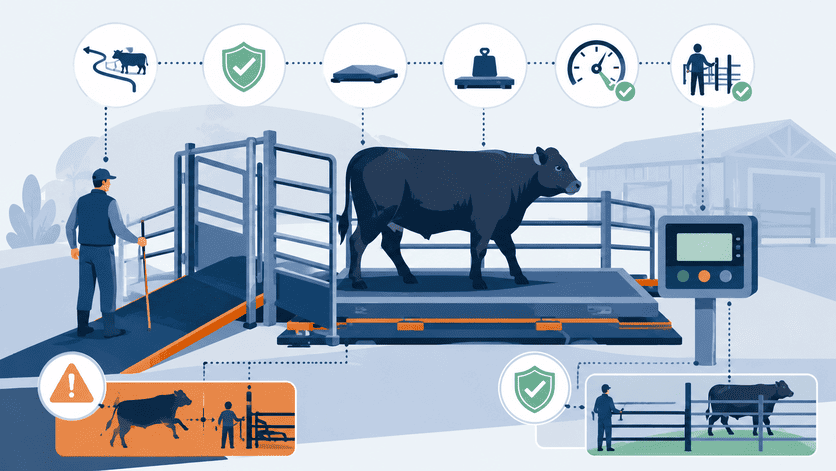
I have worked around industrial weighing equipment long enough to know one thing. A scale is not only a steel platform with a number on an indicator. It is a full weighing system. When I help customers choose equipment for cattle, large pigs, sheep, or goats, I always look at the animal, the handler, the platform, the sensor, the indicator, and the farm workflow together. If one part is wrong, the reading can be wrong. If another part is wrong, someone can get hurt. I will break this down in a practical way, so you can choose and use a large animal weighing setup with more confidence.
Why Is Capacity Alone Not Enough for Large Animal Weighing?
A scale may carry the animal’s weight, but it may still fail in the field. I see this risk when movement, footing, and control are ignored.
I do not choose a large animal scale by capacity only.1 I check platform size, anti-slip surface, side rails, gates, load cell stability, installation level, and the animal’s movement before I trust the setup.
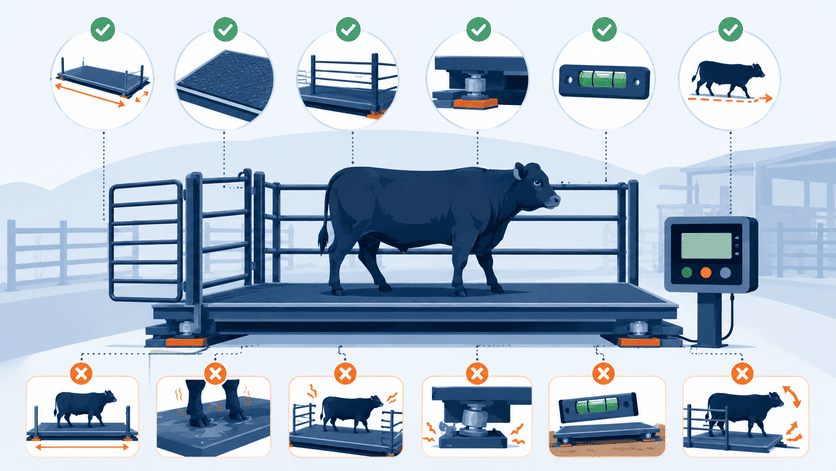
When I look at a livestock weighing job, I first separate “can hold the load” from “can weigh the animal safely.” A large cow may weigh within the rated capacity, but the same cow may step near one corner, shift weight, kick, or stop halfway on the platform. A large pig may push forward or back out. Sheep and goats may bunch, jump, or turn if the space feels wrong. This means the structure must control movement and support uneven loading. The platform must also match body length and stance.2 A short or narrow platform can make the animal stand badly, and a bad stance creates unstable readings.
I use this simple check before I recommend a livestock setup:
| Item I Check | Why I Check It | What I Prefer |
|---|---|---|
| Rated capacity | I need safe load range | Capacity above actual animal weight and use pattern |
| Platform size | I need full body support | Enough length and width for natural standing |
| Surface | I need stable footing | Anti-slip steel or treated platform surface |
| Side control | I need safer movement | Rails, fencing, or chute connection |
| Entry and exit | I need calm flow | Gates, latches, or controlled passage |
| Sensor layout | I need stable data | Proper load cells and junction box adjustment |
I have seen buyers focus on the indicator display first. I understand why. The display is visible. The steel and sensors are less exciting. But the real result comes from the whole structure. A normal industrial platform scale can work well for boxes, drums, or pallets. It is not automatically safe for live animals. I need animal-control measures, because the load is alive and it does not stand like a pallet.
How Should I Prepare the Animal and the Weighing Area?
A rushed animal gives bad readings and creates risk. I slow the process down, because calm movement is often the cheapest safety tool.
I prepare a clear path, reduce noise, use gates or rails, keep handlers out of dangerous zones, and let the animal settle before I record the weight.
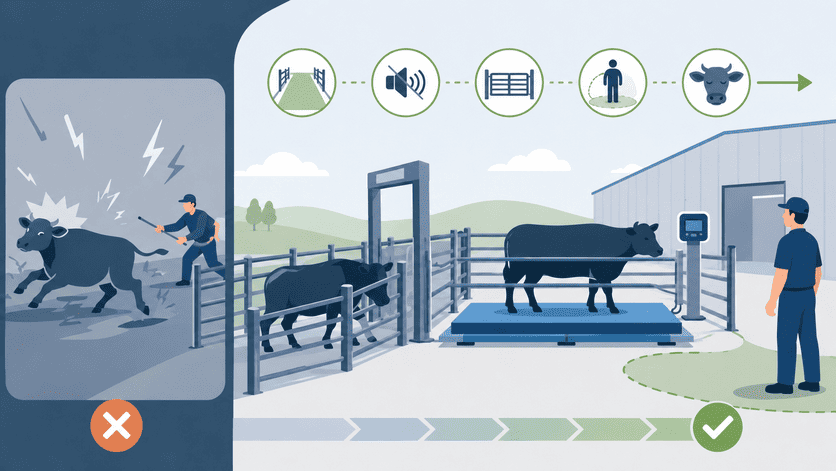
I treat the weighing area as part of the scale. The best platform cannot fix a bad approach path. I want the animal to enter straight, step with confidence, and stop on the platform without panic. I do not stand where I can be kicked, pinned, or crushed. I also do not ask handlers to push from unsafe positions just to save a few seconds. When the animal is large, speed can become expensive.
I like to prepare the area with a short checklist:
| Step | What I Do | Why It Matters |
|---|---|---|
| Clear the path | I remove loose tools, feed bags, and floor obstacles | I reduce slipping and sudden stops |
| Control the sides | I use rails, fencing, or a chute | I stop turning and side escape |
| Check the gate | I test latches before weighing | I avoid sudden gate failure |
| Reduce distraction | I avoid loud movement and crowded handlers | I help the animal enter calmly |
| Place the handler safely | I keep people out of kick and crush zones | I reduce injury risk |
| Wait for stability | I wait before recording the reading | I avoid the first unstable number |
I do not give veterinary advice, and I do not claim one behavior method fits every farm. Animals, layouts, and handler skills are different. But I do believe the weighing workflow should respect the animal’s movement. A large animal that is pushed too hard may refuse the platform, slip, or stand with only part of its body on the scale. That creates poor data. It also teaches the animal that the scale area is stressful. The next weighing session can become harder.
When I supply or discuss weighing systems, I ask about the route into the scale. I ask whether the platform will connect to an existing chute. I ask whether the operator will weigh single animals or groups. I ask where the indicator will be placed. These details sound small, but they decide how safely the system works after installation.
How Do I Get an Accurate Reading When the Animal Keeps Moving?
A moving animal makes the number jump. I do not solve this with hope. I solve it with structure, sensors, installation, and patient reading.
I get better accuracy by using a rigid platform, good load cells, a level foundation, correct calibration, indicator stabilization, and repeat checks before I record the final weight.
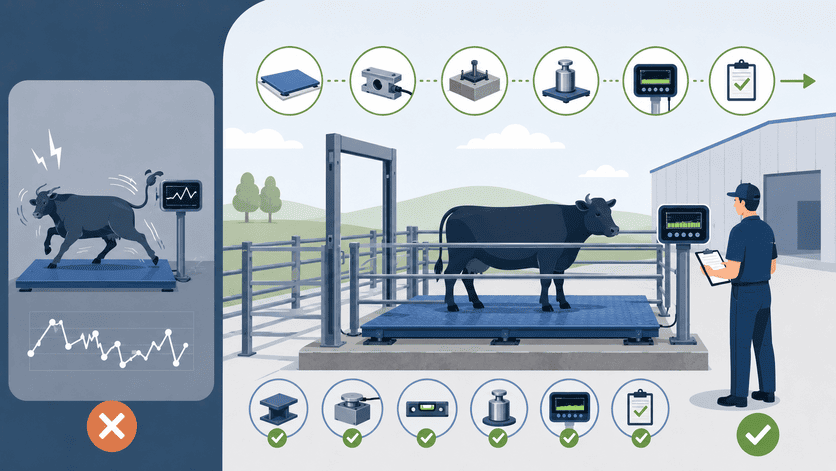
Accuracy in animal weighing is different from accuracy in static industrial weighing.3 A pallet stays still. A cow does not. A large pig may shift weight from front feet to back feet. A goat may step close to the rail. This movement affects the load cells. The indicator must process the signal, and the platform must transfer force evenly. If the platform twists, the reading suffers. If the foundation is not level, the reading suffers. If the junction box is not adjusted correctly, corner loading can create errors4.
I normally look at accuracy through these layers:
| Accuracy Layer | What I Check | Common Problem |
|---|---|---|
| Platform rigidity | I check if the frame twists under movement | Readings drift when the animal shifts |
| Load cells | I check capacity, protection, and quality | Signal becomes unstable or inconsistent |
| Junction box | I check corner adjustment and wiring | One corner reads differently |
| Indicator | I check filtering and stable reading function | Display jumps too much |
| Installation | I check level surface and support points | Scale does not return to zero |
| Calibration | I check test method and repeatability | Weight records cannot be trusted |
I do not record the first number that appears. I wait for the indicator to settle. If the animal is still moving, I let it stand. If the number keeps changing too much, I check whether the animal is fully on the platform. I also check if the platform is touching a side wall, chute, or foreign object. A scale must be free to move slightly under load. If it is jammed, it cannot measure correctly.
At HENER, I am used to thinking from the load cell upward. A load cell is not just a part. It is the part that converts force into a signal. The indicator, junction box, cable, and platform all protect or damage that signal. This is why calibration and repeat checks matter. I want one weighing result to make sense, but I also want the next weighing result to match under the same conditions.
What Equipment Should I Choose for Cattle, Pigs, Sheep, or Goats?
Wrong equipment can make every weighing session harder. I prefer a livestock weighing system, not a bare platform used without control.
I choose equipment with an anti-slip platform, side rails, secure gates, correct dimensions, enough capacity, durable load cells, a reliable indicator, and serviceable parts.
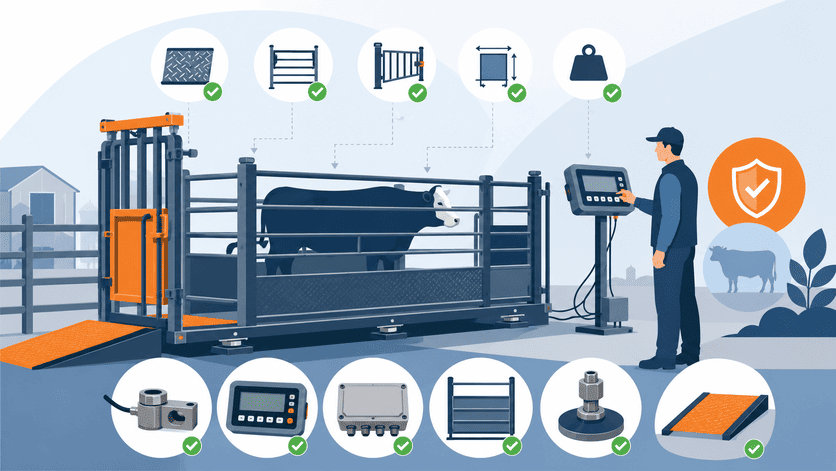
I start equipment selection with the animal type and the farm process. Cattle usually need a longer and stronger setup, often connected to a race or chute. Large pigs need strong side control and good footing. Sheep and goats may need smaller openings and secure gates because they move quickly. I do not assume one platform fits all animals. I also do not assume a high-capacity floor scale is enough. It may have capacity, but it may not have side protection, proper entry control, or a surface that gives the animal confidence.
I use this selection guide when I discuss projects:
| Animal or Use | Key Risk I See | Equipment Feature I Prefer |
|---|---|---|
| Cattle | High force, long body, side pressure | Strong frame, long platform, rails, gates |
| Large pigs | Pushing, backing out, slipping | Anti-slip surface, solid side control, secure latch |
| Sheep | Bunching, quick movement | Controlled entry, suitable width, stable gate |
| Goats | Jumping, turning, narrow stance | Higher side control, secure platform edge |
| Mixed farm use | Different sizes and workflows | Custom platform size and adjustable handling layout |
I also look at the environment. A wet floor needs stronger anti-slip design. Outdoor use needs weather protection for the indicator, junction box, and cables. A washdown area may need better sealing. Heavy daily use needs stronger welds, thicker structure, and easy service access. If the scale must send data to a computer, ERP system, PLC, or farm management software, I check communication options early. I do not leave data output until the end.
As a manufacturer, I care about the parts behind the product. I look at load cell protection, cable routing, junction box position, indicator mounting, platform coating, and calibration access. These details decide the service life of the system. They also decide how easy it is to repair the system when one part fails. A good livestock scale should not become useless because one cable or load cell is hard to reach.
What Safe Weighing Workflow Do I Use Step by Step?
A good scale still needs a good routine. I follow the same basic steps, because routine reduces mistakes and stress.
I inspect the scale, zero the indicator, guide the animal calmly, close the gate, wait for stability, record the weight, and release the animal without rushing.
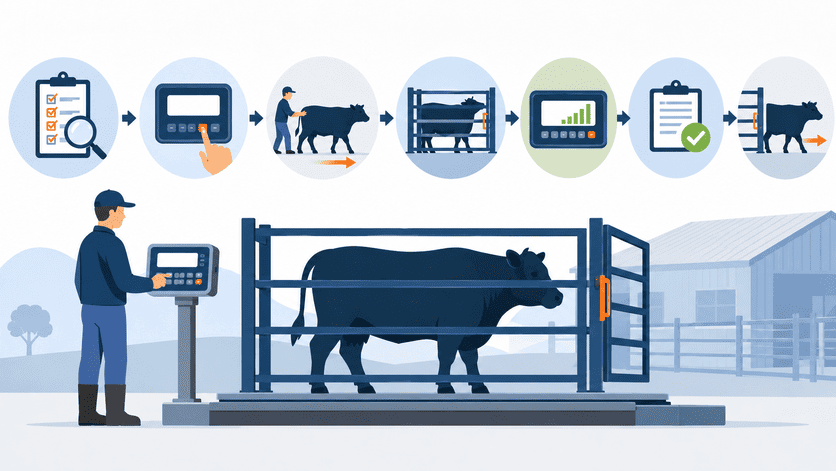
I like simple routines because farms are busy places. When a process is too complex, people skip steps. When people skip steps, weight data becomes weak. My routine begins before the animal reaches the platform. I check that the platform is clear. I check that no mud, stones, or tools are touching the underside or side of the scale. I turn on the indicator and check zero. If the zero is not stable, I do not start weighing. I find the reason first.
Here is the basic workflow I recommend:
| Step | My Action | My Reason |
|---|---|---|
| 1 | I inspect the platform and gates | I reduce mechanical and safety problems |
| 2 | I check zero on the indicator | I confirm the system is ready |
| 3 | I guide the animal slowly | I reduce slipping and panic |
| 4 | I close and secure the gate | I keep the animal fully on the platform |
| 5 | I wait for a stable reading | I avoid movement error |
| 6 | I record the weight | I keep a clean data record |
| 7 | I release the animal calmly | I keep the exit safe and smooth |
| 8 | I repeat if needed | I confirm doubtful readings |
I do not like crowded weighing areas. One calm handler often does better than several rushed people. I also place the indicator where the operator can read it without standing in a dangerous position. If the indicator has a hold or animal weighing function, I still use judgment. I do not blindly trust a captured number if the animal was half on the platform or pushing hard against a gate.
For important weights, I repeat the weighing when the result looks strange. A repeat check can catch a bad stance, a jammed platform, or a zero problem. I also keep the record format simple. I want animal ID, date, time, weight, operator, and notes if needed. Clear records are useful for feeding plans, sales, transport planning, and health tracking5, but I keep health decisions with qualified professionals.
What Business Risks Come From Poor Large Animal Weighing?
Bad weighing does not stop at the scale. I see it affect sales, feed plans, transport, records, and trust between buyers and sellers.
I treat poor weighing as a business risk because one unsafe or inaccurate process can create wrong payments, wasted feed, transport issues, injury risk, and extra labor.
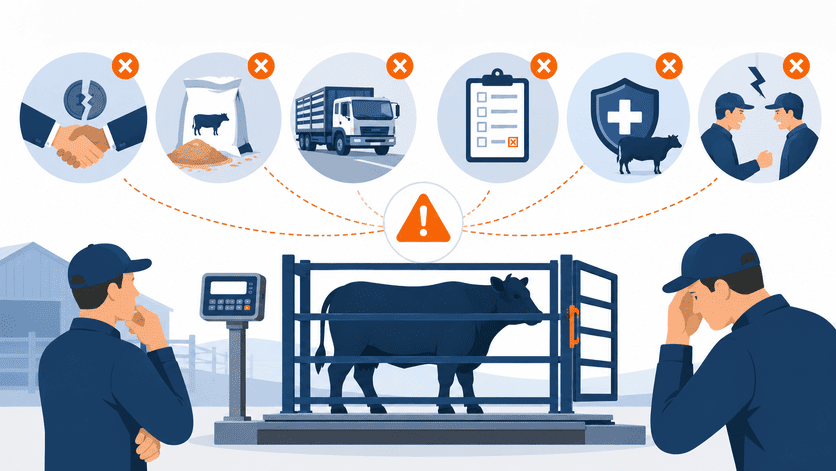
A cheap or poorly planned weighing setup can look like savings at first. I understand that pressure. Every farm and livestock business watches cost. But I also know that bad weight data creates hidden costs. If livestock sales depend on weight, a wrong reading can affect payment.6 If feed plans depend on weight, bad data can lead to poor planning. If transport limits matter, wrong weights can create loading problems. If health records use weight history, unclear data can make the record less useful.
I think about risk in five areas:
| Risk Area | What Can Go Wrong | How I Reduce It |
|---|---|---|
| Sales | Weight dispute between buyer and seller | Calibrated scale and clear record |
| Feeding | Wrong weight group or feed estimate | Repeatable weighing process |
| Transport | Overload or poor load planning | Reliable weight before loading |
| Labor | Extra time and repeated handling | Smooth workflow and good animal control |
| Safety | Slips, kicks, crush zones, panic | Rails, gates, anti-slip surface, safe handler position |
I do not say the most expensive scale is always the best choice. I say the correct system is the best choice. A small farm may need a simple livestock platform with rails and a stable indicator. A larger operation may need a full chute-integrated system with data output. A project site may need customized dimensions, stronger structure, and software connection. The right answer depends on the animals, site layout, cleaning method, climate, daily use, and record needs.
This is where I connect HENER’s industrial weighing background to livestock weighing. We manufacture weighing systems, load cells, indicators, junction boxes, and customized platforms. We also work with calibration and system integration needs. That makes me careful about hidden details. I care about the weld, the cable, the coating, the load cell seat, and the indicator setup. These things do not always appear in a product photo. But they show up every time an animal steps on the platform.
How Do I Maintain and Check a Large Animal Scale Over Time?
A good weighing system can lose performance if nobody checks it. I build small maintenance habits into the weighing routine.
I maintain accuracy and safety by cleaning the platform, checking free movement, inspecting cables, testing zero, repeating known checks, and scheduling calibration when needed.
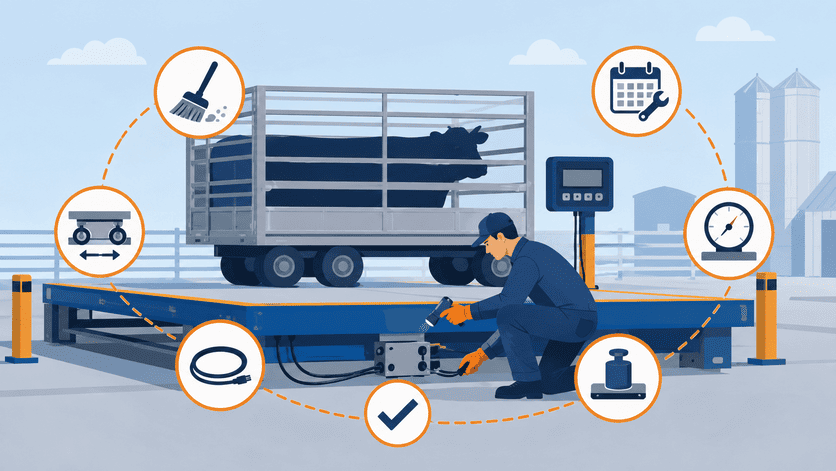
Maintenance does not need to be difficult, but it must be consistent. Large animal scales often work in rough places. Mud, manure, water, feed, stones, and dust can collect around the platform. If debris touches the scale frame or blocks movement, the reading can change. If cables are damaged by animals, rodents, or handling tools, the signal can become unstable. If gates loosen, the safety risk grows. If bolts or load cell mounts shift, repeatability can suffer.
I use this basic maintenance plan:
| Check Point | What I Look For | When I Check It |
|---|---|---|
| Platform surface | Slippery areas, damage, heavy buildup | Before weighing sessions |
| Under platform | Mud, stones, contact points | Regularly and after cleaning |
| Gates and latches | Loose parts or poor locking | Before animal entry |
| Cables | Cuts, crushing, water damage | During routine inspection |
| Indicator | Zero stability and display response | Before use |
| Load cell area | Rust, movement, impact damage | During deeper inspection |
| Calibration | Known weight check or service calibration | Based on use and local needs |
I also avoid harsh cleaning methods around electrical parts unless the components are designed for that environment. Water and chemicals can damage weak sealing. If the scale works outdoors, I protect the indicator and junction box. If the system has data output, I check connectors and communication stability. A scale that weighs correctly but fails to send data can still create record problems.
I do not wait for a major failure before I inspect the system. I prefer small checks because they prevent long downtime. If a reading suddenly changes, I look for simple causes first. I check zero. I check whether the platform is touching something. I check if the animal was standing correctly. I check cables and the junction box. If the problem stays, I stop guessing and arrange proper service or calibration.
Conclusion
I weigh large animals well when I treat safety, control, structure, calibration, and workflow as one complete system.
References
- What Is a Livestock Scale and How Does It Work? - hener scale
- [PDF] USDA =a - Instructions for Testing Livestock and Animal Scales
- [PDF] USDA =a - Instructions for Testing Livestock and Animal Scales
- What is a Shift and Corner Test | Scale Calibration Guide
- Adjusting and Monitoring Meat Animal Growth Rate
- Responsibility for Accurate Scales and Livestock Weights