



On this page

Disadvantages of weighbridges rarely appear on the datasheet you receive during the quoting process. Most first-time buyers focus on capacity, accuracy class, and unit price — then discover the real costs and failure points after the foundation is poured, the deck is installed, and the first trucks start rolling across. The gap between expectation and reality is where disputes, downtime, and regret live.
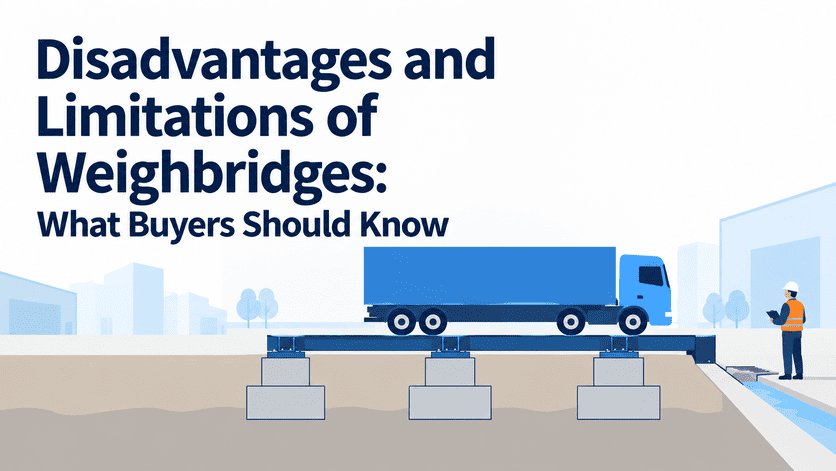
The most significant disadvantages of weighbridges are not about the scale itself — they are about the civil foundation, site preparation, drainage, environment, maintenance access, and whether a full weighbridge is even the right instrument for the task. Buyers who evaluate only the equipment spec sheet consistently underestimate the total cost of ownership, the recurring calibration burden, and the site-related failure modes that degrade accuracy over time.
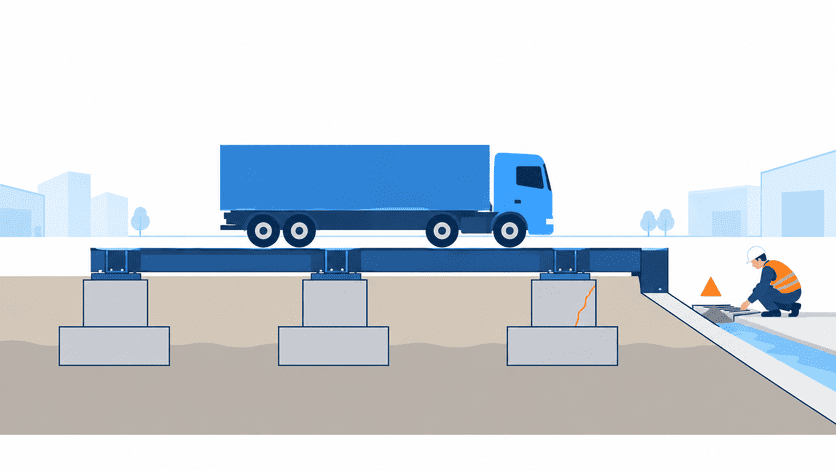
In my 23 years working in pre-sale specification and after-sales support for industrial weighing systems, I have handled hundreds of complaints. The patterns are remarkably consistent. Below, I walk through the five disadvantage categories that cause the most trouble — and the diagnostic questions I wish every buyer asked before committing.
Does a High Accuracy Class Guarantee Accurate Weighing on Site?
It does not. This is probably the single most misunderstood point in weighbridge procurement. Buyers see a certified accuracy class on a spec sheet and assume that number will hold in the field, under real traffic, weather, and time.
A weighbridge certified to a high accuracy class can still produce unreliable readings once installed. Foundation settlement, drainage failure, deck deformation, junction-box environment, and calibration decay all erode on-site accuracy1 — regardless of what the factory certificate says. Accuracy is a system outcome, not a component specification.
Why "Environment Beats Spec Sheet"
Let me share a pattern I see repeatedly in after-sales cases. A buyer installs a weighbridge, and for the first few months, everything reads well. Then readings start drifting. Corner errors appear — the same truck weighed in different positions on the deck gives different results. The buyer assumes the load cells have failed.
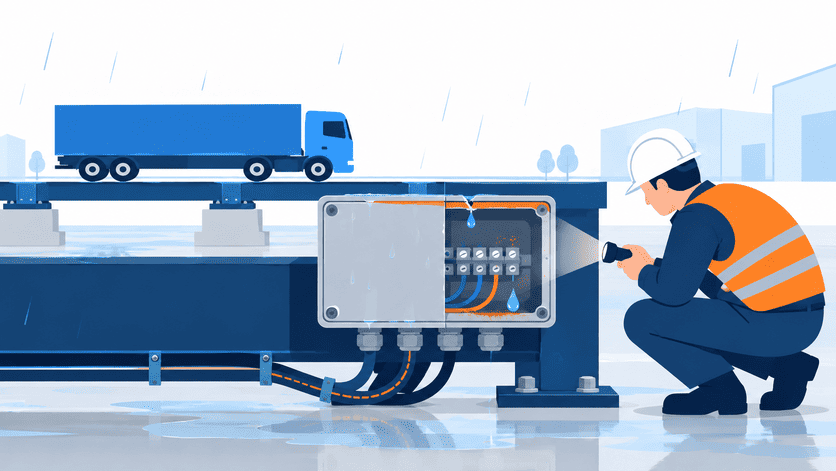
In the complaints we handle, the most common cause is not a load cell failure at all.2 It is what happened inside the junction box.
Here is the sequence:
- Water ingress or condensation enters the junction box — from poor site drainage, seasonal flooding, or simply humid climate with no ventilation.
- Moisture corrodes the trimming potentiometers or signal connections inside the box.
- In some cases, rodents chew through signal cables running between load cells and the junction box.
- The result is not a sudden failure. It is a slow, uneven signal drift across load cells — which shows up as corner error and inconsistent totals.
The buyer blames the scale. But the root cause is the environment around the scale.
What This Means for Procurement Decisions
When I scope a project, I ask these questions before discussing accuracy class:
- What is the local climate? Temperature swings, rainy seasons, humidity levels, dust.
- How is the site drained? Is water managed away from the foundation and junction boxes?
- Are junction boxes accessible for inspection? Or are they buried, submerged, or blocked by traffic?
- Is there a rodent or pest problem at the site?
If the answers suggest a harsh or poorly drained environment, the accuracy class on the datasheet becomes secondary. The real accuracy will be determined by how well the installation protects the signal chain.
Key takeaway: Before comparing accuracy classes across suppliers, evaluate whether your site conditions will allow any scale to hold its calibration. A lower-class scale in a well-managed environment will outperform a higher-class scale in a flooded pit.
Is the Purchase Price the Biggest Cost of a Weighbridge?
No — and this is the disadvantage that catches first-time buyers most often. The weighbridge itself (deck, load cells, indicator) is typically the smaller portion of total project cost.
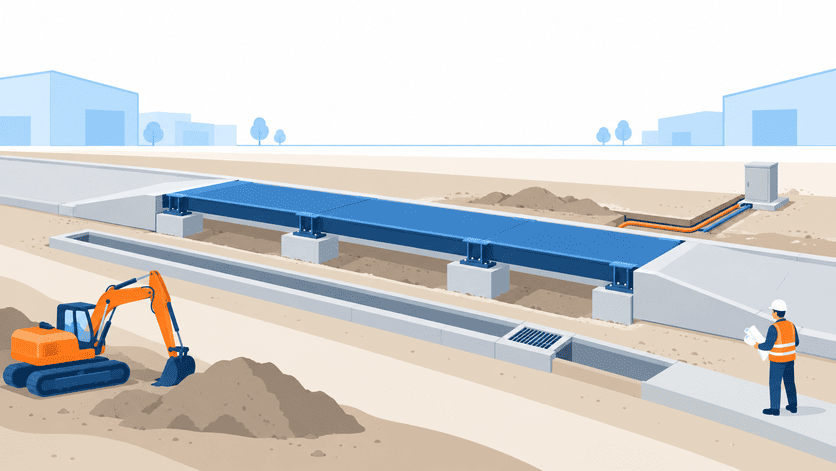
The real cost of a weighbridge includes civil foundation construction, drainage engineering, approach ramps and lane geometry, site preparation, electrical and data cabling, initial calibration, and lifetime recalibration. Many first-time buyers budget only the equipment and discover the civil works cost after commitment — sometimes doubling or tripling the expected investment.
The Costs Buyers Discover After Installation
In my experience, the budget gap follows a predictable pattern. A buyer requests a quote for a weighbridge. We provide the equipment price. The buyer approves. Then the civil engineer visits the site and delivers the foundation, drainage, and ramp estimate — and the project stalls or the buyer is forced to cut corners.
Here is a rough breakdown of what a full weighbridge installation involves beyond the equipment:
| Cost Category | Typical Scope | Often Missed? |
|---|---|---|
| Civil foundation | Reinforced concrete pit or surface pad, engineered for soil conditions and rated load | Yes — especially soil testing |
| Drainage system | Pit drains, pumps (for pit-type), grading around the platform | Yes |
| Approach ramps & lane geometry | Ramps on both ends, lane markings, fencing, traffic flow design | Sometimes |
| Electrical & data cabling | Power supply, signal cable runs, network connection to weighing software | Sometimes |
| Initial calibration | On-site calibration with certified test weights (availability varies by region) | Rarely budgeted separately |
| Ongoing recalibration | Periodic verification — frequency depends on local trade regulations | Almost always missed |
| Spare-part logistics | Lead time for replacement load cells, junction boxes, indicators | Almost always missed |
Pit-Type vs. Pitless: A Cost and Risk Decision
The choice between a pit-type (below-ground) and a pitless/surface-mounted weighbridge is not just about space. Pit installations introduce:
- Drainage complexity — water must be actively pumped or gravity-drained from the pit.
- Foundation cost — deeper excavation, waterproofing, and reinforcement.
- Maintenance access — inspecting load cells and junction boxes in a flooded or silted pit is difficult and sometimes dangerous.
I have seen cases where buyers chose pit-type installation for aesthetic reasons (flush deck surface) and then spent years fighting water accumulation, corrosion, and access problems. The pitless modular approach avoids most of these issues at the cost of requiring ramps and more surface space.3
Key takeaway: When you evaluate weighbridge quotes, ask the supplier to help you scope the full installed cost — not just the equipment. If a supplier only quotes equipment and does not ask about your site, that is a warning sign.
Does Buying a Higher Capacity Weighbridge Make It Safer?
This is a common instinct — and it backfires. Buyers think: "If my heaviest truck is 60 tons, I will buy an 80-ton or 100-ton scale for safety margin." The logic sounds reasonable. The consequences are not.
Oversizing a weighbridge does not make it safer. It increases the division value (the smallest increment the scale can display), which reduces usable resolution for lighter loads. Meanwhile, the failures I see most often are not about total capacity — they are about deck length versus vehicle length, single-axle overload on a section, and drivers stopping partially off the platform.
Resolution Loss from Oversizing
Every weighbridge has a relationship between its maximum capacity and its division value (readability). A simplified illustration:
| Max Capacity | Typical Division Value | Practical Impact |
|---|---|---|
| 60 t | 20 kg | Adequate resolution for most loaded trucks |
| 80 t | 20–50 kg | Acceptable, but lighter loads lose precision |
| 100 t | 50 kg | Poor resolution for vehicles under 20 t |
| 120 t | 50–100 kg | Useful only for consistently heavy traffic |
If your operation weighs a mix of light and heavy vehicles — delivery vans alongside loaded dump trucks — an oversized scale gives you coarse readings on the lighter vehicles. The accuracy class might be the same, but the practical usefulness drops.
The Real Capacity Problem: Length and Axle Mismatch
In the complaints we handle, capacity-related failures almost never involve the total weight exceeding the rated capacity. They involve:
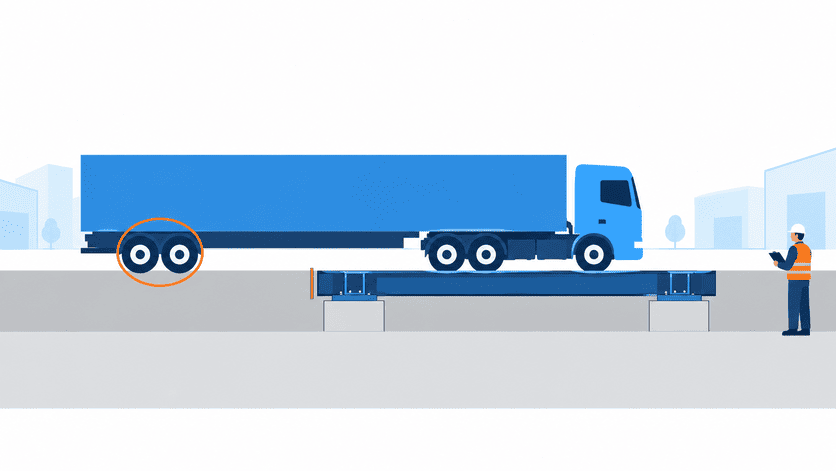
- Trucks longer than the deck. If a 18-meter trailer drives onto a 12-meter platform, some axles are off the deck. The reading is meaningless.
- Single-axle overload. A truck may be within total capacity but concentrate excessive load on one axle group, overstressing individual load cells.
- Partial positioning. Drivers stop short, pull too far forward, or angle across the deck — especially on busy sites without lane guidance.
How I Scope Capacity
When a buyer asks me "what capacity do I need?", I do not start with tonnage. I ask:
- What vehicle types will cross the scale? Two-axle, three-axle, semi-trailer, full trailer?
- What is the longest vehicle?
- How many axles, and what is the heaviest axle group?
- How many trucks per day? High-traffic sites need fatigue-rated designs.
- Is the weight used for internal control or trade settlement? Trade settlement has stricter resolution and verification requirements.
Capacity is a function of vehicle type × axle configuration × daily traffic × required deck length, not a single number to maximize.
Key takeaway: Tell your supplier what vehicles you weigh, not what capacity you want. A well-matched 60-ton, 18-meter weighbridge will outperform an oversized 100-ton, 12-meter one for the same fleet.
Can You Install a Weighbridge and Forget About It?
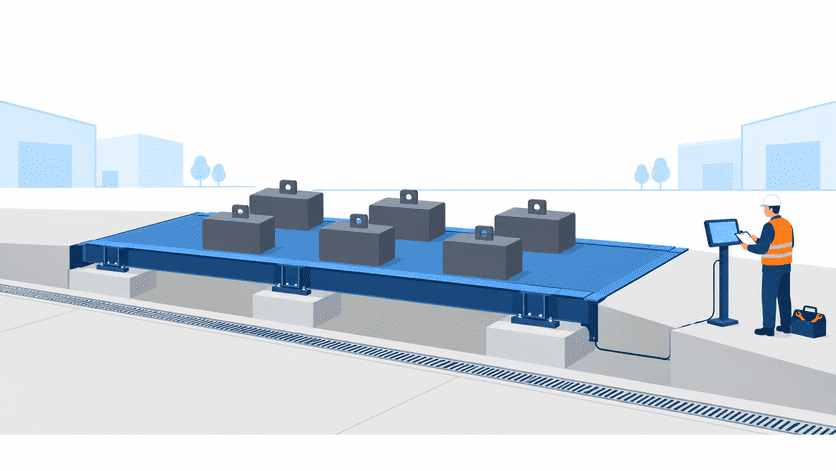
You cannot. This is the disadvantage that causes the most long-term damage — because it compounds silently. A weighbridge is a maintained system, not an appliance.
A weighbridge requires periodic calibration, environmental inspection, component replacement, and local service access to maintain accuracy and compliance. Without these, readings drift, disputes arise, and — where weights are used for trade settlement — the operator faces compliance exposure. Unattended weighing systems reduce manual manipulation and queueing4 but do not eliminate disputes, misuse, or environmental failure.
The Maintenance Burden Buyers Underestimate
Here is what ongoing weighbridge ownership looks like:
- Periodic calibration. Depending on local regulations and whether the scale is used for trade settlement, calibration may be required annually or more frequently.5 This requires certified test weights and qualified personnel — both of which may have limited availability in remote areas.
- Junction box inspection. As I described above, moisture, corrosion, and pests inside junction boxes are leading causes of drift. Regular inspection is simple but often skipped.
- Load cell health monitoring. Load cells degrade over time due to overload events, fatigue, and environmental exposure.6 Identifying a failing cell early prevents systematic error.
- Indicator and software updates. Weighing indicators and connected software need periodic attention — firmware updates, parameter checks, database maintenance.
- Spare-part lead time. If a load cell fails and the replacement takes six weeks to arrive, the scale is either out of service or reading inaccurately for six weeks.
The Limits of Unattended Weighing Systems
Unattended vehicle weighing systems — integrating license plate recognition (ANPR), cameras, automatic barriers, indicators, and weighing software — are increasingly popular. They offer real benefits:
- Reduced queuing time
- Reduced manual data entry errors
- Reduced opportunity for operator manipulation
- Continuous photographic records
But I want to be direct about their limitations, because I see buyers treat them as a complete solution for disputes and fraud:
- Dust, glare, rain, and poor lighting degrade camera and ANPR performance.
- Mixed vehicle types (different plate formats, trailers with multiple plates, dirty plates) cause recognition failures.
- Network and power instability at remote sites can interrupt data logging.
- The weighbridge itself still needs calibration, inspection, and maintenance. Automation does not change the physics of the scale.
- Disputes still occur — about tare weights, partial loads, vehicle identification mismatches, and system downtime gaps.
Unattended systems are a valuable layer, not a replacement for a well-maintained weighbridge and clear operational procedures.
Key takeaway: Before you buy, ask yourself: who locally can calibrate this scale, how quickly can I get a replacement load cell, and what happens to my operation if the scale is down for a week? If you do not have good answers, solve those problems before purchasing.
When Is a Weighbridge the Wrong Tool Entirely?
This is the question I wish more buyers asked at the start. A full weighbridge — with its civil foundation, fixed installation, and ongoing maintenance — is a significant commitment. For some tasks, it is simply the wrong instrument.
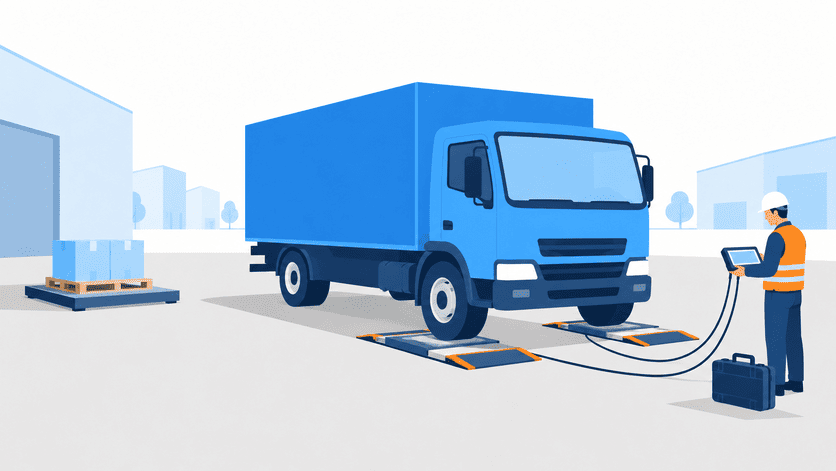
A full weighbridge is the wrong tool when weighing is low-frequency or temporary, when loads are small enough for platform or bench scales, when the site cannot support civil foundation work, or when vehicle weighing needs are portable and project-based. Portable axle pads, platform scales, bench scales, pallet truck scales, and pitless modular weighbridges each serve scenarios where a traditional weighbridge creates unnecessary cost and complexity.
Matching the Instrument to the Task
| Scenario | Better Alternative | Why |
|---|---|---|
| Temporary construction site, seasonal weighing, or mobile enforcement | Portable axle pads | No foundation, relocatable, quick deployment |
| Small-batch receiving, packing-line check weighing, parts counting | Bench scales or platform scales | Lower cost, higher resolution for small loads, no civil works |
| Warehouse receiving or shipping dock, pallet-level weighing | Pallet truck scales | Combines material handling and weighing, no dedicated floor space |
| Site where excavation is impossible or drainage cannot be solved | Pitless modular weighbridge | Surface-mounted, avoids pit drainage problems, easier maintenance access |
| Internal process control with low truck frequency (a few per week) | Portable axle pads or drive-over pads | Avoids the fixed-cost commitment for infrequent use |
The Reframed Question
The question is not "what are the disadvantages of a weighbridge?" The question is:
- Is a full, fixed-installation weighbridge the right instrument for my actual task?
- What recurring cost and failure exposure am I signing up for?
- Have I matched the platform length, capacity, and division value to my real vehicle fleet?
- Can my site support the foundation, drainage, and access this system requires?
- Do I have local calibration and service capability?
If the answers point away from a full weighbridge, that is not a failure of the product. It is a success of the evaluation process.
Frequently Asked Questions
What is the biggest hidden cost of a weighbridge?
The civil foundation and site preparation — including drainage, approach ramps, and soil engineering — typically exceed the equipment cost for first-time installations.7 Ongoing recalibration and spare-part logistics are the biggest hidden recurring costs. Budget for the full installed system, not just the scale.
How often does a weighbridge need calibration?
Calibration frequency depends on local trade and metrology regulations, which vary by country and application. Scales used for trade settlement generally require more frequent verification than those used for internal control. Consult your local weights and measures authority for specific requirements in your market.
Can a weighbridge work without a pit?
Yes. Pitless or surface-mounted modular weighbridges are installed above ground with approach ramps on each end. They avoid the drainage, waterproofing, and access problems of pit-type installations, though they require more surface space and ramp construction. For many sites, pitless designs reduce long-term maintenance burden.
Do unattended weighing systems eliminate weighbridge disputes?
No. Unattended systems with cameras, ANPR, and automatic barriers reduce manual manipulation and data entry errors, but disputes still arise from tare weight discrepancies, vehicle identification failures, system downtime, and environmental factors like dust or glare affecting cameras. They are a valuable control layer, not a complete solution.
Is it better to buy a weighbridge with higher capacity than I need?
Not automatically. Oversizing increases the division value, reducing usable resolution for lighter loads. The better approach is to match capacity, deck length, and division value to your actual vehicle fleet — including the longest truck and heaviest axle group — rather than adding a blanket safety margin on tonnage alone.
Conclusion
The real disadvantages and limitations of weighbridges are not hidden in the spec sheet — they are embedded in the site, the environment, the maintenance plan, and the match between the instrument and the actual task. Foundation and drainage problems, junction-box environment failures, vehicle-length mismatches, resolution loss from oversizing, and the absence of local calibration capability are the patterns I see repeatedly in after-sales cases. Buyers who ask the right diagnostic questions before committing — about site conditions, vehicle fleet, total installed cost, and service access — consistently make better decisions than those who compare only capacity and price.
If you are evaluating whether a weighbridge is the right investment for your operation, I would rather help you scope the decision correctly than simply quote a scale. At HENER, we start every project conversation with the site and the task, not the tonnage. Reach out with your site conditions, vehicle types, and application requirements — and we will help you determine whether a full weighbridge, a pitless modular system, portable axle pads, or a simpler platform scale is the right fit.
References
- Nonautomatic weighing instruments Part 1: Metrological ...
- Environmental Factors That Affect Strain Gauge Performance
- Pit Mounted vs Pitless Weighbridges: Which Is Better?
- Weighbridge Queue Management System to Reduce Truck ...
- Weights and measures: business guidance
- Design and Shape Optimization of Strain Gauge Load Cell for ...
- What Does a Weighbridge Cost to Buy, Install, and Operate?