
Struggling with measurement accuracy1? Industry language can be confusing, leading to costly errors. This simple mix-up between mass and weight2 might be the root of your operational headaches.
Mass is the amount of matter in an object, which never changes. Weight is the force of gravity acting on that mass, which can change depending on your location. For most business on Earth, scales measure this force but display it as mass (kg or lb) for convenience.
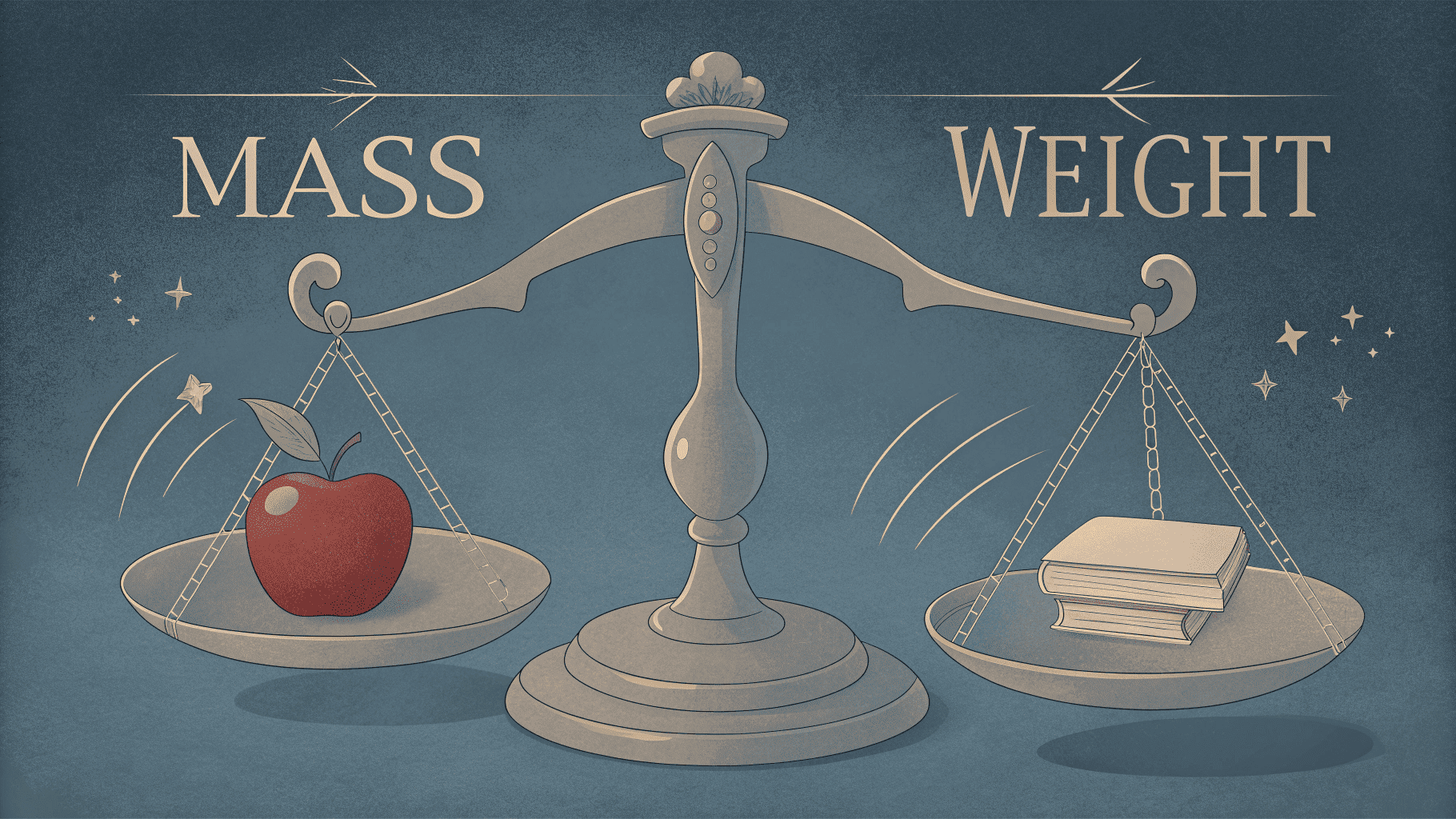
For years, I've seen clients use "mass" and "weight" as if they mean the same thing. In daily conversation, that's usually fine. But in the world of industrial weighing, where precision means profit, the difference is huge. It’s a fundamental concept that, once you grasp it, will change how you think about every measurement you take in your facility. Let's break down this distinction so you can ensure your operations are built on a foundation of true accuracy.
Defining Mass and Weight: Fundamental Distinctions in Measurement?
Are you sure your scales are telling you the whole story? They show a number, but that number can represent different physical properties, creating confusion and potential for error.
Mass is a measure of the amount of "stuff" (or matter) in an object. It is a fundamental property that doesn't change. Weight, on the other hand, is the gravitational force3 exerted on that object. It is a measurement of force, not matter.

When I started my career as a weighing technician, this distinction was one of the first things I had to master. Mass is an intrinsic property4. Think of a one-kilogram block of steel. That block contains the same amount of steel whether it’s in your warehouse in Guadalajara or on the moon. Its mass is constant. Weight is the relationship between that mass and gravity. The scale you use is actually measuring the downward force the block exerts, which is its weight. The scale's electronics then convert that force reading into a mass unit, like kilograms or pounds, for a practical reason: as long as you're on Earth, gravity is consistent enough for this conversion to work for trade and operations. Understanding this helps you appreciate what your equipment is actually doing. It's measuring a force to tell you about an object's mass.
Location Dependence: The Variable Nature of Weight vs. Constant Mass?
Do you ship products globally? If so, you might wonder if the weight of your goods changes. This is a common question that can impact logistics and international compliance.
An object's mass is always the same, no matter where it is. Its weight, however, changes depending on the local gravitational pull. This means the same object would have a different weight on a mountaintop than at sea level, or on the moon.

This concept of location dependence isn't just for astronauts. Gravity isn't perfectly uniform across the Earth. It's slightly weaker at higher altitudes and at the equator. For most day-to-day operations, this variation is so small that it's negligible. But for high-precision scientific or calibration work, it matters. I once helped a client who operated a lab at a high-altitude facility. Their scales needed to be calibrated specifically for that location to provide accurate mass readings. If they moved the same scale to a sea-level facility without recalibrating, their measurements would be slightly off. Why? The weight (the force being measured) of their samples was less at the higher altitude. This is why proper calibration on-site is critical. Your Hener scale is calibrated to your specific location to ensure that the weight it measures is correctly converted into an accurate and reliable mass reading, no matter where your business is.
Unit Confusion: Proper Measurement Units for Mass and Weight?
Ever seen "kg" and "N" and wondered what the difference is? Using the wrong units can cause miscommunication and errors in technical documents, putting compliance and safety at risk.
The standard scientific unit for mass is the kilogram (kg), while the unit for weight (a force) is the Newton5 (N). In commerce and daily life, we use mass units like kilograms or pounds to describe weight because gravity is relatively constant on Earth.
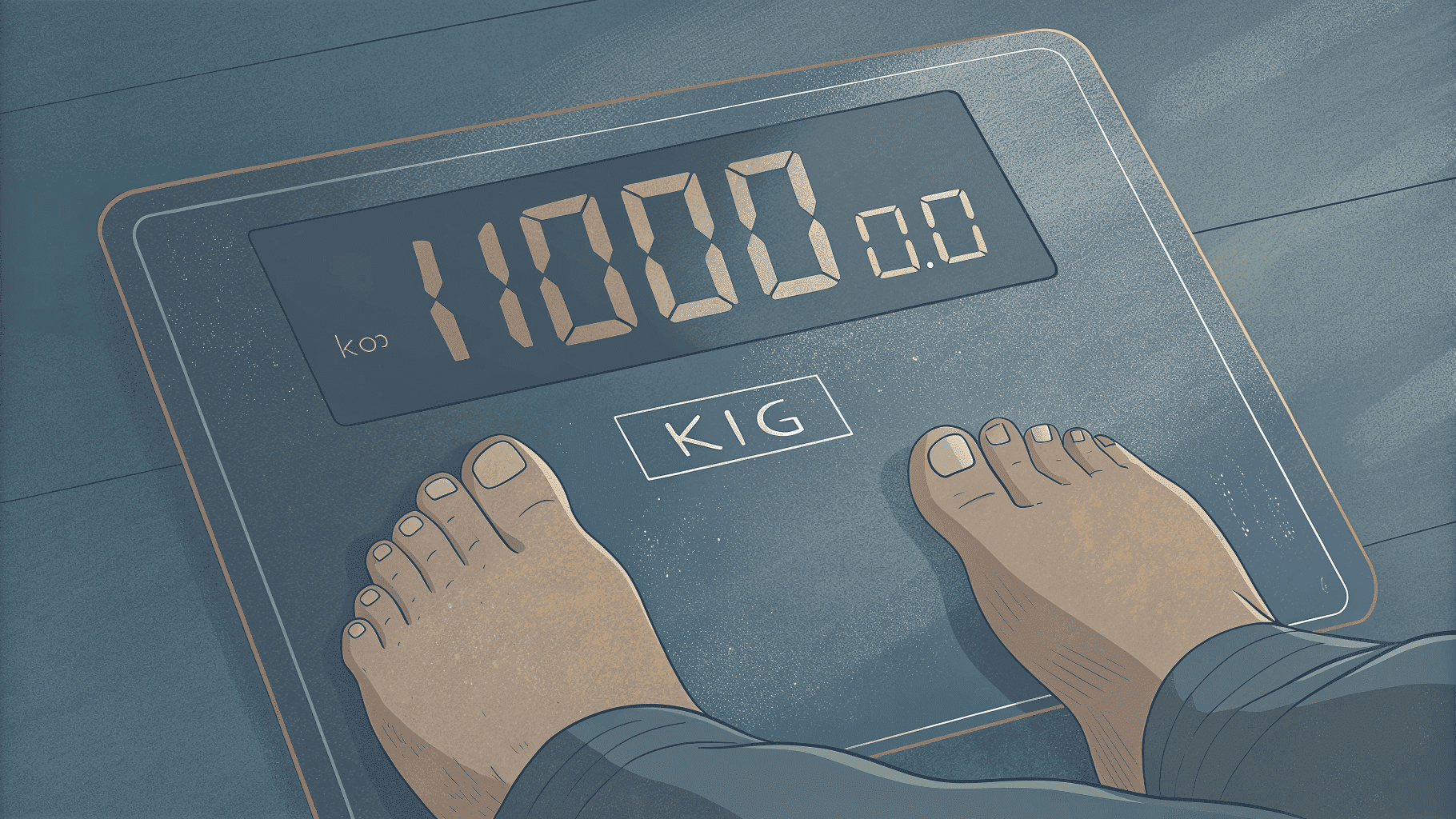
This is where physics class meets the factory floor. Scientifically, if you have a 10 kg bag of grain, its mass is 10 kilograms. To find its weight, you multiply its mass by the acceleration due to gravity (about 9.8 m/s²). So its weight is 98 Newtons. Nobody in logistics or trade talks in Newtons, though. We talk in kilograms and pounds. Why do we get away with this? Because all our buyers and sellers are on the same planet, experiencing the same gravity. Scales are designed to exploit this. They measure the force in Newtons but are calibrated to display a mass value.
This practical simplification is called "apparent mass". Here’s a simple table to clarify:
| Property | Definition | Standard Unit | Common Unit | Changes with Location? |
|---|---|---|---|---|
| Mass | Amount of matter | Kilogram (kg) | Kilogram (kg), Pound (lb) | No |
| Weight | Force of gravity | Newton (N) | Kilogram (kg), Pound (lb) | Yes |
This is why you buy flour in "kilograms," not "Newtons." Your scale is already doing the conversion, assuming Earth's gravity. It’s a shortcut that makes business work.
Practical Applications: Hener’s Solutions for Accurate Weighing?
So, how does this physics lesson help your business operations? Knowing the difference is key to selecting and using your weighing equipment correctly for maximum accuracy and efficiency.
Understanding that your scales measure weight to determine mass is critical for proper calibration and use. Hener scales6 are engineered to provide precise mass readings by accurately measuring weight force and compensating for environmental factors7, ensuring transactional fairness and operational integrity.

For an operations manager like Carlos in Guadalajara, this knowledge is power. When his truck scales weigh incoming grain, they are measuring a massive downward force. Our Hener scales6 are built to translate that force into a highly accurate mass in kilograms. This ensures the farmers are paid fairly for their product and the company's inventory is precise. When he uses our platform scales in the warehouse, he can trust that the 25 kg bags of produce are measured correctly for export, meeting international trade standards. The key is calibration. We ensure our scales are calibrated on-site to account for local gravity and provide a true mass reading. This eliminates disputes and builds trust. From our heavy-duty truck scales to our versatile platform scales, our focus is on turning the physical principle of weight into the business-critical data of mass.
Conclusion
Mass is the matter in an object, and weight is the force of gravity on it. For accurate business, your scales must expertly convert weight force into a reliable mass reading.
Explore this resource to learn how to enhance measurement accuracy, reducing costly errors in your operations. ↩
Understanding the difference between mass and weight is crucial for accurate measurements; this link provides a clear explanation. ↩
This resource explains gravitational force and its impact on weight, essential for accurate measurements. ↩
Learn about intrinsic properties to better understand the fundamental concepts of mass and weight. ↩
This link provides insights into the Newton, the unit of weight, and its significance in measurements. ↩
Learn about Hener scales and their features designed for precision in weighing, enhancing your operations. ↩
Understanding environmental factors can help improve measurement accuracy in various conditions. ↩