
Are you losing money on missing tonnage? Cross-border trade disputes stall payments and ruin trust. Standardized truck scales1 fix this problem by matching origin and destination weights perfectly.
Standardized truck scales1 eliminate AfCFTA trade disputes by ensuring that both origin and destination facilities use the same accuracy tolerances. By using standardized, OIML-certified digital load cells, companies avoid false weight discrepancies caused by outdated analog scales, ensuring fast payments and absolute trust across borders.
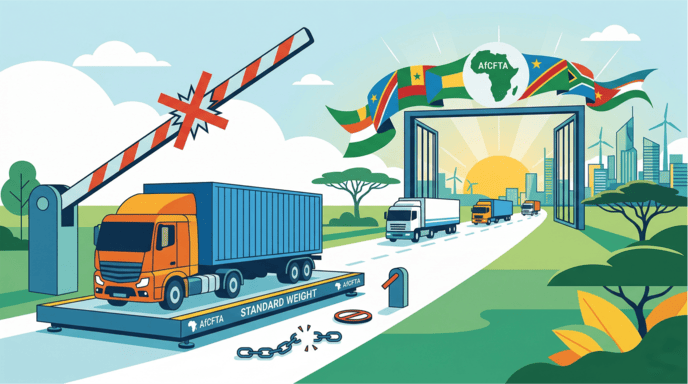
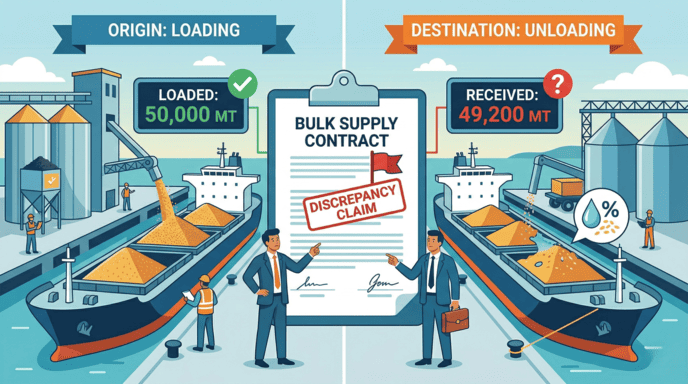
Last year at a logistics expo in Nairobi, a maize exporter pulled me aside. He was very frustrated. He thought someone was stealing his grain at the Kenya border. His Zambian scale showed 40 tons, but the receiving depot showed 39.2 tons. I looked at his diagnostic reports. I saw the truth instantly. No one was stealing his grain. The problem was his buyer's old truck scale. If you ship bulk commodities across borders, you face this exact nightmare. Let me explain how bad scales steal your money and how you can stop these losses before your next shipment.
The Hidden Friction in Free Trade: Why Weight Discrepancies Derail Bulk Commodity Contracts?
Do your invoices not match the receiving reports? This mismatch delays your money and ruins business relationships. You need to understand why these weighing errors happen first.
Weight discrepancies derail bulk commodity contracts because differing scale accuracies create false shortages. When origin and destination scales use different tolerances, the final invoice is disputed. This halts cash flow, damages trust between partners, and slows down the entire supply chain.
Demystifying the Missing Tonnage Problem
The African Continental Free Trade Area (AfCFTA) changes how we move bulk items like minerals and grain. But a hidden problem slows this progress down. I call it the classic missing tonnage dispute. When you load a truck in one country and unload it in another, you expect the numbers to match. But they rarely do.
You might think theft is the root cause. My years working as a weighing equipment technician taught me otherwise. The real issue is a complete lack of weighing standardization. Different facilities use scales with vastly different accuracy rules. When the numbers clash, both sides refuse to pay. This creates a bitter standoff.
Let us look at how these differences break down in real operations. I created a simple comparison to show why these trade disputes happen.
| Scale Type | Accuracy Level | Resulting Action | Impact on Contract |
|---|---|---|---|
| Unstandardized Analog | Low | Invoice contested | Payment delayed |
| Calibrated Digital | High | Invoice accepted | Smooth transaction |
When you use unstandardized scales, you invite arguments. Your buyer will only pay for what their scale shows. If your scale is right but theirs is wrong, you lose money. You must standardize both ends to fix this operational friction.
The Physics of Disagreement: How Calibration Drift and Corner-Load Errors Skew Cross-Border Weights?
Are your weights changing with the weather? Bad physics can make 40 tons look like 39 tons. You must fix these mechanical errors to protect your profits.
Calibration drift2 and corner-load errors3 skew cross-border weights when old analog scales react poorly to changing environments. A warped scale deck or uncompensated load cells will lose accuracy under maximum capacity. This physical failure creates false weight readings, leading directly to costly cross-border disputes.
The Mechanical Truth Behind Bad Weights
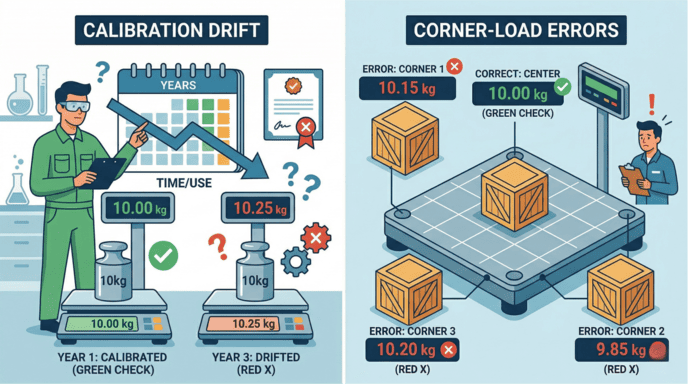
To understand why scales disagree, we need to look at the basic physics of weighing. Many regional depots across Africa still use outdated analog scales. These old systems suffer from non-linear calibration drift. This means the scale loses its exact accuracy as the temperature changes during the day.
Another big issue is the corner-load error. I saw this exact problem with the Zambian maize exporter. I checked his buyer's scale diagnostic reports. The buyer's scale had a warped foundational deck. When a heavy truck drove onto the edge of the scale, the uncompensated analog load cells bent the wrong way. The scale simply failed under maximum capacity.
We can break down these physical failures into clear operational categories.
| Physical Error | Cause | Effect on Final Weight |
|---|---|---|
| Calibration Drift | Temperature changes | Unpredictable weight shifts |
| Corner-load Error | Warped deck structure | Lower weight on edges |
| Capacity Failure | Uncompensated load cells | Massive errors under heavy loads |
Weighing machines must speak the same mathematical language. If a scale physically bends or drifts, it will never give the right number. You must replace parts that fail under pressure.
Weighing Standardization: The Urgent Need for OIML-Certified Metrics Across the AfCFTA Network?
Do you hate arguing over invoices? Uncertified scales make cross-border trade impossible to manage. You need OIML-certified metrics to put everyone on the same exact page.
OIML-certified metrics provide the weighing standardization urgently needed across the AfCFTA network4. By demanding an international accuracy standard, countries ensure that all regional depots measure commodities exactly the same way. This absolute data parity removes guesswork and creates a unified, reliable language for bulk trade.
Building Absolute Data Parity
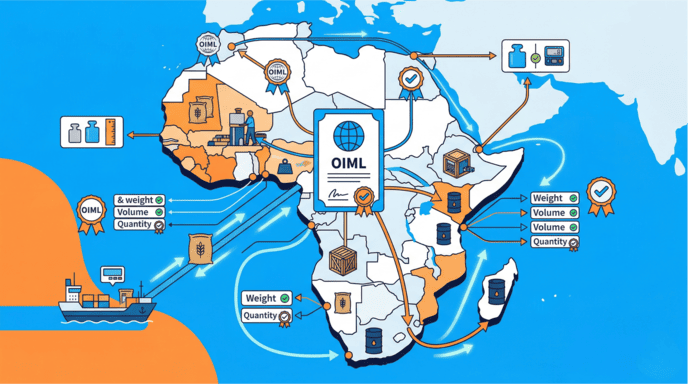
You cannot build a strong trade network based on wild guesses. As the AfCFTA trade volume grows, we need absolute data parity. This means 40 tons in Zambia must read exactly as 40 tons in Kenya. You achieve this goal through strict weighing standardization.
International standards exist for this very reason. The OIML sets the universal rules for weighing accuracy. When all regional depots use OIML-certified scales, they eliminate the root cause of arguments. As an engineer, I know that clear rules fix bad data. When you standardize the hardware, you secure the entire trade route.
Here is how standardization improves the whole cross-border network.
| Metric Status | Trust Level | Dispute Risk | Payment Speed |
|---|---|---|---|
| No standard | Very low | Very high | Extremely slow |
| Local standard | Medium | Medium | Delayed |
| OIML-certified | High | Zero | Immediate |
We must demand these international metrics for every single border crossing. Fleets and depots that adopt these rules will completely eliminate their costly payment delays. Standardization is the only path forward for smooth cross-border trade.
Building Borderless Trust: Securing Payment and Compliance with HENER’s Precision Truck Scales?
Are you scared of losing more tonnage? Using weak equipment puts your business at severe risk. HENER precision truck scales secure your payments with perfect data every time.
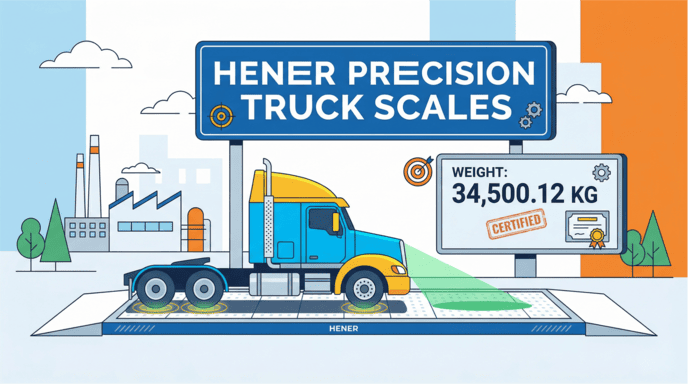
HENER precision truck scales secure payment and compliance by using OIML-compliant digital load cells. These advanced systems represent the highest international accuracy standards. By guaranteeing that every cross-border weight holds absolute credibility, our scales build borderless trust and stop trade disputes before they even start.
Delivering Unmatched Accuracy Everywhere
You need equipment you can fully trust. At HENER SCALE5, we solve these complex weighing challenges every single day. We equip our truck scales with OIML-compliant digital load cells. These parts represent the highest international accuracy standards available today.
My mission has always been to share my expertise with clients everywhere. If you move agricultural goods or minerals, your weights must mean something. We guarantee that your cross-border weight data holds absolute credibility. When you use a HENER scale, you never have to wonder if the receiver will disagree. You get the exact same number, every single time.
Let us look at the real-world benefits of using our certified systems.
| System Feature | Direct Benefit | Business Outcome |
|---|---|---|
| Digital Load Cells | Perfect measurement | No missing tonnage |
| OIML Compliance | Meets local laws | Easy border crossing |
| Stable Deck Build | Stops corner errors | Secures full payment |
You secure your payment the moment your truck rolls onto a proper scale. We provide these high-performance weighing solutions to help you operate faster and smarter. You can stop worrying about missing grain and start focusing on growth.
Conclusion
Standardized truck scales1 end AfCFTA missing tonnage disputes. By using OIML-compliant digital systems from HENER SCALE5, you ensure perfect accuracy, build complete trust, and secure your cross-border payments instantly.
See how standardization creates consistent weights at both ends, reducing disputes and improving confidence in every shipment. ↩
Understand how calibration drift changes readings over time and why fixing it is vital for protecting profit margins. ↩
Learn why uneven loading points distort readings and what solutions improve scale performance under real operating conditions. ↩
See how better weighing infrastructure can accelerate trade, improve compliance, and strengthen commercial trust across countries. ↩
Explore a specialized provider focused on precise, compliant weighing systems that help secure payments and reduce disputes. ↩