













On this page

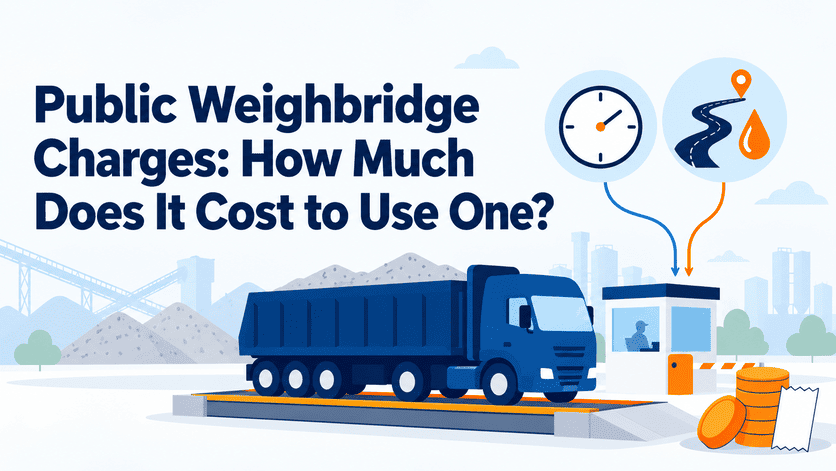
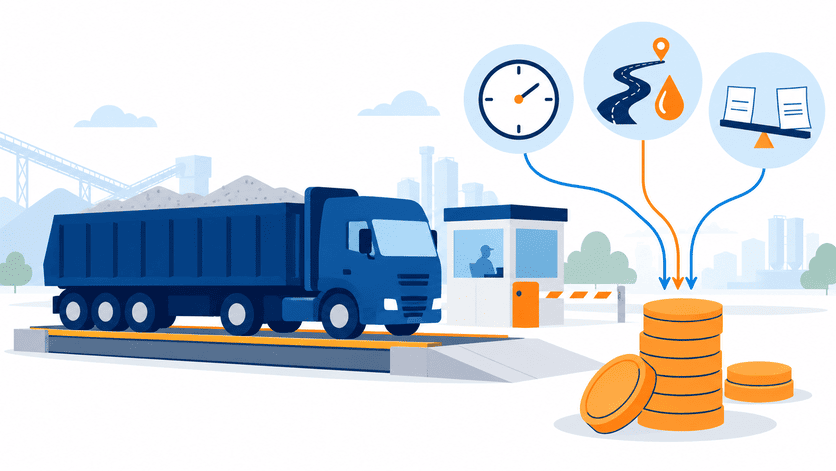
Public weighbridge charges seem straightforward — pay a fee, get a ticket, drive away. But if you ship bulk cargo regularly, that simple fee hides a much larger cost. Queue time, detour distance, driver downtime, and the ever-present risk of a disputed weight reading all compound into a per-trip expense that most buyers never calculate. The real cost of using a public weighbridge is rarely the number printed on the rate board.
The actual cost of a single public weighbridge visit includes far more than the posted fee. It includes driver and truck idle time, fuel for detours, and — most critically — the financial exposure when the buyer's scale and the seller's scale disagree on weight. Published fees vary widely by country, vehicle type, axle count, and operator policy, so no single price found online is universally reliable. The formula for calculating your true per-trip cost matters more than any fixed number.
I've spent over two decades manufacturing truck scales — selling them to traders who previously relied on public weighbridges, supplying equipment to public weighbridge operators themselves, and visiting project sites where I've watched how these facilities actually run. What I've learned is that the fee question is the easy part. The hard part is everything the fee doesn't cover. Let me walk you through what public weighbridge charges really look like, what you should check every time you use one, and when the math starts pointing toward a different solution.
What Is the Real Per-Trip Cost of a Public Weighbridge?
Most shippers look at the posted weighing fee and think that's their cost. It isn't. The fee is usually the smallest line item on your actual per-trip expense.1
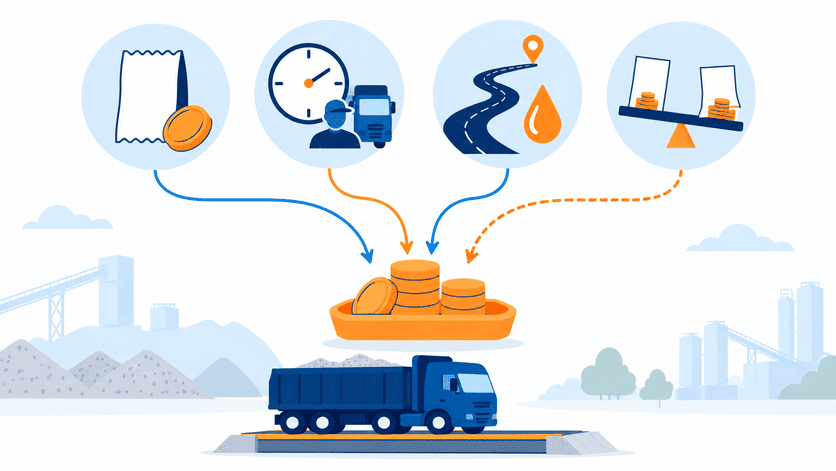
The real per-trip cost of a public weighbridge includes the weighing fee, the value of your driver's and truck's time spent queuing and detouring, the fuel burned reaching the facility, and the probability-weighted financial impact of a weight dispute. Any honest cost evaluation must account for all four components — not just the receipt.
The Formula That Travels
Published fee schedules vary so widely — by jurisdiction, vehicle class, axle configuration, single-weigh vs. double-weigh policy, and even time of day — that quoting a specific number here would mislead you.2 Instead, here's a formula you can populate with your own real numbers:
Per-trip cost = Weighing fee + (Driver hourly rate × hours for queue + detour) + Fuel cost for detour + (Probability of weight dispute × Cargo value at stake)
Let me break each component down:
- Weighing fee: This is the only visible cost. It can range from a nominal amount for a single-axle vehicle to a significantly higher charge for multi-axle heavy trucks requiring inbound and outbound weighing. Some operators charge per weigh event; others charge per transaction (two weighs = one transaction). Ask before you queue.
- Driver and truck hours: In the projects and markets we serve, I've seen queue times range from 15 minutes to over two hours during peak season — harvest time in agricultural regions, for example, or month-end at construction material depots. Your driver isn't free. Your truck isn't free. Neither is the cargo sitting idle.
- Fuel for the detour: Many public weighbridges are not on the direct route between loading point and destination. A 10-kilometer round-trip detour, repeated hundreds of times per year, adds up fast.
- Weight dispute exposure: This is the line item most people overlook entirely. If your shipment weighs 30 tonnes and the buyer's scale disagrees with the public weighbridge by even 0.5%, you're arguing about 150 kg of cargo. For high-value commodities — metals, grain, chemical raw materials — that disagreement can represent real money. Multiply the probability of a dispute (based on your experience) by the value at risk, and you get a per-trip expected loss.3
Why the Fee Alone Is Misleading
| Cost Component | Visible? | Controllable? | Typical Share of Total |
|---|---|---|---|
| Weighing fee | Yes | Somewhat (choose operator) | Often the smallest portion |
| Queue + detour time | Partially (predictable patterns) | Limited | Significant during peak periods |
| Fuel for detour | Calculable | Limited by geography | Moderate |
| Weight dispute risk | Hidden until it happens | Very limited at a third-party scale | Potentially the largest single cost |
The key insight: the fee is the cost you see, but the dispute risk is the cost you pay. In my experience, the customers who eventually decided to invest in their own truck scale almost never came to us after comparing weighing fees. They came after a settlement dispute that cost them far more than a year's worth of weighbridge charges.
What Should a Weighbridge Ticket Include to Be Commercially Useful?
A public weighbridge produces a ticket. But not all tickets are created equal. The ticket is the product you're actually paying for — not the digital reading on the indicator screen. And a ticket that lacks key information is commercially worthless when you need it most: during a settlement dispute.
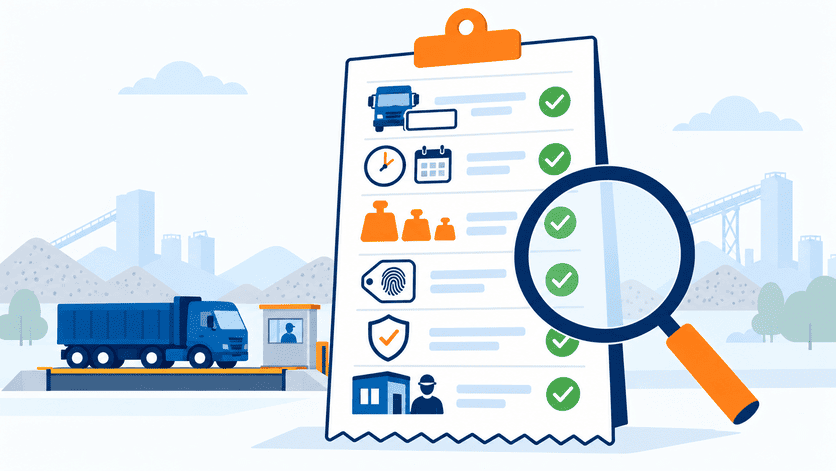
A commercially useful weighbridge ticket should include the vehicle registration (plate number), a timestamp for each weigh event, the gross, tare, and net weights, a unique transaction or ticket number, the weighbridge verification or certification reference, and the name and details of the operating entity.4 If any of these are missing, the ticket's value in a commercial dispute drops significantly.
The Weighbridge Ticket Checklist
I've been on project sites where I watched disputes unfold because a ticket was missing one critical detail. Here's what I now recommend every shipper verify before accepting a ticket:
- Vehicle plate number — Clearly printed, matching the actual truck. This sounds obvious, but handwritten or generic tickets with no plate ID are surprisingly common in some regions.
- Timestamp — Date and time for each weigh event (inbound and outbound). Without a timestamp, you cannot prove the weighing happened before or after loading, or even on the same day as the delivery.
- Gross, tare, and net weight — All three figures should be printed. A ticket showing only net weight provides no way to verify the calculation.
- Unique transaction/ticket number — Essential for traceability. If a dispute arises weeks later, a serial number allows both parties to reference the exact event.
- Weighbridge verification or certification reference — This links the reading to a specific piece of equipment that has (ideally) been inspected and certified by the relevant authority. Regulations vary by country — verify locally what certification or verification marks your jurisdiction requires. Without this reference, the ticket may carry no weight (no pun intended) in a formal dispute.
- Operating entity name and contact details — You need to know who stands behind the reading. An anonymous ticket from an unidentified operator gives you no recourse.
Why This Checklist Matters More Than the Fee
When a buyer's scale and a seller's scale disagree, the public weighbridge ticket becomes the arbitration document. I've seen situations where both parties had tickets, but neither ticket met the minimum standard for the other party to accept it. The result? A standoff, a delayed payment, and a damaged commercial relationship — all because the ticket lacked a timestamp or a verification number.
Before you use any public weighbridge, ask to see a sample ticket. If it doesn't cover the checklist above, the weighing fee — however low — is money poorly spent.
This is jurisdiction-dependent: in some countries, weighbridge operators are legally required to display their certification and include it on every ticket. In others, the requirement is looser or unenforced. Always verify local regulations. But regardless of legal requirements, your commercial interest is best served by demanding a complete ticket every time.
What Physical Errors Can You Actually Check on Site?
You don't need to be a metrologist to spot problems at a public weighbridge. Several common sources of weighing error are visible to anyone standing on site — and they directly affect the accuracy of the reading you're paying for.
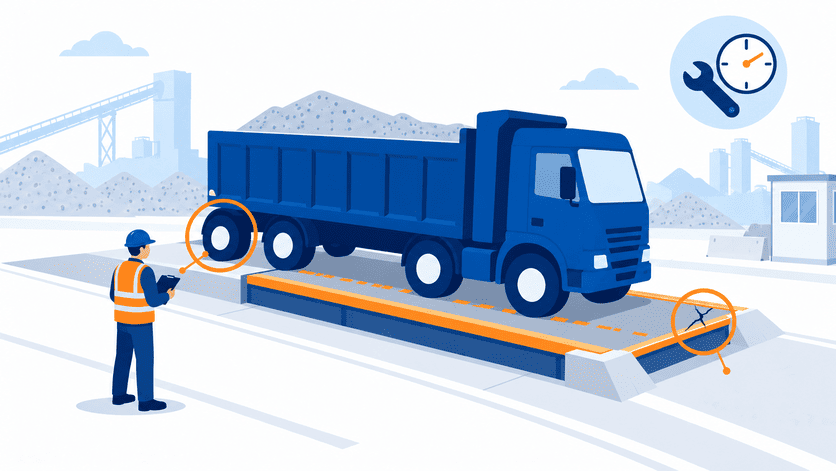
The most common observable errors at a public weighbridge include a platform that is too short for the vehicle being weighed, the truck not being fully on the platform, off-center parking, visible structural damage to the deck, and scales that are visibly overdue for maintenance or calibration. These are things any driver or logistics manager can check before accepting a ticket.
What to Look For Before You Drive On
Here's what I've observed on actual project sites — not in a lab, but in the field:
Short Deck vs. Long Vehicle
A weighbridge platform has a specific length. If your truck — including trailer overhang — extends beyond the platform edges, part of the vehicle's weight is not being captured. I've seen this happen with long trailers at older facilities that were originally built for shorter trucks. If your truck hangs over the edge, the reading is wrong. Period.
Truck Not Fully On the Platform
Sometimes the driver stops short, or pulls too far forward. Both front and rear axles — and all wheels — must be fully on the weighing surface. This sounds basic, but under time pressure, in a queue, drivers cut it close. The operator should verify positioning, but not all do.
Off-Center Parking
Driving onto the platform at an angle or parking significantly off-center can introduce measurement error. Modern load cell configurations are designed to minimize off-center loading effects, but they don't eliminate them entirely — especially on older or poorly maintained scales.
Visible Structural and Maintenance Issues
Look around:
- Is the platform visibly corroded, cracked, or warped? Heavy use and weather take a toll.
- Is debris packed under or around the platform? Dirt, gravel, or frozen material wedged between the platform and the pit walls can physically interfere with the scale's free movement.5
- Is the calibration/verification sticker current? In jurisdictions that require periodic verification, the sticker or certificate should show a date. If it's expired — or absent — the reading may have drifted beyond acceptable tolerance.
Drift Is Real and Seasonal
Scale accuracy drifts over time. Temperature swings, load cycles, and component wear all contribute. A weighbridge that was accurate on the day it was last calibrated may not be accurate six months later — especially in climates with extreme seasonal temperature variation. This isn't a theoretical concern. In the markets we serve, I've seen customers report consistent discrepancies that tracked with season changes, only to resolve after the weighbridge operator performed recalibration.
You cannot calibrate the scale yourself, but you can ask when it was last calibrated and by whom. If the operator can't answer, that's a signal.
Does Structural Neutrality Matter When Choosing a Public Weighbridge?
This is the question most shippers don't think to ask — but it may be the most important one affecting the reliability of public weighbridge charges and the readings behind them.
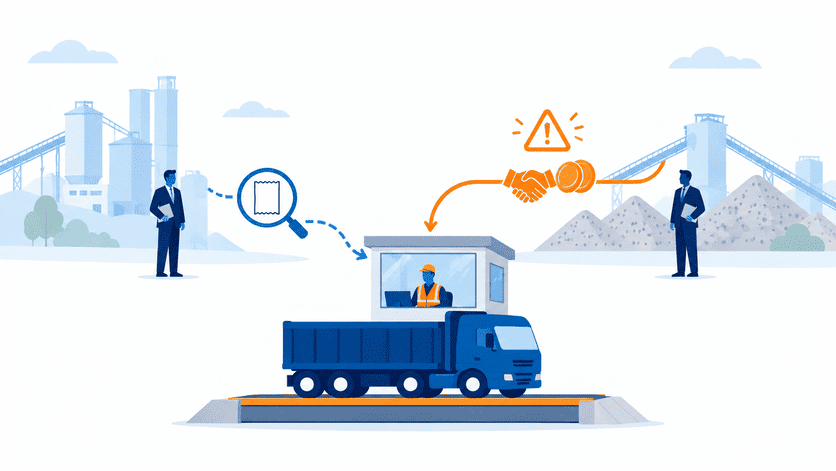
Structural neutrality means the weighbridge operator has no financial relationship with either the buyer or the seller of the cargo being weighed. When the operator is commercially connected to one party — for example, when the weighbridge is owned by the local aggregate supplier — the other party has no independent way to verify the reading and limited ability to challenge it. This is a structural risk, not an accusation, and it applies to any measurement where the measurer has a stake in the outcome.6
How to Evaluate This Risk
I want to be clear: I'm not alleging that any specific operator manipulates readings. What I am saying — based on years of supplying equipment to both independent weighbridge operators and cargo-associated facilities — is that the incentive structure matters.
Ask yourself:
- Who owns the weighbridge? Is it a genuinely independent third party, a municipal or government-operated facility, or a private entity connected to one side of the cargo transaction?
- Who calibrates it, and how often? Independent calibration by a certified third party is a stronger assurance than self-calibration by the operator.
- Can you request a re-weigh at a different facility? Some trade agreements allow for re-weighing at a second independent scale if the first reading is disputed. If your contract doesn't include this provision, consider adding it.
Why This Drives the Ownership Conversation
In the projects and markets we serve, the single most common trigger for a buyer purchasing their own truck scale is not the weighing fee — it's the loss of confidence in a third-party reading they cannot independently verify. When a building material supplier tells me they've been absorbing a 200–300 kg discrepancy on every truckload for months because they can't challenge the weighbridge operator's number, the cost of that accumulated shortfall usually exceeds the price of a truck scale within a year or two.
This isn't about accusing anyone. It's about understanding that a measurement you don't control is a cost you can't manage.
When Does It Make More Sense to Own a Weighbridge Than to Pay Per Use?
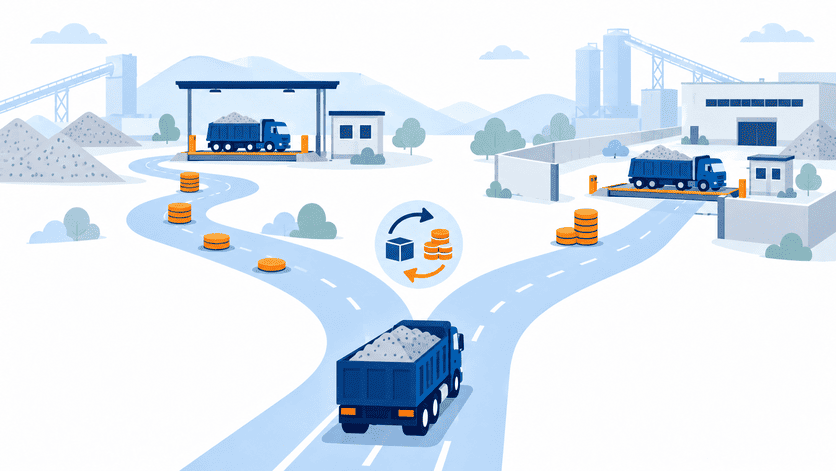
This is the question behind the question. Public weighbridge charges are a recurring operating expense. At some point, for some shippers, the accumulated cost — fees, time, fuel, and especially dispute losses — exceeds the cost of owning a scale.
The switch point depends on your shipment frequency, cargo value, and the cost of weight disputes. Customers we've worked with typically start considering their own scale when they're weighing more than a few hundred trucks per year, handling high-value cargo, or experiencing recurring settlement disagreements. This isn't a universal rule — it's an observed pattern from customer conversations over 23 years.
A Decision Framework, Not a Sales Pitch
I'm a truck scale manufacturer. I have an obvious interest in this answer. So let me be transparent about how I frame this for the customers who ask:
| Factor | Public Weighbridge Makes Sense | Own Scale Makes Sense |
|---|---|---|
| Weighing frequency | Low (occasional, seasonal) | High (daily or near-daily) |
| Cargo value per load | Low to moderate | High |
| Weight dispute history | Rare or nonexistent | Recurring |
| Detour distance/time | Short, on existing route | Long, adding significant time/cost |
| Need for data integration | None (standalone tickets are fine) | Yes (ERP, PLC, inventory, settlement) |
| Control over measurement | Not a priority | Critical for operations or settlement |
The Math the Customer Does
Here's how I've seen buyers think through this:
- Calculate annual per-trip cost using the formula from the first section. Multiply by your annual truck count.
- Add the annualized dispute loss.7 Even a small probability, multiplied by high cargo value and hundreds of trips, produces a meaningful number.
- Compare to the annualized cost of ownership. A truck scale has an upfront cost, plus installation, annual calibration, and maintenance. Spread over a 15–20 year service life, the annual cost is often lower than people expect.8
I won't put specific numbers here because scale costs depend on capacity, platform size, foundation type, accessories, and local installation conditions. But I will say this: in the projects we've delivered, the customers who made the switch almost always told us they should have done it sooner — and the trigger was almost always a dispute, not a fee comparison.
What "Owning" Actually Means
Owning your own scale means:
- You control the calibration schedule. You decide when to recalibrate and which certified service provider performs it.
- You control the ticket. Every data field — plate number, timestamp, operator ID, gross/tare/net — is yours to define and verify.
- You control the data. Integration with your ERP, warehouse management, or settlement system becomes possible. You can generate reports, track trends, and audit historical weights.
- You eliminate the detour. The scale is at your facility, on your route, on your schedule.
This doesn't mean a public weighbridge is never the right answer. For low-frequency, low-value, low-dispute operations, paying per use is perfectly rational. The key is making the decision based on your actual numbers, not on the assumption that the posted fee is the only cost.
Frequently Asked Questions
How much does a single public weighbridge visit typically cost?
Published fees vary significantly by country, vehicle type, axle count, and whether you need a single weigh or a double weigh (gross and tare). No single global figure is reliable. Contact operators in your area directly, and remember to factor in time, fuel, and dispute risk — not just the posted fee.
Can I use a public weighbridge ticket to settle a commercial dispute?
This depends entirely on your jurisdiction and contract terms. In some countries, tickets from certified or verified weighbridges carry legal standing; in others, they do not. Always verify local regulations and ensure your weighbridge ticket includes all essential data fields before relying on it for settlement.
How often should a public weighbridge be calibrated?
Calibration and verification intervals are set by local metrological authorities and vary by jurisdiction.9 As a user, you can ask the operator when the last calibration was performed and request to see the current verification certificate. If they can't provide this information, consider using a different facility.
What is the biggest hidden cost of using a public weighbridge?
In my experience, the biggest hidden cost is weight dispute risk — the financial exposure when the seller's reading and the buyer's reading disagree, and neither party has a strong enough ticket or an independent measurement to resolve the difference quickly.
At what point should I consider buying my own truck scale instead of using a public weighbridge?
Customers we've worked with typically start evaluating ownership when they weigh several hundred trucks per year, handle high-value cargo, or face recurring weight disputes. The exact break-even depends on your specific fee structure, time costs, cargo value, and dispute frequency. Run the numbers with your own data.
Conclusion
Public weighbridge charges appear simple on the surface, but the true per-trip cost includes far more than the posted fee. Queue time, detour fuel, and weight dispute exposure often dwarf the weighing charge itself. A commercially useful ticket must include plate number, timestamp, all weight figures, a verification reference, and operator identification — without these, the reading is difficult to defend in settlement. Observable site conditions like platform length, positioning, debris, and calibration currency are checks any shipper can perform. And when frequency, cargo value, or dispute history reaches a certain threshold, the math often favors owning a scale over continuing to pay per trip.
At HENER, we've spent 23 years building truck scales for operators and end users across more than 50 countries. If you're at the point where you're questioning whether your current weighing arrangement is costing you more than it should, we're happy to help you evaluate the numbers — with no obligation. Reach out to our team for a consultation tailored to your shipment volume, cargo type, and operational requirements.
References
- Chapter 2. Work Zone Road User Costs - FHWA Operations
- Find a weighbridge
- Risk and the probability of insolvency: a regulatory ...
- Public Weighbridge Operator's certificate
- Section 2.20. Scales
- NIST Quality System
- Life Cycle Cost Analysis Handbook: Cost Benefit Guide
- Weighbridge service and calibration (UK)
- Calibration and Calibration Verification