













On this page

“Who is doing the foundation, what lifting equipment is on site, and what’s the access road?” is the first question I ask when dealers request quotes for modular truck scale systems. If those answers are missing, a low deck price can hide expensive freight changes or an installation crew that cannot finish the job.
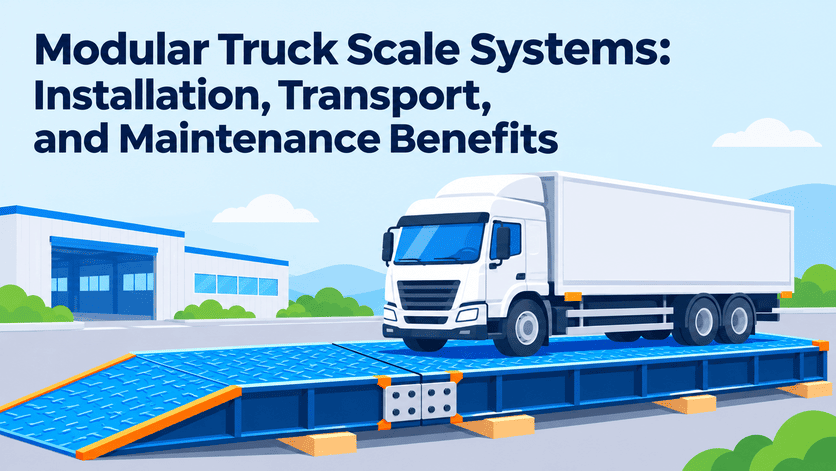
Modular truck scale systems can reduce on-site deck fabrication, simplify transport, and make service planning easier. Those benefits depend on three conditions: the foundation is ready, the packed modules fit the full delivery route, and the local service team can obtain compatible parts. I verify all three before recommending a modular deck.
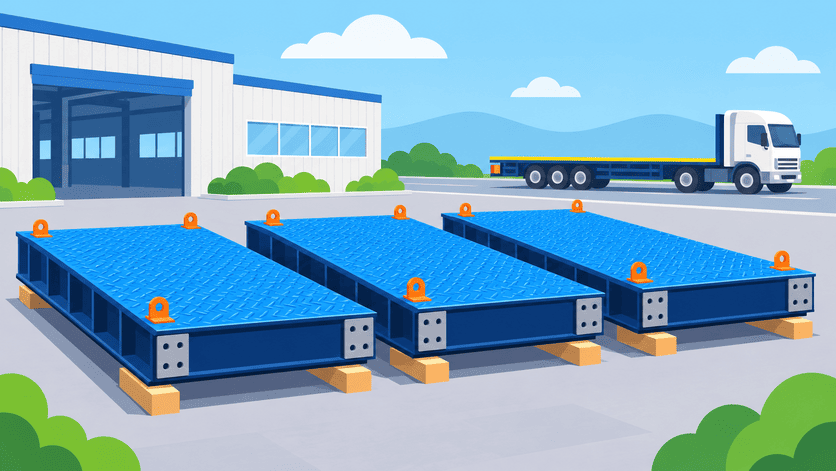
At HENER, I handle export loading plans, answer dealer selection questions, and hear what goes wrong after commissioning. Those conversations have taught me to review what the brochure leaves out. I use the following checks before a dealer commits to a price or delivery date.
What site preparation do modular truck scale systems still need?
A pitless deck can sound like a way to skip civil work. But the installation crew cannot make up for badly positioned embedded plates or missing drainage just because the deck arrived in sections. I ask the dealer to settle who owns the civil work before anyone books the crane.
For a pitless modular truck scale, I ask the buyer to confirm load-bearing foundation pads or supports, acceptable levels and alignment, and drainage1 with the local civil contractor. Modular construction reduces deck fabrication at the site.2 It does not remove the need to check the as-built foundation against the supplier’s project-specific drawing.
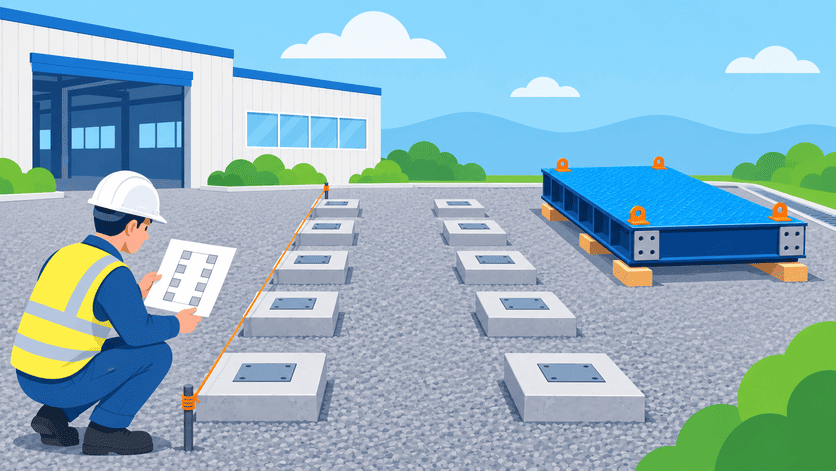
I separate deck assembly from civil readiness
When I review feedback after commissioning, the cases that concern me most are the ones where the crew found a civil problem only after the deck arrived. If an embedded plate is out of position or the supports are not at the agreed levels, the modules may not sit flush. The crew can then spend time trying to adjust corner readings before it has resolved the seating problem. Poor drainage is a separate risk: even a deck that aligns on day one can become difficult to inspect or service if water collects around its supports.
I supply or coordinate the scale interface information from the manufacturer’s side. I do not sign off on site conditions, foundation design, or structural capacity. I ask the local civil contractor or qualified engineer to reconcile the supplier’s foundation drawing with the site and confirm the finished work. Before dispatch, I want the dealer to have written answers to three questions:
- Who checks the as-built work? I ask for a named person to verify support levels, embedded plate locations where applicable, and the clearances shown on the approved drawing.
- Who signs off on drainage and approaches? I ask the civil team to confirm where water goes and whether the planned approach geometry suits the site’s vehicles and traffic.
- Who owns the lift? I share module weights and supplier handling information so a qualified local lifting team can confirm equipment, staging space, and site access.
I also separate modular versus one-piece deck construction from pit versus pitless installation. They are different decisions. If raised approaches consume too much yard space, I ask the buyer to price a pit installation, including drainage and service access. A modular deck can still be an option in a pit if the supplier’s design supports it.
When do modular truck scale systems make shipping easier?
I sometimes get a request to compare two FOB prices before either supplier has shared a packing plan. That comparison leaves out the cost most likely to change between quotes. I ask for packed module dimensions first, because a deck that fits the price target may not fit the route.
Modular truck scale systems make shipping easier when the packed sections fit the chosen container or trailer and can be handled at every transfer point. I verify package dimensions, weights, loading clearances, destination road access, and unloading arrangements before treating a 40-foot high-cube container plan as a freight advantage.
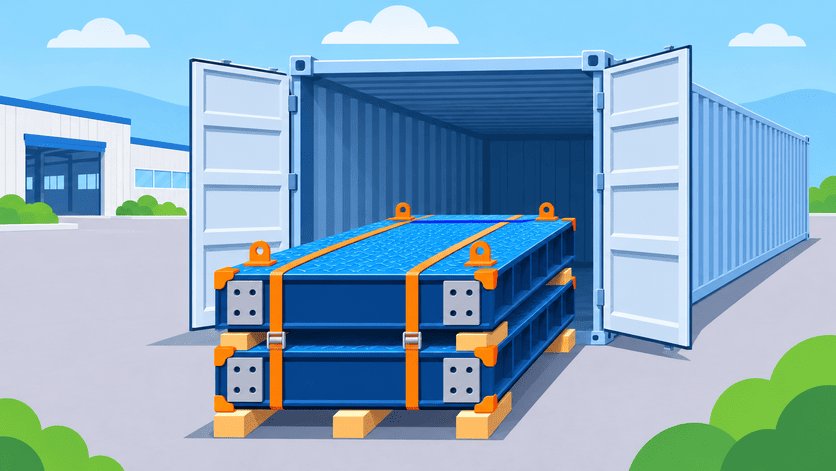
I price the route, not just the ocean leg
When we plan container loading at HENER, I work with the packed dimensions, not the finished platform dimensions on a sales drawing. I ask what the packaging and lifting clearances add, how the sections are oriented for loading, and where accessories will go. A module may fit inside a container on paper but still be difficult to move through the door or position with the equipment available. I ask the forwarder to verify door and internal clearances, allowable payload, and the proposed loading arrangement for the actual equipment being booked.
Then I work backward from the site gate. A standard container booking does not prove that the destination truck can take the final turn into a quarry or that the receiving yard can unload the modules from the planned trailer. If the shipment needs out-of-gauge equipment, special handling, or another transfer, I ask for those items to be priced before the dealer commits to the end customer.
| What I compare | What I ask the dealer or forwarder to confirm |
|---|---|
| Factory packing list | I ask for packed length, width, height, gross weight, and package count. |
| Ocean booking and port handling | I ask whether the proposed equipment and handling plan are accepted at both ports. |
| Inland delivery | I ask about local truck availability, road restrictions, turning room, and any permits or transfers. |
| Site unloading | I ask who supplies the lifting equipment and whether the crew can unload in the planned sequence. |
If a local supplier can deliver a one-piece deck directly to an accessible site, I compare that option too. I use the delivered and unloaded cost, with installation quoted separately on the same basis, rather than assuming a lower FOB price will protect the dealer’s margin.3
What do deck joints tell me about installation and long-term performance?
When a dealer asks me whether modular decks are weaker, I turn the question around: what connection is the supplier offering, and who will install and inspect it? If the quote says only “modular steel deck,” I cannot tell what tools the crew needs or what the dealer will have to service later.
I evaluate modular truck scale joints by asking for the exact connection design, assembly instructions, factory inspection records, and service requirements. Bolted splice plates, pin or shear connections, and field-welded designs place different demands on the installer. I rely on a qualified professional to assess suitability for the intended traffic and site conditions.
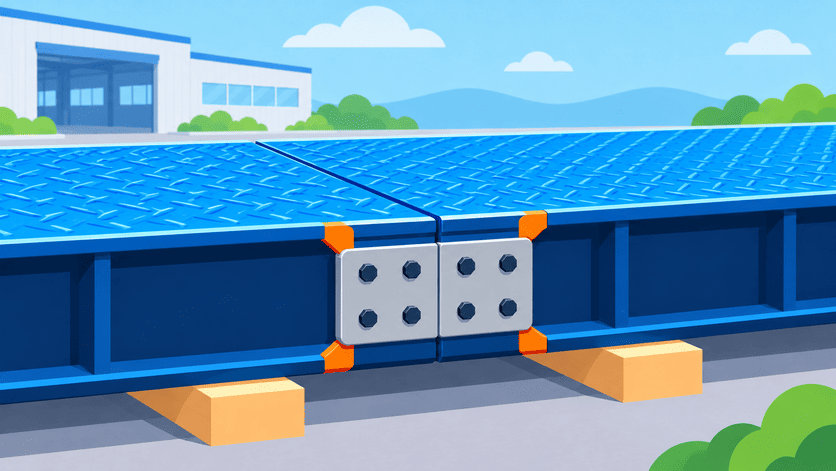
I ask for the connection details before accepting the quote
The connection method matters because it determines what the factory finishes and what the field crew must complete. I do not rank joint types by strength from their names alone. I ask the supplier what evidence supports the quoted design for the application, including the expected traffic and concentrated loading where relevant. At a mine or quarry, for instance, I want the buyer to share the actual vehicle types with the supplier and the project engineer rather than relying on the scale’s headline capacity.
| Connection method | What I verify before ordering |
|---|---|
| Bolted splice plates | I ask which hardware and tools the supplier specifies, how installers access the joint, and what checks the maintenance instructions call for. |
| Pin or shear connections | I ask how the installer confirms correct fit and retention, how wear is checked, and which replacement pieces the dealer can stock. |
| On-site welding | I ask who provides qualified welders, what procedures and inspections are required, and who restores the protective coating afterward. |
I also ask whether the factory trial-fits the modules, how it marks mating sections, and what dimensional or final inspection records it can provide. A clear drawing and module identification scheme help the receiving crew distinguish a shipping or alignment issue from a part that simply belongs in a different position. I confirm who resolves any mismatch before allowing field modifications.
If the site lacks qualified welding or inspection support, I would not quote a deck that depends on field welding just because its purchase price is lower. I would price a factory-finished connection the local crew can assemble and inspect, or compare a one-piece deck if the route and lifting plan allow it.
How do I keep modular truck scale systems serviceable for five years?
A dealer can win the order on price and still lose money on the first breakdown. I pay particular attention to parts that look interchangeable in a catalog but differ at the mounting point, the indicator, or the approval documents. A small mismatch can turn a local repair into an import order.
I evaluate serviceability by checking whether the dealer can identify, source, and replace load cells, junction boxes, indicators, and joint hardware locally. I ask for exact part numbers and supplier-approved alternatives, then verify which replacements require recommissioning or metrological checks. A spare saves time only if the technician can use it.

I put spare-parts compatibility in the purchase file
For a dealer serving several remote sites, I start with a simple question: if a technician finds a failed component today, can the dealer name the replacement and get it to the site without waiting for another import? A vague promise that the supplier uses “standard parts” does not answer that. For a load cell, I ask about its mounting interface, capacity, output or communication type, and compatibility with the quoted indicator. For a replacement indicator, I check whether it supports the required data connection and whether the dealer can recover the settings needed after a swap.
I ask for a project-specific parts list that includes model numbers and revisions. I also ask the supplier to distinguish parts the dealer can stock across several installations from parts specific to one deck or approval configuration. A common junction box may be easy to keep on the shelf, while a joint pin or mounting assembly may be specific to that series. I want to know the difference before the first order, not when the end customer is waiting for the scale to reopen.
For a scale used in commercial transactions, I ask to see the applicable OIML documentation and verify that it covers the quoted configuration and is accepted by the destination’s metrology authority.4 I also ask a qualified local scale service provider what checks, calibration, or legal reverification may be required after a replacement. I build those obligations into the five-year comparison alongside spare-parts lead times, technician travel, and likely downtime. I do not assume that a modular deck makes the electronics easier to service.
Frequently Asked Questions
Can I install a modular truck scale without a pit?
I can specify a pitless model, but I still ask a local civil contractor to confirm the load-bearing supports, drainage, approaches, and finished levels against the supplier’s drawings. If the site cannot accommodate the approaches, I compare a pit installation rather than forcing a pitless layout.
Will a modular truck scale fit in a 40-foot high-cube container?
I do not assume it will. I ask for the packed dimensions and gross weight of each module, then have the forwarder check door clearance, usable space, payload, and the loading method. I confirm destination unloading separately because the receiving site may not have the same equipment as the factory.
Can I replace a truck scale load cell with a locally stocked model?
I consider a local replacement only after the supplier and service technician confirm mechanical, electrical, and system compatibility. For a commercial weighing installation, I also check whether the substitute is permitted under the approved configuration and whether local rules require reverification before the scale returns to service.
When would I choose a one-piece deck instead?
I would consider a one-piece deck when a supplier can deliver it directly, the site can handle the lift, and avoiding field joints offers a practical advantage. I compare that option against the modular quote on delivered cost, civil work, installation support, and access to replacement parts.
Conclusion
I recommend modular truck scale systems when the packed deck fits the route, the civil team can deliver the specified foundation, and the local service team can keep the scale running. I would rather resolve a freight restriction, a joint detail, or a parts mismatch before quoting than leave a dealer to absorb it after delivery. If you are pricing a project, send me your destination port, site access details, lifting plan, and local service requirements. I can help you compare deck and packing options before you commit.