
Your mobile weighing data is often off, putting you at risk for fines and safety issues. Usually, the scale is fine, but the setup is not.
To ensure accuracy with portable axle scales1, you must select a hard, flat surface and maintain coplanar weighing. Using leveling tracks or dummy plates prevents weight transfer between axles. Regular maintenance of load cells2 and following correct static or dynamic procedures guarantees precise data.
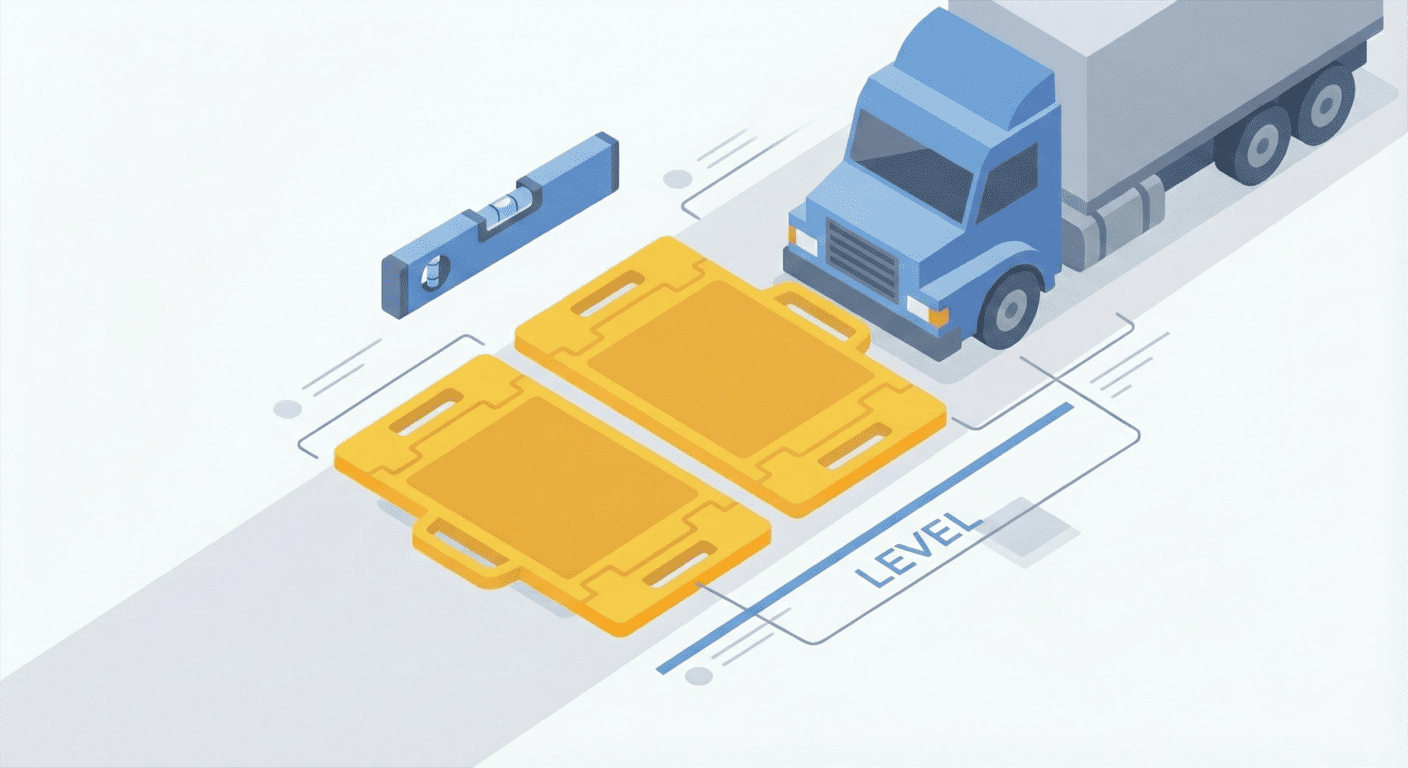
I have seen many high-quality portable scales fail to give good results. This happens because the user focuses only on the variety of the equipment. They forget about the environment around the scale. If you want true precision, you must look at the whole picture. I will guide you through the technical steps to fix this.
Does Your Site Selection Strategy Affect Weighing Precision?
Placing scales on soft dirt or gravel is a major mistake. The ground sinks under heavy loads, readings fluctuate, and you lose accuracy immediately.
Choose a site with high surface hardness, like concrete or compacted asphalt. The ground must be level to prevent the truck's center of gravity from shifting and skewing the weight data.
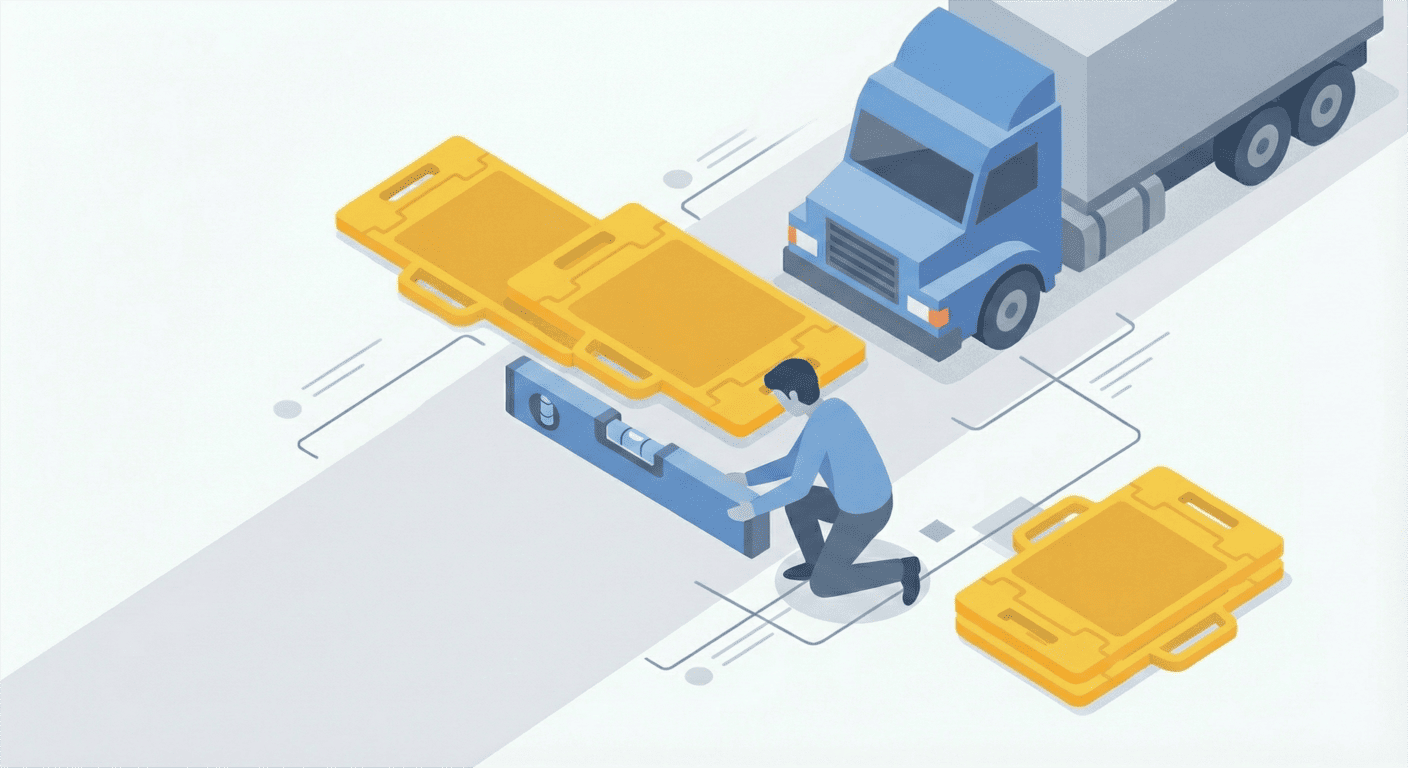
In my years as an engineer, I have learned that portability brings variability. A fixed truck scale sits on a deep concrete foundation. It does not move. But a portable scale relies on the ground you place it on. This is the first place where errors happen. You cannot just throw the pads down on a field and expect a perfect number.
New technology helps us a little. Some modern scales have tilt sensors. These sensors tell you if the ground is too uneven. However, technology cannot fix a bad foundation. I always tell my clients to inspect the site first. You need a surface that will not bend when 20 tons roll over it. If the ground sinks by even a few millimeters, the load cell inside the scale pad twists. This twisting causes false readings.
Also, you must look at the slope of the ground. We call this "flatness3." If the truck is leaning to the left or right, the weight shifts to the tires on that side. This is basic physics. You need a site that is as flat as possible. I recommend using a long straight edge or a bubble level to check the area before you set up. It takes five minutes, but it saves you from bad data.
Surface Requirements Checklist
| Factor | Requirement | Why it Matters |
|---|---|---|
| Material | Concrete or Asphalt | Prevents sinking and twisting of pads. |
| Slope | Less than 3% | Keeps the center of gravity stable. |
| Cleanliness | Free of debris | Rocks under the pad cause point-loading errors. |
| Length | Full truck length | Ensures the whole vehicle sits on the same plane. |
Are You Using Dummy Plates to Eliminate Weight Transfer Errors?
Why is your total weight often lower than what you expected? Physics causes weight to shift when axles sit at different heights.
"Coplanar weighing" is essential. When one axle is lifted by the scale pad, weight shifts to the lower axles. You must use dummy plates or leveling tracks to keep all wheels at the same height.
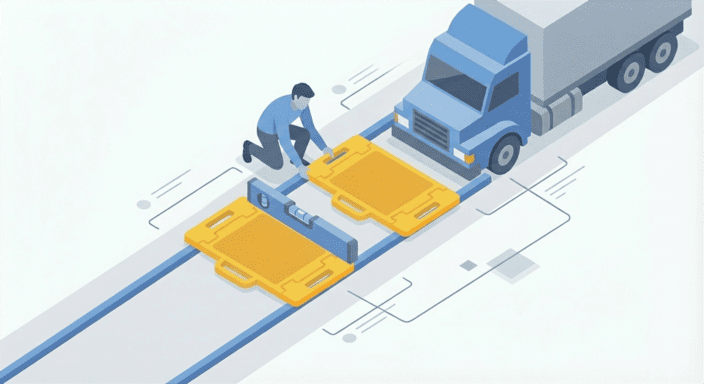
This is the most critical insight in portable weighing. It is the difference between guessing and measuring. Imagine a truck with multiple axles. When you drive the front axle onto a portable pad, that axle is now higher than the rest of the truck. The pad might be 2 or 3 inches tall. This effectively tilts the truck.
When the truck tilts, gravity acts on the load. If you are weighing a liquid tank or grain, the cargo shifts backward. The weight transfers from the front axle to the rear axles. The scale reads the front axle as lighter than it really is. Then, when you weigh the rear axle, the weight might shift again. When you add all the axle weights together, the total is wrong. You can see errors of 5% to 10%. In the logistics world, that is a huge loss.
To fix this, you need "coplanar weighing." This means all wheels must be on the same horizontal plane. You achieve this using dummy plates or a leveling track. These are mats or ramps made of wood, plastic, or rubber. They are the same height as the scale pad. You place them under the wheels that are not being weighed. This keeps the truck perfectly flat. At HENER SCALE, we emphasize this heavily. We sell the hardware, but we also teach this method because it protects your data integrity.
The Physics of Weight Transfer
| Situation | Physics Effect | Resulting Error |
|---|---|---|
| High Front Axle | Center of Gravity moves back | Under-weighing of front axle. |
| Uneven Side | Load shifts to the lower side | Inaccurate individual wheel weights. |
| Coplanar Setup | Center of Gravity stays neutral | Accurate Total Weight. |
How Do You Perform Step-by-Step Procedures for Static and Dynamic Weighing?
Rushing the truck driver ruins the data instantly. Speed variations and sudden braking destroy the consistency in your weight records.
For static weighing4, stop each axle gently on the center of the pad. For dynamic (in-motion) weighing, maintain a constant speed usually below 5 km/h and never apply brakes while crossing the scale pads.
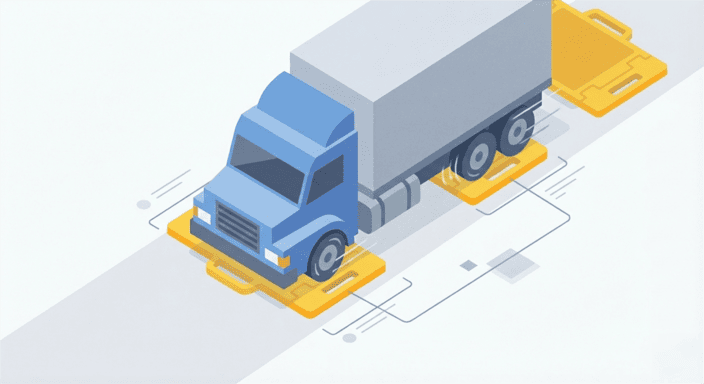
We have two main ways to use these scales: static and dynamic. Static is technically more accurate. You stop the truck for a few seconds on each axle. Dynamic is faster. You drive over the pads without stopping. Both methods work, but only if the "Human Factor" is controlled.
For static weighing, the driver's behavior is key. I have seen clear errors when drivers slam on the brakes right on top of the scale. This sends a shockwave through the load cells. It creates a "spike" in the reading. The driver must approach slowly. They should let the truck roll to a stop or brake very gently before the wheel hits the pad. The wheel must sit in the absolute center of the active weighing area. If the tire hangs off the edge, you lose weight data.
Dynamic weighing is harder to get right. It relies on smooth motion. If the driver speeds up or slows down while the truck is passing over the pads, the calculation fails. The computer inside the indicator tries to sample the weight thousands of times per second. Acceleration confuses this calculation. I recommend a steady speed of 3 to 5 kilometers per hour. It helps to have a spotter outside the truck guiding the driver. This ensures the speed stays steady and the wheels stay centered.
Operational Procedures Comparison
| Feature | Static Weighing Steps | Dynamic Weighing Steps |
|---|---|---|
| Motion | Full Stop | Continuous Roll (3-5 km/h) |
| Braking | Gentle, before the pad | NO BRAKING on pads |
| Accuracy | High (0.1% - 0.5%) | Medium (1% - 3%) |
| Best For | Legal Trade / Invoicing | Check-weighing / Safety |
| Time Needed | 3-5 Minutes per truck | 30 Seconds per truck |
What Are the Best Practices to Protect Your Equipment in Harsh Conditions?
Dirt and moisture kill sensitive electronics very quickly. Neglecting your pads leads to signal failure right when you need it most.
Clean debris from under the pads after every use to prevent mechanical binding. Store wireless transmitters in dry cases and check cables for cuts. Regular zero-calibration ensures the load cells2 remain accurate.

A portable scale is a rugged tool, but it is also a precision instrument. In industries like agriculture or mining, the environment is harsh. I started my career fixing these machines, so I know what breaks them. The biggest enemy is usually dirt and rocks.
When you use the scale on a gravel site, small stones get stuck fast. They lodge underneath the weighing pad. This prevents the pad from flexing correctly when the truck drives on it. This is called "mechanical binding." The scale might read zero when empty, but it will not read correctly when loaded. You must flip the pads over and sweep underneath them often. I suggest doing this after every few trucks if the site is dirty.
Cables and connectors are the next weak point. Even wireless scales have charging ports. If water gets into these connectors, it corrodes the metal pins. I advise using dielectric grease on connections and keeping dust caps on at all times. Also, do not leave the scales out in the rain if you are not using them. Store them in a dry place. Finally, check your "zero" often. Before you weigh a truck, ensure the indicator reads "0". If it reads "20kg" when nothing is on it, your calibration has drifted.
Maintenance Schedule for Longevity
| Frequency | Action Item | Benefit |
|---|---|---|
| Daily | Clear debris under pads | Prevents mechanical binding errors. |
| Weekly | Inspect cables/antennas | Stops signal loss during operation. |
| Monthly | Check zero & corner load | Ensures consistent accuracy across pads. |
| Storage | Clean & Dry Location | Protects against corrosion and moisture. |
Conclusion
Accuracy requires a hard surface, proper leveling to stop weight shift, disciplined driving, and regular maintenance. Hardware is only half the battle; proper procedure is the key to success.
Explore this resource to learn how to maximize the accuracy and efficiency of portable axle scales. ↩
Learn about load cells and their role in ensuring accurate weight readings in various applications. ↩
Explore the significance of flatness in weighing setups to ensure precise measurements. ↩
This resource outlines the best practices for static weighing to ensure high accuracy in measurements. ↩