
Buying a truck scale from China can feel risky. Bad choices lead to cracked steel and wrong weights. Knowing the right questions will save you thousands of dollars.
To source reliable truck scales from China in 2026, you must ask about load cell technology, U-beam thickness, computer integration, maintenance plans, and total cost. Focusing on these engineering details prevents costly downtime and ensures your scale becomes a 20-year operational asset.
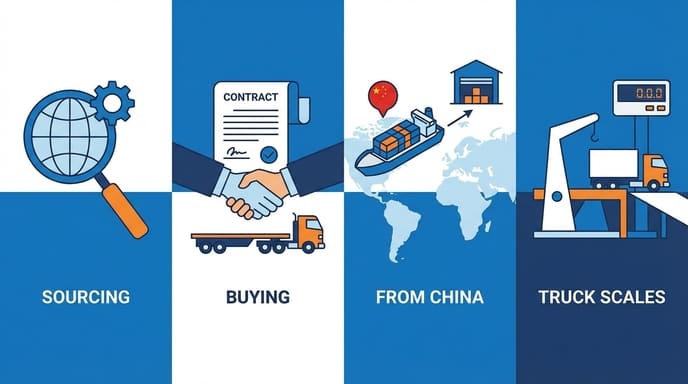
When international buyers look for industrial truck scales today, everything is different. We do not just buy heavy steel anymore. We invest in smart ways to handle data. But many buyers still look only at basic spec sheets. They miss the small engineering details that decide how long a scale will really last. I want to show you exactly what to look for so you never waste your money. If you skip these questions, you will buy a problem instead of a solution.
Beyond "Digital": Are the Load Cells Featuring True Internal A/D Conversion or Just a Retrofitted Junction Box1?
Fake digital scales cause huge problems. Moisture ruins cheap junction boxes. Your scale stops working, and your trucks stop moving. Let us fix this by asking a simple question.
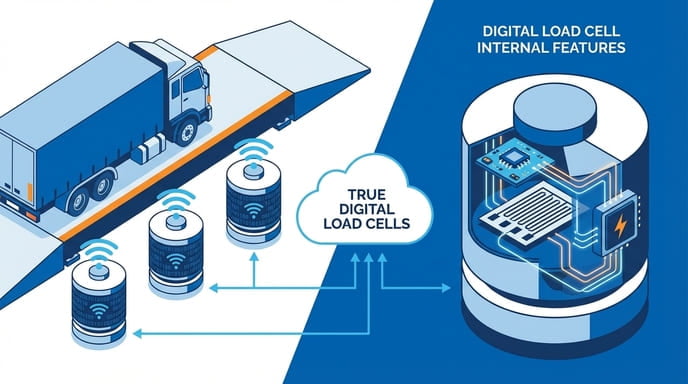
True digital load cells process signals internally using a built-in A/D microprocessor. They are hermetically sealed and laser-welded with an IP68/IP69K rating. Avoid systems that simply wire cheap analog cells into a vulnerable smart junction box that fails from moisture.
Many suppliers tell you their system is fully digital. You need to dig deeper. I always tell buyers to check the load cell parts first. In my years working with truck scales, I have seen many failures. Most failures happen at the junction box.
Suppliers often use cheap analog load cells. They connect them to a "smart" junction box. They call the whole system a digital scale. This is a basic trick. When condensation builds up inside the small box, the analog signals get mixed up. This changes your weight reading completely. You lose money on every load.
True digital sensors do the thinking inside the cell itself. They use a small internal A/D microprocessor. The data travels as a strong digital signal from the start. Water cannot mess up a digital signal easily. At HENER SCALE, we only use fully sealed, laser-welded cells. Let us look at the differences clearly.
Analog vs. True Digital Load Cells
| Feature | Fake Digital (Analog + Smart Box) | True Digital (Internal A/D) |
|---|---|---|
| Processing Spot | Outside in a junction box | Inside the sealed sensor |
| Water Resistance | Low (fails very easily) | High (IP68/IP69K rated) |
| Data Accuracy | Signal drops over distance | Signal stays perfect |
| Upkeep Cost | High (frequent repairs) | Low (built to last) |
Structural Integrity Revealed: What is the Real Thickness and Welding Standard of the Orthotropic U-Beams?
Thin steel bends under heavy trucks. Spot welds break over time. A broken weighbridge deck stops your whole business. You must check the exact U-beam details to stay safe.
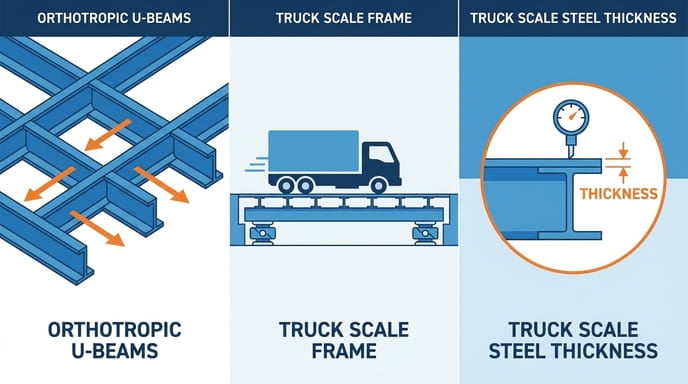
The best industrial truck scales use 8mm orthotropic closed U-beams with continuous welding2. This design stops fatigue cracks3 under heavy axle loads. Do not accept 5mm open-ribbed designs with intermittent spot welding, because they will quickly break and cost you money.
Just last month, I had a video call with a port logistics director in Brazil. He was very frustrated. He bought a massive weighbridge from a generic supplier two years ago. The deck already showed severe fatigue cracks3. Heavy axle loads ruined the steel.
I asked him a very simple question. Do you know the thickness and welding method of your U-beams? He paused. He had no idea at all. The cheap supplier used a flimsy 5mm open-ribbed design. They also used intermittent spot welding to save time. They did not care about the heavy pressure from the trucks. This poor physical choice hurt his terminal badly. That early 15 percent cost savings ultimately cost his company tens of thousands of dollars in unexpected downtime. They paid a lot for structural repairs.
At HENER SCALE, we build our frames differently. We use 8mm orthotropic closed U-beams. We use continuous welding for every inch. This keeps the deck flat and strong. This unwavering material integrity separates a short-term toy from a real operational asset.
Checking Your Weighbridge Steel Specs
| Specification | Bad Standard | Good Standard (HENER) |
|---|---|---|
| Steel Design | Open-ribbed | Orthotropic closed |
| Metal Thickness | 5mm | 8mm |
| Welding Style | Spot welded (gaps) | Continuous welded (solid) |
| Expected Lifespan | 2 to 3 years | 20 years or more |
The Automation Edge: How Seamlessly Can the Weighing Terminal Integrate with Global ERP and TOS Platforms?
Manual data entry causes major mistakes. Bad numbers mess up tracking and billing. Your scale must talk to your computer networks automatically. If it cannot, you lose profit.
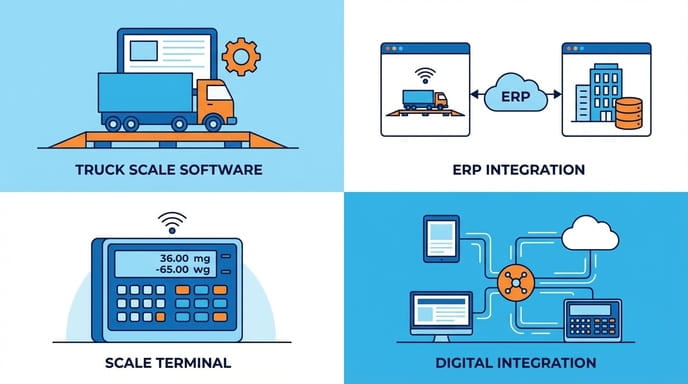
Your weighing terminal must connect directly with your global Enterprise Resource Planning (ERP)4 and Terminal Operating Systems (TOS)5. Look for built-in APIs, Ethernet outputs, and standard communication links. Seamless digital integration stops human error, speeds up yard operations, and ensures global compliance.
In 2026, a truck scale operates as an IT device. Operations managers like my colleague Carlos Martínez in Mexico know this well. Carlos manages a huge grain distribution center. His team used to write down scale weights with pen and paper. They made big mistakes. Those mistakes cost the company money and trust with international buyers.
He decided to modernize his weighing processes. He needed a digital network with remote monitoring and automatic data recording. If your weighing terminal cannot talk to your main ERP system, you block your own workflow. You need standard software tools to push weight numbers straight to your network in real time.
We understand this deep business need. Smart decisions depend on fast and clean numbers. Your indicator box must support modern network connections so no one ever types a number by hand again.
Essential Integration Features
| Software Feature | Why it Matters for Operations |
|---|---|
| Direct API Links | Connects custom software easily without extra steps |
| Ethernet Parts | Sends total weight data to cloud servers instantly |
| Auto Logging | Removes human error entirely from the scale house |
| ERP Hookups | Matches weight tickets directly with billing systems |
Lifecycle Accountability: What is the Verifiable Preventative Maintenance Protocol for High-Corrosion Environments?
Rust eats heavy steel fast. Salt and chemicals ruin scale parts. Waiting for parts to break is a terrible plan. You need a solid upkeep routine to protect your investment.
You need a clear maintenance protocol that includes routine cleaning, anti-corrosion paint checks, and sensor seal tests. For harsh environments, ask the supplier for an annual service checklist. Proper daily upkeep stops rust, protects the internal cables, and keeps the scale completely accurate.
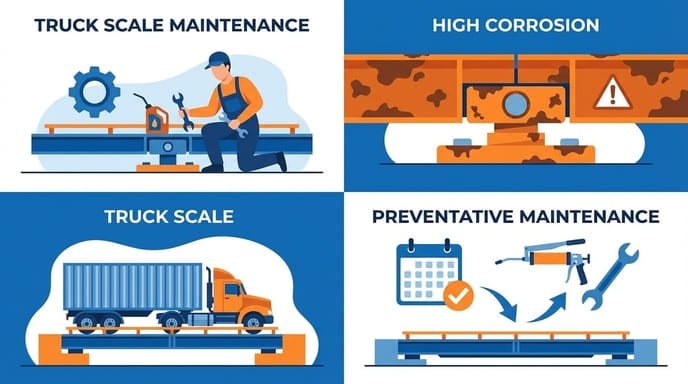
Truck scales usually live in awful conditions. They fight mud, chemical spills, and heavy rain. In places with high salt or moisture, rust becomes your biggest problem. If you wait for the scale screen to go blank, you are already too late.
You must ask the factory how to take care of the heavy equipment. They must give you a simple upkeep plan. This is a preventative maintenance protocol. It means performing simple tasks to fix things before they break. Some suppliers just sell the scale and vanish. They leave you guessing about the care.
A trusted supplier tells you exactly when to clean under the deck. They tell you when to check the black wires for animal damage. They teach your yard team how to protect the metal corners. At HENER SCALE, we guide our global partners through every step of this care process.
Maintenance Tasks for Harsh Yards
| Task Timing | Action Required to Protect Scale Parts |
|---|---|
| Every Week | Wash dense mud from under the metal weighbridge |
| Every Month | Check all sensor cables for cuts or water damage |
| Every 6 Months | Look at the junction box seal for tiny loose spots |
| Every Year | Test the calibration and apply fresh anti-rust paint |
Transparency and Value: What is the True Total Cost of Ownership Over a 20-Year Lifespan?
Cheap scales hide big long-term costs. Low prices mean weak parts and constant repairs. You pay much more over time. You must check the true total money spent.
The true total cost of ownership goes beyond the initial price to include installation, downtime, repairs, and calibration over 20 years. Demand full transparency on material quality and hidden replacement costs. A high-quality scale saves money by working smoothly without interruption for decades.
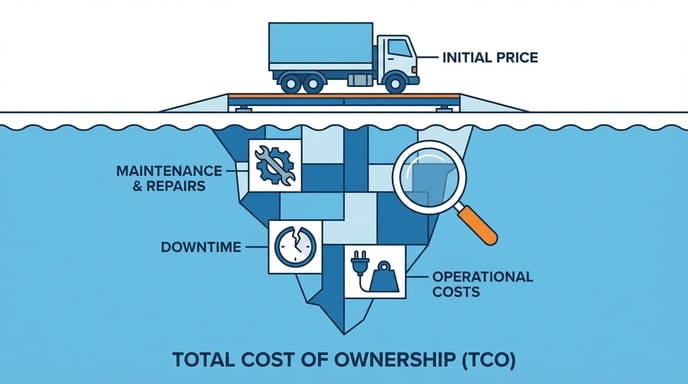
Sourcing success does not mean finding the cheapest price per ton of steel. We always remind buyers of this basic truth. Many purchasing teams look at the top page of a quote. They just want the lowest option right now. They forget about the next 20 years.
I started my career as a weighing equipment technician. I worked hands-on with platform scales and truck decks. I learned a huge lesson then. A cheap scale costs twice as much in the end. The business pays for broken load cells. They also pay a big penalty for lost time. A broken truck scale creates a massive traffic jam that stops the whole factory floor.
When you buy a truck scale from China, you need strict honesty from the builder. Ask for the real lifespan of every single part. Compare the real total costs.
Comparing Total Cost over 20 Years
| Cost Category | Cheap Generic Supplier | Premium Supplier (HENER) |
|---|---|---|
| Buying Price | Very low | Fair market price |
| Repair Bills | Very high (breaks often) | Very low |
| Lost Work Time | High (trucks waiting in yard) | None (system runs well) |
| Final Cost | Extremely expensive | Predictable and smooth |
Conclusion
Buying truck scales from China requires asking hard questions about technical details. Check digital sensors, steel frames, network connections, maintenance plans, and total costs to secure a long-lasting investment.
Shows common failure modes and what to inspect so you don’t buy a system that drifts or dies in wet conditions. ↩
Shows how weld standards affect cracking risk, helping you specify build quality in contracts and inspections. ↩
Helps you understand load-cycle failure so you can select designs that avoid costly structural repairs. ↩
Shows integration patterns that eliminate re-typing, speed billing, and improve audit-ready documentation. ↩
Explains data flow needs for terminals so weights automatically sync with gate, container, and workflow systems. ↩