
Picking an OEM/ODM partner is risky. A bad choice will ruin your reputation and cost you money. You need a strict checklist to prevent these costly mistakes.
Global distributors choose the right manufacturing partner by checking engineering depth1, continuous robotic welding, component quality, and firmware stability. They must audit environmental testing capabilities and intellectual property protection. You should look beyond basic ISO certificates and price to ensure your private label thrives.

Many buyers only look at unit price and basic certificates. But in the industrial weighing sector, slapping your logo on a basic scale is not enough. You must understand the hidden details to keep your business safe. Let's look at the real rules for finding the best partner.
Beyond the Brochure: How Can You Audit a Manufacturer’s True Production and R&D Capabilities?
Glossy brochures promise the best quality. But real factories often hide weak processes. You must check their actual tools, like robotic welding and testing rooms, to find the truth.
You audit a manufacturer by checking if they use laser-cut steel, continuous robotic welding, and in-house environmental testing chambers. These tools prove they can handle metal stress and block moisture. Do not trust generic claims. Demand raw proof of their real engineering depth.
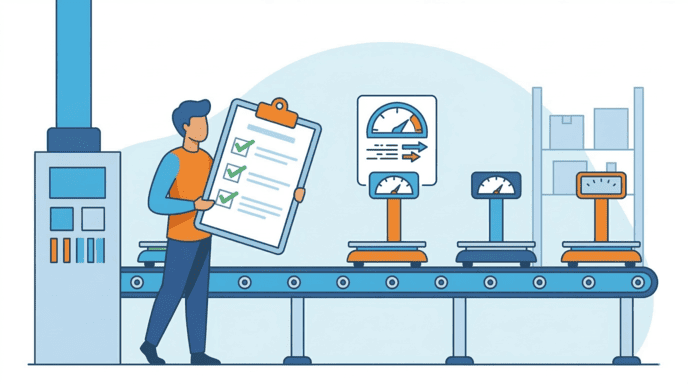
Breaking Down Factory Production Audits
When I worked hands-on with platform scales, I learned quickly that basic assembly lines fail. A real ODM partner must manage invisible variables. Metal stress2 is a big danger in heavy agriculture logistics. If a truck scale bends under a heavy grain load, the scale is useless.
You can evaluate a factory's engineering capacity by checking specific areas. A standard ISO paper is never enough.
Key Audit Areas
| Audit Focus | Basic Factory Standard | HENER Global Standard |
|---|---|---|
| Steel Cutting | Manual plasma cutting | Precise laser cutting |
| Steel Welding | Spot welding by hand | Continuous robotic welding |
| Environmental Tests | No real test chamber | In-house climate chambers |
| Moisture Protection3 | Basic paint covers | Welds block all moisture |
Continuous welding stops moisture from entering the metal. This protects the scale in a wet warehouse. Also, an in-house environmental chamber tests the scale in harsh weather before shipping. If a factory does not have these advanced tools, they cannot build a strong scale for your private brand. I always tell my clients to ask hard questions about these invisible technical details.
The Hidden Costs of Cheap Sensors: Why is Component-Level Quality Control Non-Negotiable?
Cheap sensors save money at first. Then, zero-point drift causes massive return rates. You must focus on high-quality load cells and chips to protect your brand and profits.
Component-level quality control is non-negotiable because cheap Analog-to-Digital chips and uncompensated load cells fail during temperature changes. Thermal shock4 ruins accuracy. You need stable sensors and smart firmware to stop environmental creep and guarantee precise weights in every condition.
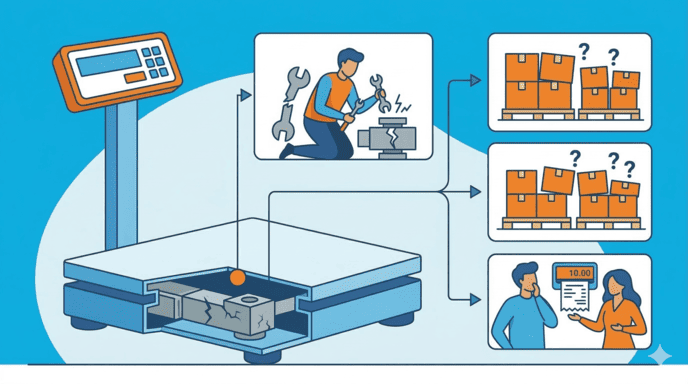
The Danger of Thermal Shock
I will never forget a meeting I had last year in Frankfurt. A prominent European distributor was very tired. He bought a private-label line of pallet jack scales from a cheap budget supplier. Suddenly, he faced a massive 15 percent return rate.
The problem was simple but deadly to his business. His clients moved the scales from a warm heated warehouse into a freezing cold-storage unit. The zero-point drifted wildly. His supplier used cheap Analog-to-Digital chips and uncompensated load cells. These parts could not handle the sudden cold.
Solving Sensor Failures
| Component Type | Cheap Supplier Feature | Good Manufacturing Standard |
|---|---|---|
| Load Cells | Uncompensated units | Real temperature compensation |
| A/D Chips | Low-budget cheap chips | High-grade stable chips |
| Firmware | Basic generic code | Proprietary smart algorithms |
I sat down with him and sketched out our specific ODM protocol. At HENER, we embed proprietary temperature compensation algorithms directly into our firmware. This controls environmental creep easily and keeps the scale accurate. We redesigned his whole product line in six weeks. After this change, his return rate dropped to near zero.
Global Compliance and Certifications: How Do You Secure CE, OIML, and NTEP for Your Private Label?
Selling scales without legal approval brings big fines. Getting trade certificates takes too much time. You need a partner who engineers compliance from the start to sell scales fast.
You secure CE, OIML, and NTEP for your private label by partnering with a manufacturer that designs for legal metrology5 from day one. They must build globally compliant measurement ecosystems. This step ensures your scales pass strict lab tests easily and meet all local export rules quickly.
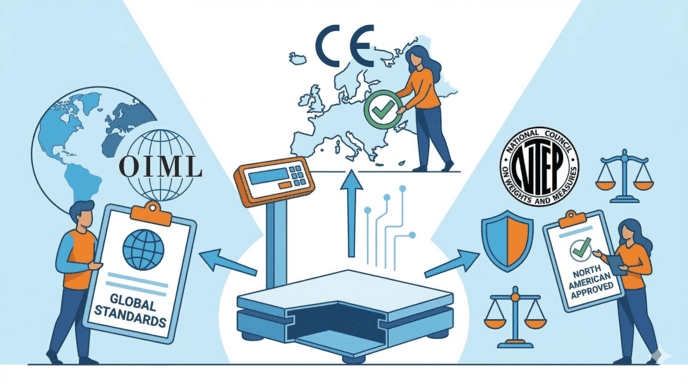
Why Legal Trade Matters
Farmers and logistics managers measure bulk grains every day. These precise weights affect daily business costs and international trade directly. If your private label scale lacks an OIML or NTEP certificate, buyers cannot use it for legal trade. This problem blocks your market growth entirely.
A bad ODM factory will build a scale and hope it passes the official lab test later. A strong engineering partner builds the scale to pass the test from the very first day. They understand the strict legal rules deeply.
| Certificate | Target Region | End User Benefit |
|---|---|---|
| CE Mark | Europe Markets | Safe electrical systems |
| OIML | Global Markets | Legal trade rules met |
| NTEP | North America | Commercial weight accuracy |
When your logo is on the scale, your name is on the line. Getting these legal papers takes strict internal testing. We build ecosystems that help our distributors pass these difficult hurdles. We pre-test all scale designs in our own test chambers to match NTEP and OIML rules perfectly. This fast legal compliance gives our partners a clear competitive edge in their local markets.
Intellectual Property and Long-Term Support: How Will You Protect Your Custom Firmware and Market Position?
Competitors can easily copy your digital scales. Losing your secret software ruins your market lead. You need strict legal protection and long-term support to keep your unique scale safe.
You protect your custom firmware by ensuring the ODM signs strong intellectual property contracts. They must treat your custom IoT software6 as a strict secret. A good partner provides long-term technical support to update your software while keeping your data and digital scale features safe from competitors.
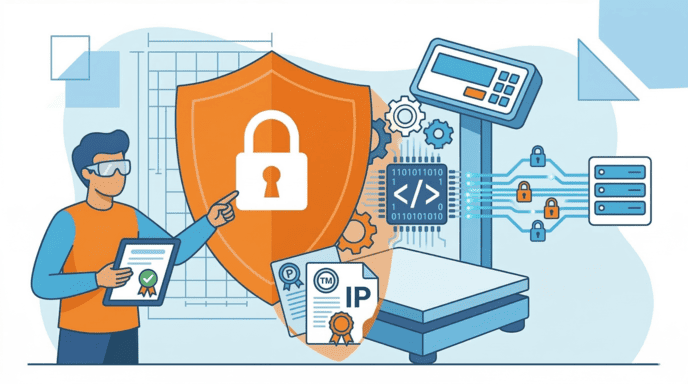
The Value of Smart Software
Today, distributors want to modernize old weighing processes. Modern logistics managers need digital weighing systems, remote monitoring tools, and automated data records. This digital step reduces human error and speeds up factory branch operations. Custom IoT software makes this fast data transfer possible. But this custom software is a primary target for fast competitors.
If your ODM factory sells your unique digital features to another buyer, your market position dies. You must ask hard questions about software legal protection before you sign any deal.
Protecting Your Digital Lead
| Protection Area | Weak Supplier Risk | True Partner Benefit |
|---|---|---|
| Legal Contract | No IP agreement | Strict NDA and IP lock |
| Firmware Code | Shared with others | Private secure access only |
| System Support | Disappears after sale | Regular long system updates |
Your custom software stops cheap local copies. We do not just assemble basic hardware at HENER. We secure your complete digital edge. We write proprietary programs and protect them strictly under global laws. Your custom firmware is your ultimate secret weapon. When you control the smart software, you control the local market. We support this software for years to keep you ahead.
Conclusion
Choosing the right OEM/ODM partner requires deep checks on factory tools, sensor quality, certificates, and IP protection. A true engineering partner guarantees precision, protects your brand, and drives growth.
Helps you verify real R&D capability so your products aren’t built on weak processes that cause failures. ↩
Explains structural risks that can make scales unusable under heavy loads like grain logistics. ↩
Helps you understand sealing/welding approaches that prevent corrosion and premature breakdowns. ↩
Explains the field failure mode behind sudden zero-point drift in cold-storage operations. ↩
Helps you avoid fines and failed certifications by engineering compliance from day one. ↩
Shows how connectivity boosts efficiency while highlighting the protections needed to keep features exclusive. ↩