
Are your heavy truck scales losing accuracy under pressure? Bad readings lead to lost money and safety risks. Thankfully, proper testing and temperature controls fix these hidden problems.
Yes, they can. Temperature compensation1 stops weather from changing the scale signal. Creep testing2 makes sure the scale goes back to zero after heavy loads. Together, these steps stop tiny errors from causing large and dangerous system failures in heavy industry.
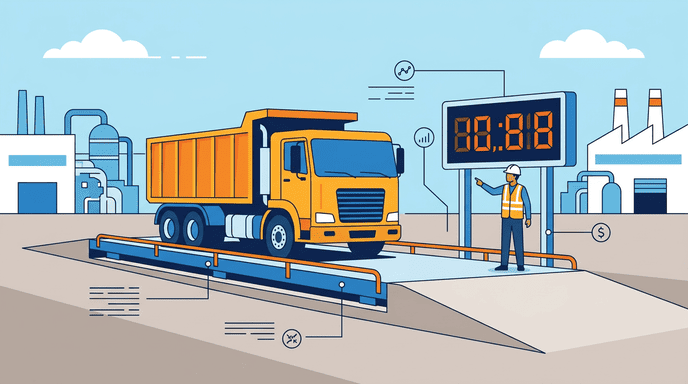
I will show you how these unseen forces attack your equipment and how we exactingly stop them before a disaster happens.
The Invisible Threats: Do You Know How Thermal Drift and Material Fatigue Degrade Load Cell Accuracy Over Time?
Heavy loads sit on your scales for days. The heat changes, and the metal gets tired. Soon, your exact numbers become dangerous guesses. We must understand why this happens.
Thermal drift3 happens when heat changes the metal and wires inside the load cell. Material fatigue4 occurs when constant heavy weight bends the metal too long. Both problems slowly ruin your scale accuracy and create phantom weights5.
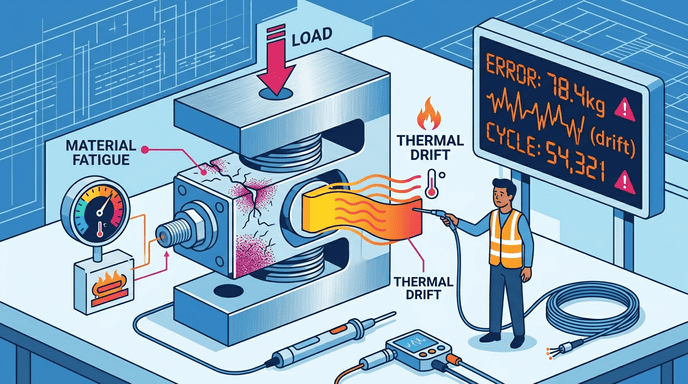
I started my career fixing platform scales. I saw heavy industry scales fail many times. It rarely happens all at once. It usually happens slowly. Tiny errors group together over time. We face two main enemies here. They are thermal drift and mechanical creep6.
Breaking Down the Hidden Errors
Heat changes the metal spring inside the scale. Heat also changes the wires. A foundry can get very hot or very cold. Then, the scale changes its zero point. A very small error like 0.01% looks fine at first. But in a 200-ton silo system, this small error makes a phantom weight. You think you have 200 tons. You really do not. This leads to overfilling. It can ruin chemical mixes. It can even cause the big silo to fall down.
We can look at the differences between these two threats below.
| Threat Type | Cause | Result on Scale | Business Risk |
|---|---|---|---|
| Thermal Drift | Large weather changes | Zero-shift error | Overfilling and bad mixes |
| Material Fatigue | Constant heavy weight | Loss of zero balance | Wrong inventory records |
I tell my clients like you that these tiny physical changes are serious. We must stop them before they stop your business.
The Science of Stability: How Can Advanced Temperature Compensation Circuits Neutralize Extreme Environmental Swings?
Hot days and cold nights break your scale signals. Your systems give wrong weight data. Smart temperature circuits fix this by adjusting the signal in real time.
Advanced temperature compensation uses smart parts inside the load cell. These parts measure heat changes. They use math to fix the signal right away. This keeps the weight reading true, no matter how hot or cold the factory gets.
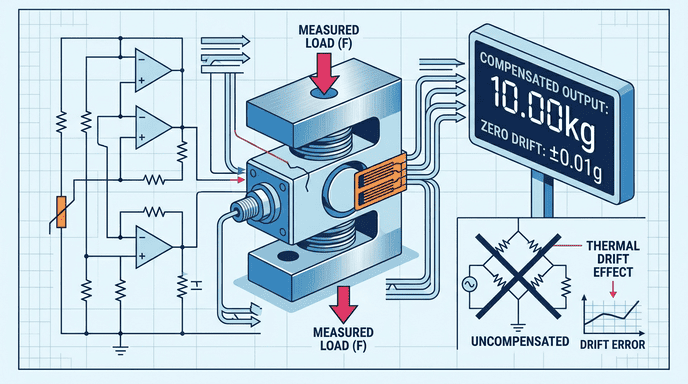
Many years ago, I fixed a truck scale. This scale only worked well in the morning. When the afternoon sun hit it, the weights were wrong. The heat changed the resistance of the wires. Today, we fix this with science. We do not just use thick metal. We use active technology.
How Smart Circuits Stop Weather Errors
We put microprocessors inside smart digital load cells. These tiny computers read the temperature around them. They apply math rules to correct the weight signal. This means the signal stays in a straight line. The climate does not matter anymore.
Here is how old passive scales compare to new smart scales.
| Scale Type | Heat Reaction | Signal Fix | Final Accuracy |
|---|---|---|---|
| Old Standard Scale | Wires change resistance | None | Drops in extreme heat |
| Smart Digital Scale | Reads the exact heat | Uses math right away | Stays exact all day |
This is very important for massive weighing. A smart scale works like an active guard. It does not just hold weight. It thinks and adjusts. This stops the phantom weights5 before they reach your computer screens.
Beating the "Creep" Effect: Why Do We Need Rigorous Testing Protocols to Ensure Zero-Return Under Constant Heavy Loads?
Tank scales hold heavy weight for weeks. The metal inside slowly bends and does not bend back. Strict creep testing stops this from ruining your long-term storage measurements.
Creep is when scale output changes while holding a steady heavy load. We need strict testing to ensure the metal bounces back to true zero. This testing separates cheap sensors from good ones and meets strict rules like OIML R607.
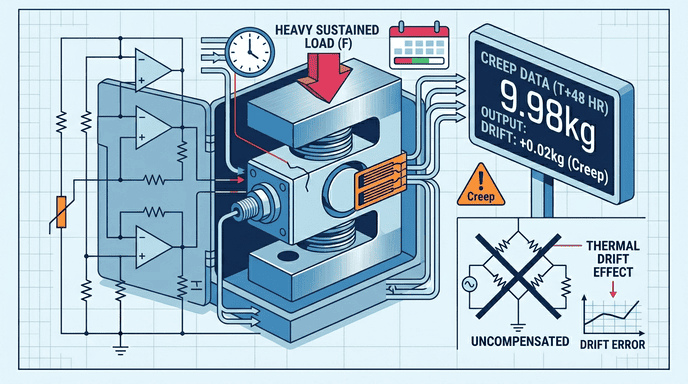
Imagine a grain silo that sits full for three months. A cheap scale will slowly show a lower weight over time. The material inside the sensor gets tired. It does not perfectly recover its first shape after you remove the grain. We call this the creep effect. Your system loses its exact zero point.
The Rules of Creep Testing
We must beat this effect in the factory. At HENER SCALE, we do not guess. We put every big load cell through hours of strict tests. We push a heavy load on the sensor and watch it for hours. We confirm it meets the OIML R607 standards. If a sensor does not return exactly to zero, we do not sell it.
| Testing Step | Action | Goal |
|---|---|---|
| Load Apply | Put exact heavy weight on sensor | Start the test |
| Hold Period | Keep weight steady for many hours | Find any slow bending |
| Release | Take weight off fast | Check the true zero return |
I tell operations managers that buying cheap scales is risky. If the scale forgets its zero point, your long-term storage counts will always be wrong. Strict testing gives you peace of mind.
Beyond Accuracy: Why Do Metallurgical and Mining Sectors Demand Pre-Tested, High-Tolerance Sensors?
Mining and metal plants are dangerous places. A bad scale causes spills or broken machines. Pre-tested sensors protect your plant, your money, and your workers from terrible accidents.
Mining and metallurgical plants deal with huge weights and hard conditions. They need high-tolerance sensors to prevent structural breaks and accidents. Pre-tested sensors mitigate risks and ensure safety because they can handle massive stress without failing or giving false readings.
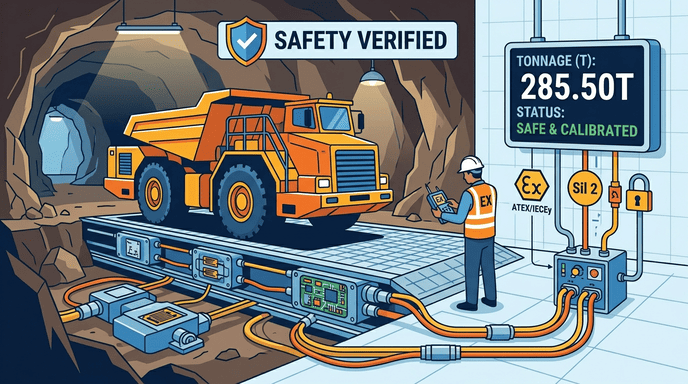
When I talk to clients in the heavy metals industry, we do not talk about the price of the scale. We talk about risk. In deep-shaft mining and chemical batching, a scale does not just measure mass. It controls safety. A broken scale in a mine can cause a catastrophic failure.
Moving From Measuring to Protecting
Heavy industries demand sensors that can take a beating. They need sensors that survive dirt, shock, and extreme weight. A pre-tested sensor acts as a safety guard. We run deep cycle tests before the scale leaves our factory. We make sure the metal can handle the hardest jobs.
Here is what heavy operations look for in a safety sensor.
| Sector Needs | Threat | Sensor Solution |
|---|---|---|
| Deep-shaft Mining | Extreme shock loads | High-tolerance metal bodies |
| Metallurgical Plants | Intense heat and dust | Smart temperature correction |
| Chemical Batching | Wrong mix ratios | Exact continuous creep control |
We sell risk mitigation. We prevent expensive downtime. A scale is a small part of a big plant. But if it fails, the whole plant stops. That is why safety always comes before simple counting.
Conclusion
Thermal drift3 and creep silently ruin heavy weighing systems. Smart temperature compensation and strict factory testing stop these threats, keeping your industrial operations exact, safe, and highly productive.
Find the best guidance on keeping signals stable across weather changes and improving real-world accuracy. ↩
Get clear test protocols and pass/fail criteria to avoid sensors that drift during long hold periods. ↩
Learn root causes and proven mitigation so temperature swings don’t create costly zero-shift and false weights. ↩
Understand fatigue mechanisms and design/maintenance steps to prevent long-term accuracy loss and failures. ↩
Identify hidden error sources that inflate inventory or silo totals and learn practical fixes to stop them. ↩
See how creep develops under constant loads and what controls keep readings stable for storage and batching. ↩
A definitive standard reference builds confidence in sensor quality and helps specify compliant equipment. ↩