Industrial weighing for warehouse workflows
Pallet Jack Scale Manufacturer. Weigh As You Move.
Configure a manual pallet jack with integrated weighing around your pallet entry, loaded weight, operating floor, weighing frequency, and data requirements. Talk directly with a manufacturing team in China before you request a final quotation.
B2B orders only · Standard MOQ: 4 units. Orders for 1–2 units are not accepted.
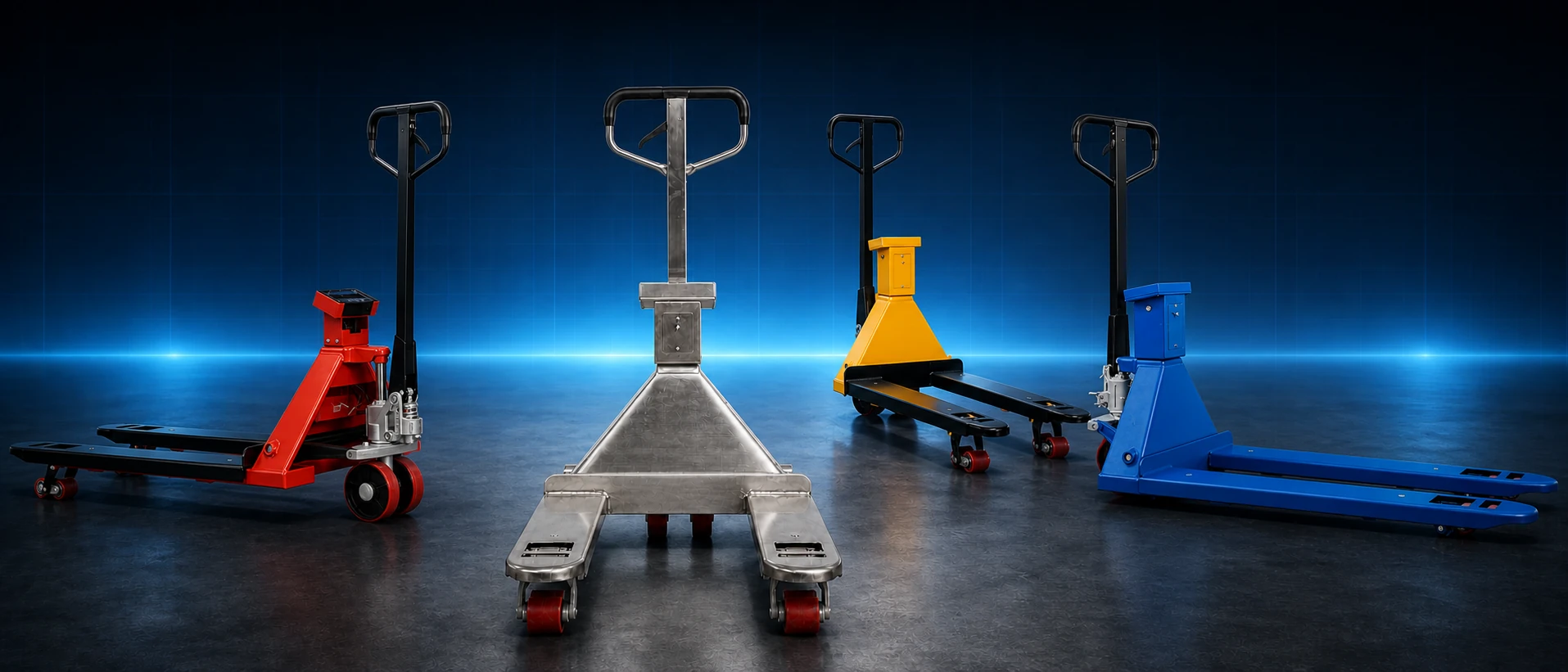
The details buyers need  before a quote means anything.
A pallet jack scale is not selected by capacity alone. The pallet, load distribution, floor condition, work frequency, fork geometry, weighing performance, indicator, and data workflow must be reviewed together.
Technical decision sheet
Compare the configuration buyers actually need to confirm.
Use this option matrix to prepare a configuration discussion. The final model, material, thickness, indicator, wheels, weighing performance, and custom requirements are confirmed in the quotation.
- Model
- HC-PSB / HC-PSR / HC-PSY / HR-SS / HR-EE
- MOQ & packing
- MOQ 4 units; standard 4 or 6 units per wooden crate; 2-unit crating by arrangement only
- Rated load
- 2000 / 2500 / 3000 kg
- Fork width
- 560 mm narrow fork or 690 mm wide fork
- Division
- 0.5 kg
- Material
- Carbon steel / stainless steel
- Plate thickness
- 4 mm / 6 mm / custom
- Power
- Rechargeable battery; AC 187-242 V; DC 6 V / 4 Ah
- Temperature
- -10°C to +40°C
- Indicator
- HR-T10 / HR-T8 / HR2208 / HR2308 / A12E / A23P / C23 / customer-supplied
- Wheel options
- PU / plastic / nylon
Send us these inputs
Start with the real handling task.
- Maximum complete load, including pallet and goods
- Pallet type, entry direction, and fork pocket dimensions
- Floor condition, aisle width, ramps, and turning space
- Weighing frequency and typical load distribution
- Required display, data capture, printing, or system output
Documents that reduce risk
Ask for the files behind the product.
- Product drawing and fork dimensions
- Confirmed indicator functions and available data-output options
- Calibration, repeatability, and off-center-load evidence
- Packing plan, included accessories, and spare parts list
- Operation and maintenance documentation available for the model
One product. Three parts of a confident buying decision.
A useful proposal starts with the real handling workflow, then confirms the product, configuration, documents, packing, and support required for the selected model.
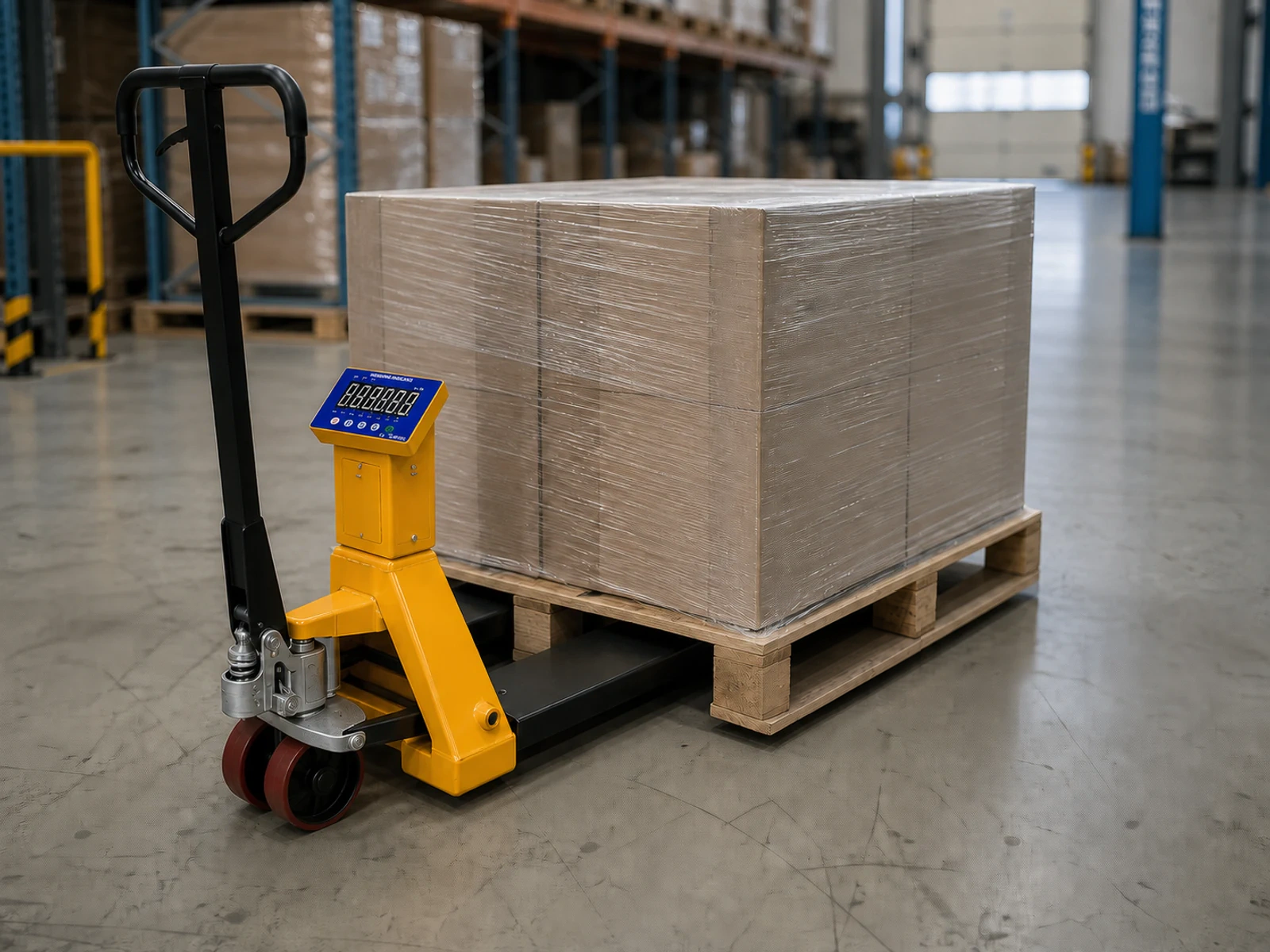
Move the load. Capture the weight.
A manual pallet jack scale combines material handling and weighing so warehouse teams can reduce unnecessary transfers between separate handling and weighing stations.
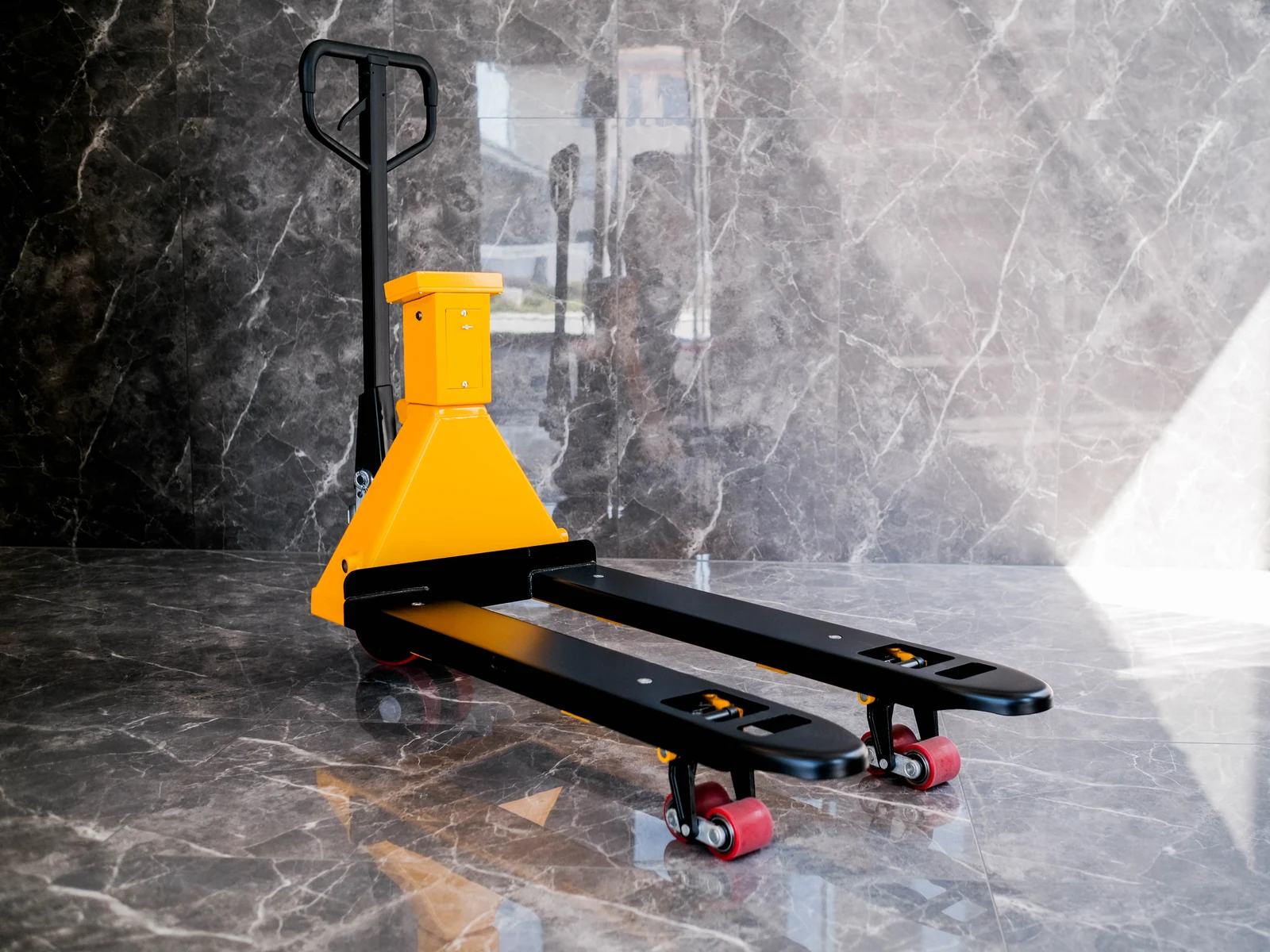
Match the pallet before selecting the scale.
Fork width, fork length, lowered height, wheel material, turning space, load distribution, and floor conditions determine whether the equipment will work in the buyer's actual site.
Confirm evidence, packing, and support before shipment.
Use verified drawings, testing records, operating documents, included accessories, branding options, and packing details to align expectations before production and shipment.
Trust the visible process, not a list of unsupported promises.
A serious buyer should be able to see where the product is assembled, how reference-weight calibration is carried out, and how the final unit is protected for shipment. Confidential internal weighing-system details are not displayed publicly.
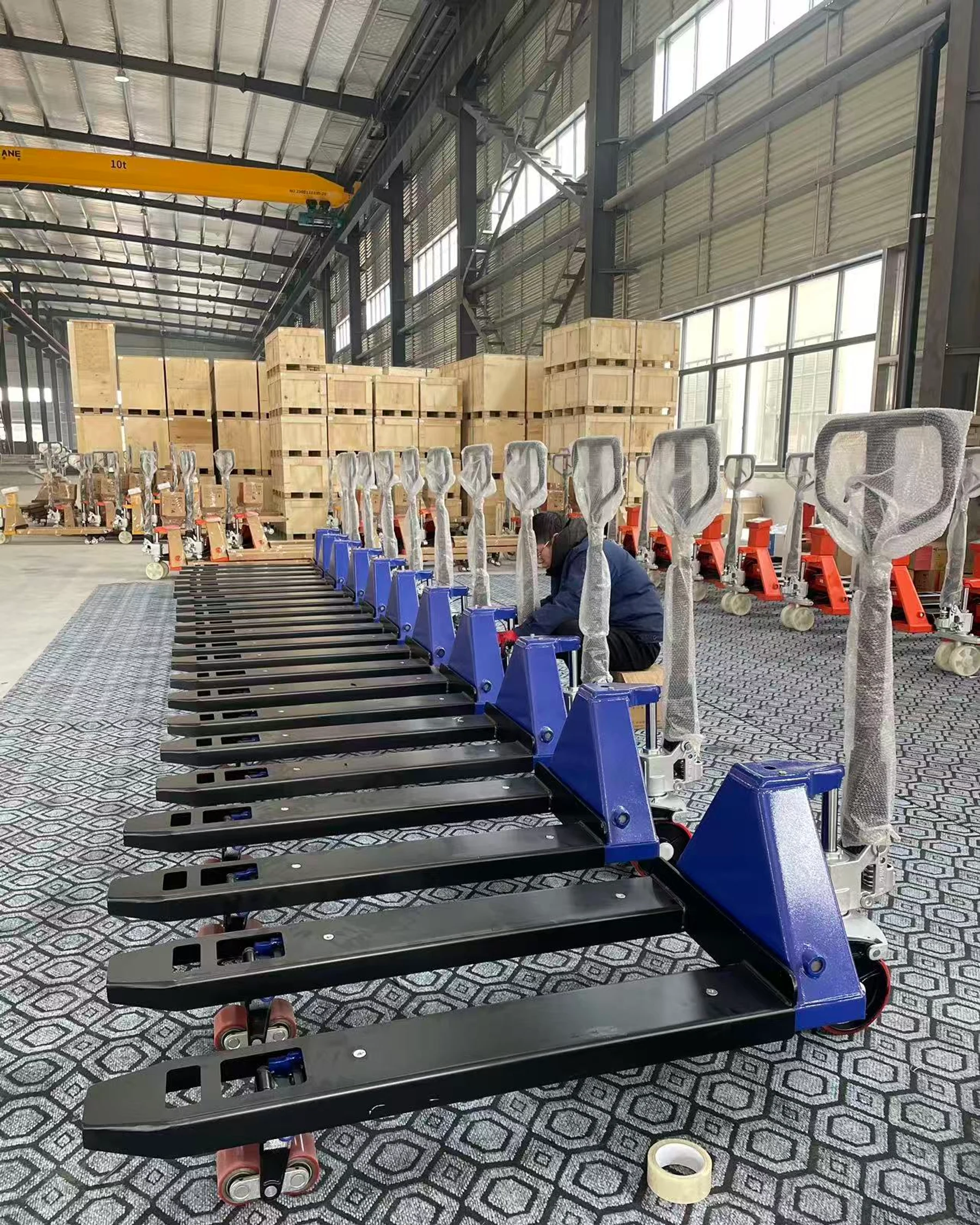
Show the real assembly environment.
Authentic factory photo: complete pallet jack scales, identifiable work area, active assembly, natural work traces, and clear product structure.
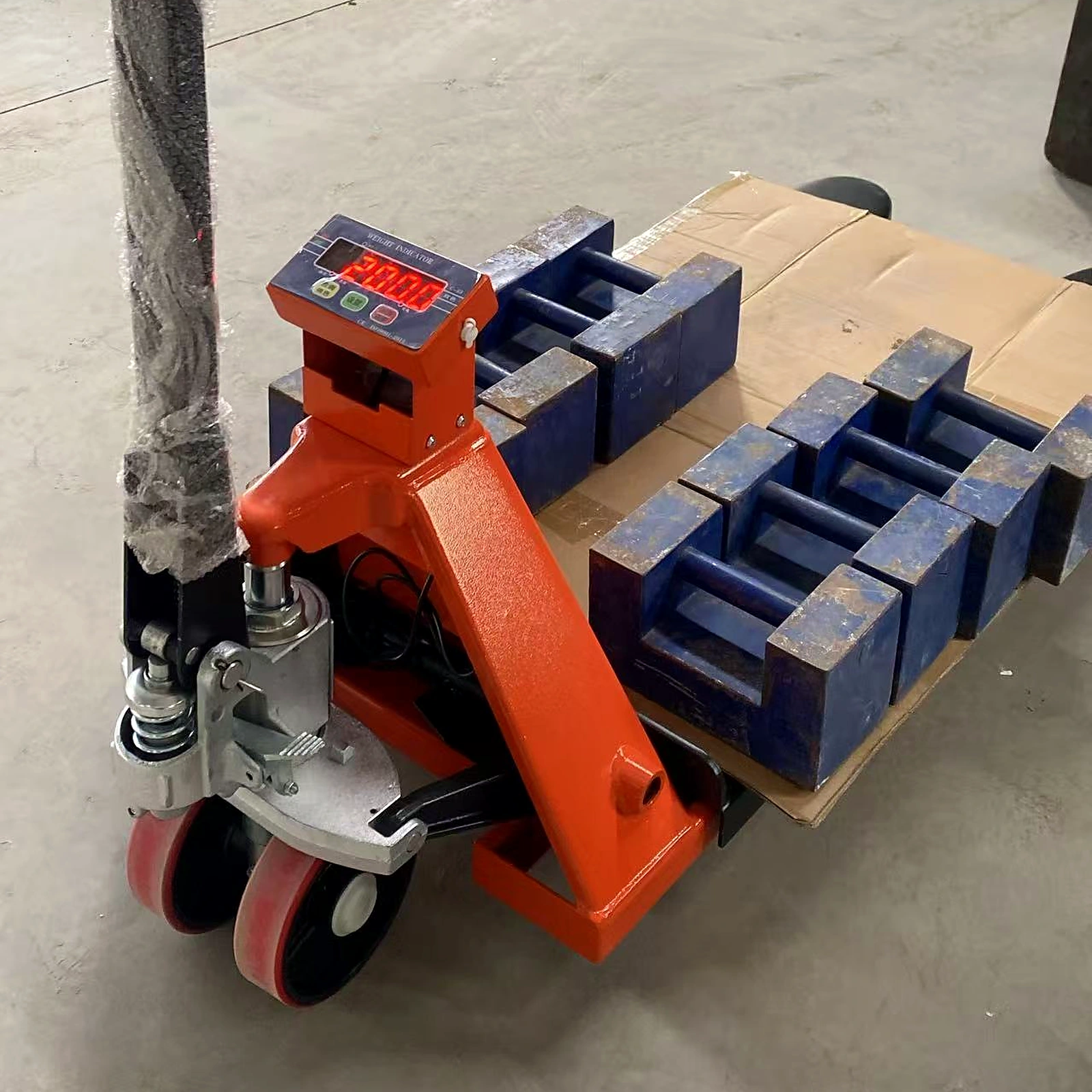
Show how weighing performance is checked.
Authentic factory calibration photo: reference test weights are positioned on the pallet jack scale while the illuminated indicator shows a load-check reading.
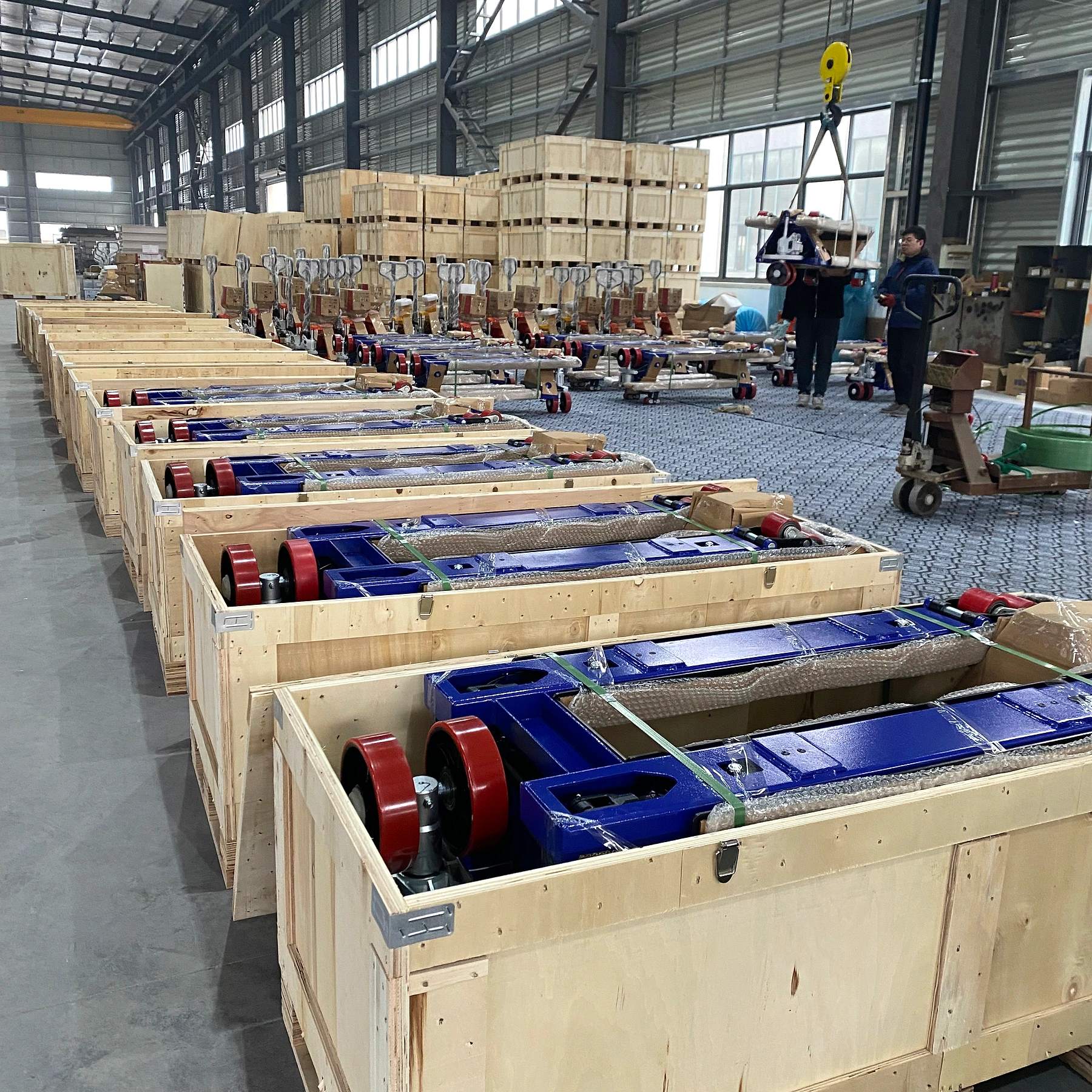
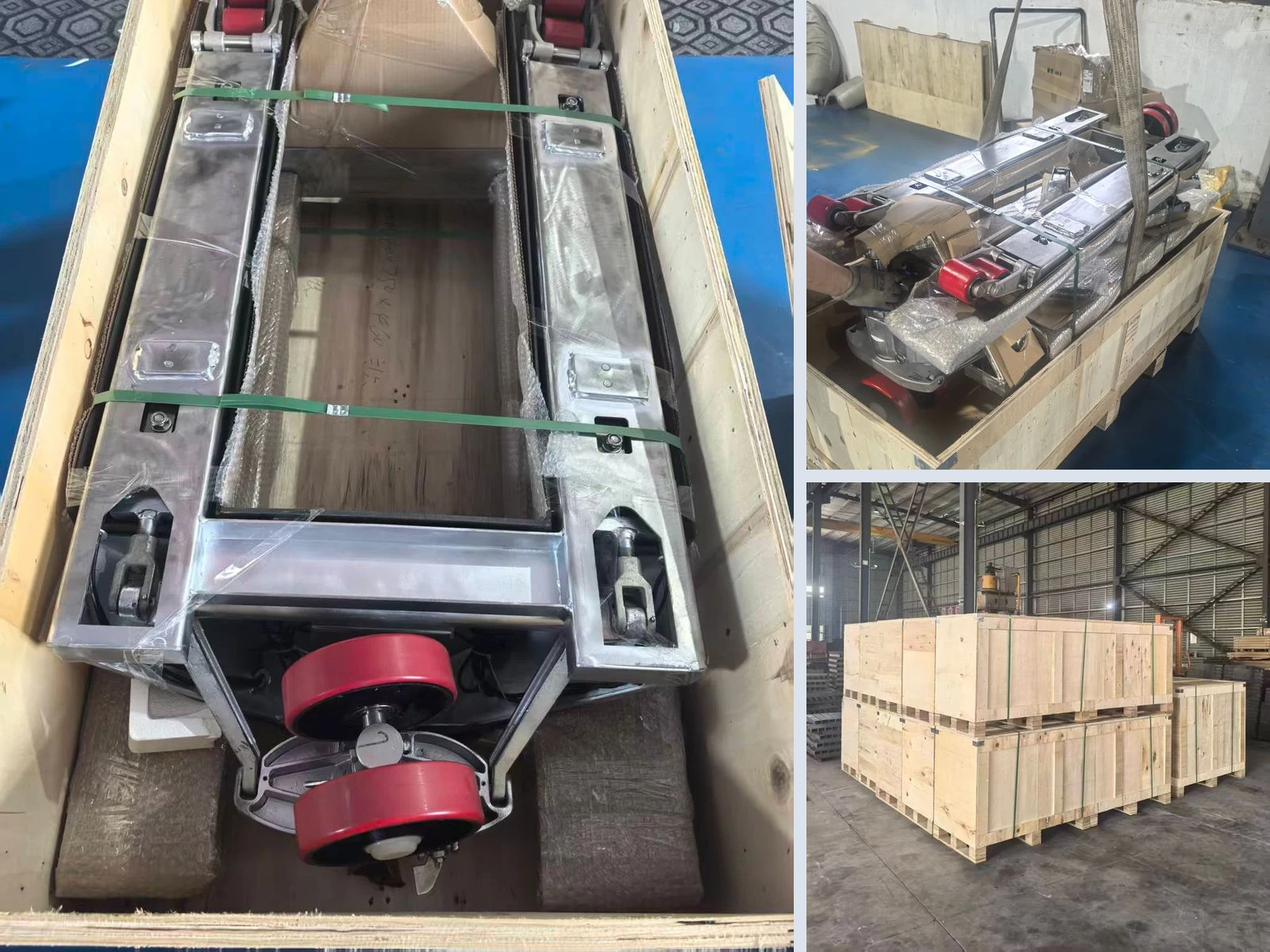
Show the products ready to leave the factory.
Standard export packing is 4 or 6 pallet jack scales per wooden crate. Two-unit crating is available only by arrangement for qualifying multi-unit orders and does not reduce the 4-unit MOQ.
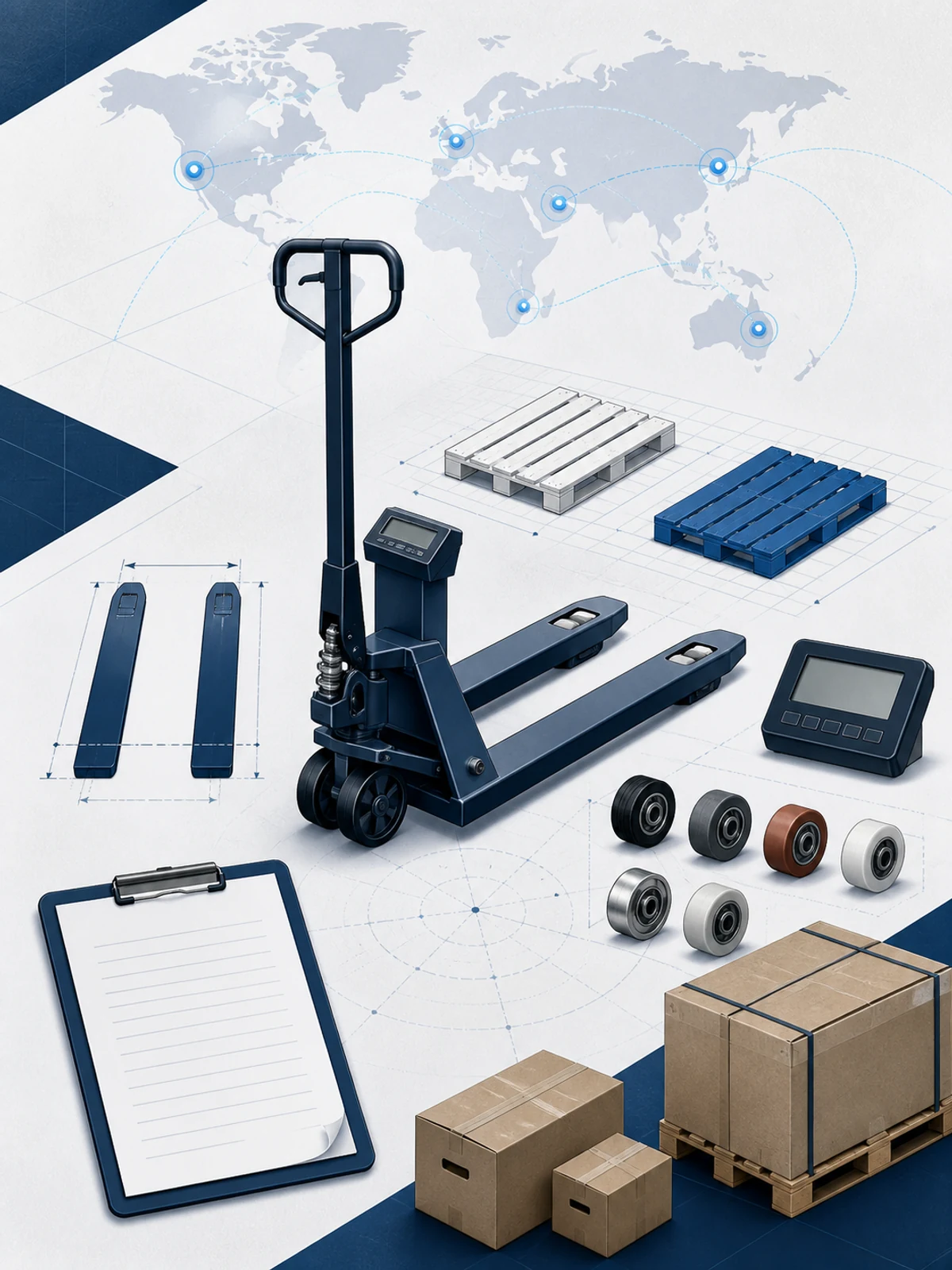
Illustrative buyer scenarios
Ten ways buyers may define the job before selecting a model.
Send the pallet, load, and workflow. Start with a useful answer.
Tell us what you move, the maximum complete load, your pallet entry, floor conditions, weighing frequency, and any data requirement. We will use that information to discuss a suitable configuration.